
Main Courses
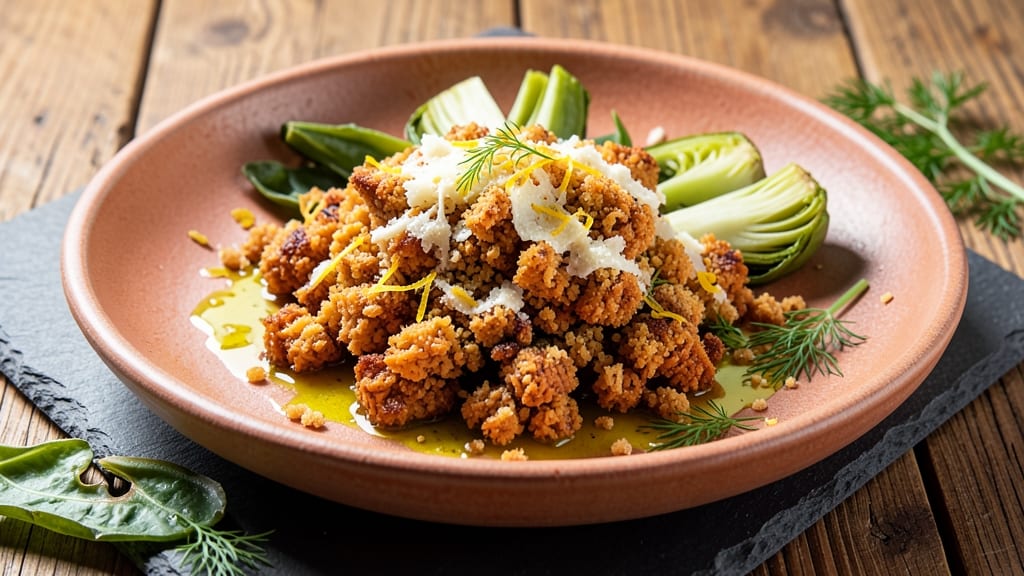
This artichoke and bread crumbs recipe transforms humble ingredients into crispy-topped bites that balance herby depth and satisfying crunch. The secret lies in properly breading artichoke quarters and achieving that perfect golden crust through careful baking—no frying required.
I developed this technique after years of experimenting with artichoke preparations, and it consistently delivers restaurant-quality results at home.
The dish starts with fresh artichokes that are carefully prepped to remove tough outer leaves, leaving tender hearts ready for breading. A mix of panko breadcrumbs, grated parmesan, and fresh herbs creates the perfect coating—light enough to stay crispy but flavorful enough to complement the artichoke's natural nuttiness.
The baking process ensures that exterior becomes beautifully golden while keeping the interior tender.
What you'll end up with is a dish that's elegant enough for dinner parties but simple enough for weeknight meals. Each bite offers a satisfying contrast of textures—crispy breadcrumb exterior giving way to tender artichoke hearts—all infused with herby, savory flavors.
The technique works equally well with fresh or frozen artichokes, making it versatile for any season.
Serve these crispy artichoke bites with a drizzle of lemon aioli or a sprinkle of flaky sea salt for extra depth. They pair beautifully with grilled meats, roasted vegetables, or even as a standalone appetizer.
The recipe scales easily, so you can make just a few for snacking or double the batch for a crowd.
Ingredients for artichoke recipe bread crumbs
Fresh artichokes meet crispy breadcrumbs for a restaurant-worthy appetizer with herby depth and satisfying crunch.
| Ingredient | Amount | Notes |
|---|---|---|
| Fresh Artichokes 🍃 | 4 whole | Medium-sized, trimmed properly |
| Panko Breadcrumbs 🍞 | 1 ½ cups | Japanese-style for extra crispiness |
| Parmesan Cheese 🧀 | ½ cup | Freshly grated, fine texture |
| Fresh Lemon Zest 🍋 | 1 tbsp | From 1 large lemon |
| Fresh Dill 🌿 | ¼ cup | Chopped, stems removed |
| Fresh Parsley 🌿 | ¼ cup | Chopped, flat-leaf preferred |
| Garlic Cloves 🧄 | 3 cloves | Minced for seasoning |
| Extra-Virgin Olive Oil 🫒 | ¼ cup | For tossing and baking |
| Large Eggs 🥚 | 2 whole | Beaten for egg wash |
| Diamond Crystal Kosher Salt 🧂 | 1 tsp | For seasoning, plus flaky finish |
| Ground Black Pepper 🌶️ | ½ tsp | Freshly ground for flavor |
| All-Purpose Flour 🌾 | ½ cup | For dredging artichokes |
The artichokes are the foundation, so look for firm, compact heads with tightly packed leaves. Whole Foods and Trader Joe's carry the best quality, but any grocery store's produce section will work. For prepping, trim the tough outer leaves until you reach the tender heart—this takes about 15 minutes but is crucial for texture. If using frozen artichokes, thaw and pat completely dry before breading. The panko breadcrumbs are non-negotiable here; Japanese-style panko stays crispy while regular breadcrumbs turn soggy.
No panko? Toast regular breadcrumbs in a dry pan for 5 minutes to revive them. Fresh herbs can be swapped for 1 tbsp dried dill and 1 tbsp dried parsley, but fresh delivers that restaurant-quality brightness. For extra richness, add 1 tbsp nutritional yeast to the breadcrumb mix. The egg wash needs to be lightly beaten—over-beating makes it rubbery. If you're avoiding eggs entirely, 2 tbsp water + 1 tbsp cornstarch works as a binder. The lemon zest adds brightness that balances the savory breading.
Prepped artichokes keep for 3 days in the fridge, wrapped tightly in damp paper towels. The breadcrumb mixture stays fresh for 2 days in an airtight container. For make-ahead convenience, bread the artichokes and refrigerate unbaked for up to 4 hours before baking. Once baked, they're best served immediately for maximum crispiness, but reheat at 350°F for 5 minutes to restore crunch. Store leftovers in a single layer to prevent sogginess.
Why You'll Love This Recipe
- I’ll be real: I used to toss artichoke trimmings after making hearts, but now I turn them into crispy, herby crumbs. That bright lemon zest and dill cut through the richness—like a little sunshine in every bite.
- Here’s what sold me: the toasted panko and shaved Parmesan create this irresistible texture contrast. It’s not just flavor—it’s the way it feels in your mouth, like a fancy bite without the fuss.
Step-by-step instructions for artichoke and bread crumbs recipe
Transform fresh artichokes into golden, crispy bites with a fragrant herby crust.
Prepare the Artichokes for Breading
Trim the 4 whole fresh artichokes by cutting off the top third and bottom third. Use a sharp paring knife to peel away the tough outer layers, revealing the tender heart. Remove the choke from the center by pulling out the fuzzy interior with your fingers or a spoon.
Cut each artichoke into 8 even wedges, ensuring each piece maintains its shape. In a large bowl, toss the artichoke wedges with the 0.5 cup all-purpose flour, coating them evenly. This creates a thin barrier that helps the breading adhere perfectly. Shake off any excess flour - you want a light, even coating, not a thick layer.
Create the Herby Breading Mixture
In a shallow dish, combine the 1.5 cups panko breadcrumbs, 0.5 cup freshly grated parmesan cheese, 1 tablespoon fresh lemon zest, 0.25 cup chopped fresh dill, 0.25 cup chopped fresh parsley, 3 minced garlic cloves, 0.5 teaspoon ground black pepper, and 1 teaspoon kosher salt. Mix thoroughly with your hands until all ingredients are evenly distributed.
This herby blend is the secret to flavor - the lemon zest brightens, the parsley and dill add freshness, while the garlic and pepper provide depth. The panko will create that signature crispy texture we're aiming for. Keep this mixture in the shallow dish for easy dredging.
Set Up the Breading Station
Beat the 2 whole large eggs in a medium bowl until fully incorporated. The eggs will serve as the binder that helps the breading stick to the artichokes. Pour 0.25 cup extra-virgin olive oil into another shallow dish - this will help create a crispy exterior when baked.
Arrange your three dishes in this order: flour-coated artichokes first, then egg wash, then the herby breadcrumb mixture. This assembly-line approach ensures each piece gets properly coated without cross-contamination. Work quickly but carefully to maintain the crisp texture of the panko.
Bread and Bake for Crispy Perfection
Dredge each artichoke wedge first in the beaten eggs, allowing excess to drip off, then press firmly into the herby breadcrumb mixture, coating all surfaces completely. Transfer to a baking sheet lined with parchment paper, leaving space between pieces. Repeat until all artichokes are breaded.
Preheat your oven to 400°F. Bake the artichokes for 20-25 minutes until golden brown and crispy, flipping halfway through for even browning. The edges should be deeply golden with a crisp texture that gives way slightly when pressed. Remove from oven and let rest for 2 minutes before serving to allow the breading to set.
Serve Immediately for Maximum Crispiness
Transfer the crispy artichoke bites to a serving platter while they're still warm. The breading should be golden and crunchy, with a fragrant aroma of herbs and lemon. Serve immediately to enjoy that perfect balance of crispy exterior and tender artichoke heart.
For best results, serve with a lemon aioli or marinara sauce for dipping. The contrast of the warm, crispy artichokes with cool sauce creates an irresistible combination. These bites make an excellent appetizer or can be served as part of a Mediterranean-inspired meal.
Pro Tips For Making Artichoke Recipe Bread Crumbs
- Trim the Artichokes Right: Cut off the tough outer leaves one by one until you hit the pale, tender heart—don’t just hack at it like I did my first time. The first few layers are fibrous and bitter, so patience here saves you from chewing on disappointment later.
- Toast the Panko First: Dry-toast your panko in a skillet over medium heat for 2-3 minutes before mixing in anything else. This gives it a deeper crunch and prevents the breadcrumbs from turning soggy when you add the artichoke purée later.
- Squeeze, Don’t Chop Wet: After cooking the artichoke hearts, squeeze out every last drop of liquid with a clean towel—no chopping them wet. I learned this after my first batch turned into a gloppy mess instead of crispy crumbs.
- Grate the Parmesan Fine: Use a microplane or fine grater for the Parmesan—none of that block-shredding nonsense. The finer the cheese, the better it blends into the crumbs without clumping, and it melts into a creamy, savory binder instead of gritty bits.
Regional styles of these flavors
Mediterranean Coastal Style
In regions like Southern Italy and Greece, artichokes are often breaded with a mix of panko and crushed semolina for extra crunch. I swap half the panko for finely ground semolina in the breading mixture, adding 1 tsp dried oregano and zest from 1 orange instead of lemon.
This variation works beautifully with grilled octopus or as part of a mezze platter. 🌊
Southern French Twist
For a Provençal-inspired take, I replace the parsley with 1 tbsp chopped tarragon and add 1 tsp smoked paprika to the breadcrumb mix.
The French often serve these with a white wine reduction made from ½ cup dry white wine, 1 tbsp butter, and 1 shallot, simmered until syrupy. This version pairs perfectly with roasted lamb chops.
Spanish-Inspired Version
In Spain, artichokes are frequently stuffed with breadcrumbs before baking. I modify the technique by hollowing out the artichoke hearts and filling them with a mix of ½ cup breadcrumbs, 2 tbsp olive oil, 1 tsp smoked paprika, and 1 tsp ground cumin.
Bake at 375°F for 30 minutes until golden. Serve with alioli (garlic mayo) for dipping. 🌶️
American Italian Fusion
For a New York-Italian approach, I add 1 tbsp grated Pecorino Romano to the breading and top the baked artichokes with marinated sun-dried tomatoes before serving.
This version is popular in Little Italy and pairs well with garlic knots or roasted eggplant. The key is using Italian-style panko for extra crispiness.
Modern Herb Garden
For a contemporary twist, I incorporate 1 tbsp finely chopped basil and 1 tsp lemon pepper seasoning into the breadcrumb mix. This version is lighter but still packed with flavor, perfect for spring and summer gatherings.
Serve with a yogurt dip infused with mint and cucumber for a refreshing contrast. 🌿
Nutrition facts
Frequently asked questions
Can I use frozen artichokes instead of fresh for this recipe?
Yes, but you'll need to thaw and dry them thoroughly first! Place frozen artichokes in cold water for 2-3 hours or overnight in the fridge. After thawing, pat them completely dry with paper towels—this step is critical for crispy breading. The texture will be slightly different from fresh, but the flavor remains excellent.
How do I get the breadcrumbs to stay crispy instead of soggy?
The secret is proper drying and baking technique. First, ensure your artichokes are completely dry before breading. Second, bake on a middle rack at 400°F for 20-25 minutes, flipping halfway. For extra crispiness, broil for 1-2 minutes at the end. Avoid overcrowding the pan—leave 1 inch between pieces.
What are good dipping sauces for these artichoke bites?
Try these crowd-pleasing options: A tangy lemon aioli (mix ½ cup mayo, 1 tbsp lemon juice, 1 minced garlic clove), creamy tahini sauce (thin ½ cup tahini with lemon water), or classic marinara. For something lighter, blend ½ cup Greek yogurt with 1 tsp dill and a squeeze of lemon.
Can I make this recipe gluten-free?
Replace the all-purpose flour with ½ cup gluten-free flour blend, use gluten-free panko (like Bob's Red Mill), and swap regular parmesan for nutritional yeast if needed. For binding, mix 1 tbsp cornstarch with 2 tbsp water instead of eggs. The texture will still be crispy with these adjustments.
How far ahead can I prepare the breaded artichokes?
You can bread the artichokes up to 4 hours ahead and store them uncovered in the fridge. Bake straight from the fridge (add 5 minutes to baking time) or let them sit at room temperature for 30 minutes before baking. For best texture, bake immediately after breading if possible—this preserves maximum crispiness.