
Main Courses
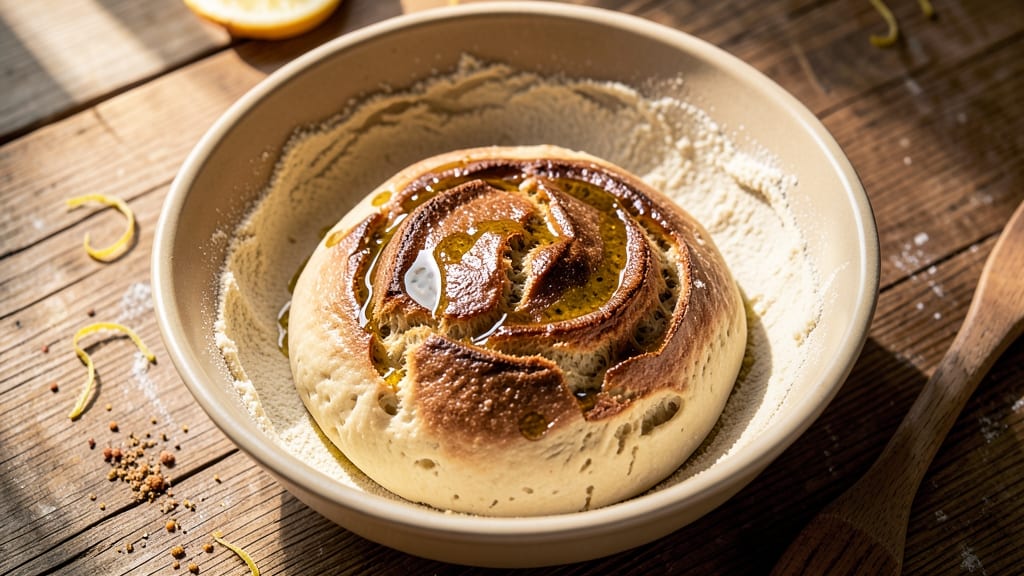
What sets this recipe apart is its simplicity combined with professional results. You'll work with just five core ingredients—flour, water, yeast, salt, and olive oil—plus optional mix-ins like seeds or olives for customization.
The dough develops overnight, allowing gluten to relax naturally, which eliminates the need for vigorous kneading while creating that signature artisan texture.
By the time you pull it from the oven, you'll have a loaf with a deep golden crust and an open crumb structure that's light yet substantial. The scoring technique I'll show you ensures even oven spring, while the steam pan creates that coveted bakery-style crust.
This is the kind of bread that makes toast, sandwiches, and charcuterie boards taste extraordinary.
Perfect for beginners and experienced bakers alike, this method builds confidence while delivering professional-quality results. Whether you're making bread for a special occasion or just want to impress with homemade loaves, this recipe delivers every time. Let's get started with the foolproof process that's earned praise across Reddit forums.
Ingredients for artisan bread recipe reddit
Five core ingredients transform into restaurant-quality artisan bread with minimal effort.
| Ingredient | Amount | Notes |
|---|---|---|
| Bread Flour 🌾 | 5 cups | High-protein for structure |
| Warm Water 💧 | 3 ½ cups | 105°F for optimal yeast activation |
| Active Dry Yeast 🍞 | ½ tsp | Ensure freshness with expiration check |
| Extra-Virgin Olive Oil 🫒 | 2 tbsp | For dough elasticity and flavor |
| Diamond Crystal Kosher Salt 🧂 | 2 tsp | Adjusts to Morton's ratio |
| Cornmeal 🌽 | ¼ cup | For dusting parchment paper |
| Ice Cubes ❄️ | 1 cup | For steam generation during baking |
| Sesame Seeds (optional) 🌻 | ¼ cup | For decorative crust topping |
| Coarse Sea Salt (optional) 🧂 | ⅛ cup | For finishing crust |
The flour selection is critical—bread flour's high protein content (12-14%) creates that signature open crumb structure. King Arthur or Caputo are Reddit favorites for their consistent performance. If you only have all-purpose, add 1 tablespoon vital wheat gluten per cup of flour to mimic the protein structure. The yeast must be active dry, not instant—this recipe relies on proper hydration and proofing time. For storage, keep flour in an airtight container in a cool, dark place for up to 6 months. The olive oil should be extra-virgin for both flavor and dough elasticity, though regular virgin works in a pinch.
No bread flour? All-purpose plus vital wheat gluten solves the protein issue. The water temperature is crucial—105°F activates yeast without killing it. Too hot and it dies; too cold and it won't activate. For yeast testing, proof a small amount in warm water with sugar before mixing full dough. The optional sesame seeds should be toasted briefly in a dry pan for enhanced flavor. Diamond Crystal kosher salt measures differently than Morton's—use two teaspoons for every teaspoon of Morton's. For a nutty flavor variation, substitute half the flour with whole wheat.
This dough requires 12 hours of cold fermentation for optimal gluten development. Store the dough in a proofing box or sealed container at room temperature. For longer storage, shape and freeze the dough for up to 3 months before baking. The ice cubes create steam during baking—replace with a metal bowl of boiling water on the oven rack if you forget. Baked loaves keep well at room temperature for 3 days or frozen for 3 months. For reheating, wrap in a towel and warm in a 200°F oven for 10 minutes to restore crust crispness.
Why You'll Love This Recipe
- Four-Ingredient Magic: This recipe nails the "less is more" philosophy—just flour, water, yeast, and olive oil. No fancy mix-ins, no stress. The yeast does the heavy lifting while you mix, let it rise, and shape it in under 15 minutes. Honestly, it’s the kind of bread that makes you feel like a baker without the mess.
- Crust That Cracks: That golden, shatterable crust? Pure satisfaction. The olive oil and kosher salt work together to create a crispy shell with a soft, airy interior—no fancy scoring tools needed. (Yes, even on a Tuesday night.)
- Weeknight Wonder: I keep a loaf in the freezer for lazy mornings—just toast slices straight from frozen. It’s also the perfect side for soups, charcuterie, or even a simple tomato sandwich. Between us, it’s my go-to for when I don’t want to think too hard.
- Budget-Friendly Staple: A single batch costs pennies but feels like a splurge. The dough stretches far enough for two loaves, and leftovers toast up beautifully. I’ll be real: this is the kind of bread that makes grocery-store rolls feel like a waste.
Step-by-step instructions for artisan bread with no-knead technique
This method delivers restaurant-quality crust with minimal effort—perfect for home bakers.
Mix the Dough and Let It Rest Overnight
In a large bowl, combine the 5 cups bread flour, 2 tsp diamond crystal kosher salt, and 0.5 tsp active dry yeast. Make a well in the center and add the 2 tbsp extra-virgin olive oil and 3.5 cups warm water (105°F). Mix with a wooden spoon until just combined—you'll see a shaggy dough form with some dry bits remaining. This is intentional.
Cover the bowl with plastic wrap and let it rest at room temperature for 12-18 hours. The dough will transform dramatically—what starts as a rough, uneven mass will become smooth and slightly sticky by morning. This long fermentation develops complex flavors and improves texture. If your kitchen is cold, place the bowl in a slightly warm spot (like near the oven with the light on) to maintain consistent yeast activity.
Shape the Dough and Prepare for Baking
After resting, the dough will be noticeably puffier and may have risen slightly. Using wet hands (to prevent sticking), gently fold the dough over itself 4-5 times to develop surface tension. This creates a smoother texture without kneading. Shape it into a loose round by pulling the edges toward the center, then place it seam-side up on a piece of parchment paper dusted with 0.25 cup cornmeal. This prevents sticking and adds a subtle flavor.
Cover the dough loosely with plastic wrap and let it rest at room temperature for 1-2 hours. You'll see it expand and develop small bubbles on the surface—this indicates proper fermentation. If your kitchen is warm, you might see faster activity. The dough is ready when it springs back slowly when poked with a finger, but leaves a slight indentation.
Create Steam and Bake for Maximum Crust Development
Preheat your oven to 450°F with a Dutch oven inside for 45 minutes. This ensures maximum heat retention. Carefully transfer the dough (still on its parchment paper) into the hot Dutch oven. Add 1 cup ice cubes to the bottom of the oven—this creates steam during the initial baking phase, which is crucial for developing that crackly crust and open crumb structure.
Bake covered for 30 minutes, then remove the lid and bake for an additional 15-20 minutes until the bread is deep golden brown. The internal temperature should reach 205-210°F when measured with an instant-read thermometer. If you're using the optional toppings, sprinkle 0.25 cup sesame seeds and 0.125 cup coarse sea salt during the final 5 minutes of baking for added texture and flavor.
Cool and Enjoy for Optimal Texture
Remove the bread from the oven and transfer it to a wire rack to cool completely. This can take 1-2 hours, but resist the urge to cut into it sooner—cooling allows the crumb to set properly and prevents a gummy texture. The bread will sound hollow when tapped on the bottom, indicating it's fully cooled and ready to slice.
For the best experience, serve the bread at room temperature. The crust should be crisp with a satisfying snap, while the interior remains soft and airy. Store any leftovers wrapped in a clean kitchen towel to maintain freshness for up to 3 days, or freeze for up to 3 months. This method consistently produces a bread that rivals professional bakery quality with minimal active effort.
Pro Tips For Making Artisan Bread Recipe Reddit
- WEIGH YOUR FLOUR: I learned this the hard way—measuring bread flour by scooping from the bag gives you way too much volume. Use a kitchen scale for 100% accuracy, especially with bread flour’s high protein content. A cup of bread flour isn’t the same as all-purpose, and your dough will either be too slack or too stiff.
- HYDRATE THE YEAST FIRST: Skip mixing yeast into dry flour—it’s a rookie move. Bloom it in warm water (110°F) with a pinch of sugar (or honey) for 5 minutes first. This ensures it’s active before it hits the flour, and you’ll spot weak yeast early (no bubbles? Start over).
- STRETCH, DON’T PUNCH: Resist the urge to punch down stiff dough aggressively—you’ll deflate the gluten you just built. Instead, gently stretch the surface with wet hands, then fold the edges toward the center. It’s slower but gives you that signature open crumb without overworking the dough.
- SALT THE WATER: Diamond Crystal kosher salt dissolves unevenly, so don’t just sprinkle it on the dough. Mix it into the warm water first—this guarantees even distribution. Uneven salt means some bites taste bland while others are harsh, and nobody wants that.
Flavor customization for this dish
Herb-Infused Variations
Add fresh herbs directly to the dough for subtle but complex flavors. I like using 1 tbsp chopped rosemary or 1 tbsp thyme mixed into the flour before adding water—these infuse the dough with aromatic notes that develop beautifully during fermentation.
For a Mediterranean twist, try 1 tbsp dried oregano combined with 1 tbsp garlic powder for a savory depth. 🌿
Seed and Nut Enhancements
For texture and nutrition, fold ¼ cup toasted pumpkin seeds or ¼ cup chopped walnuts into the dough during the final shaping stage. These add crunch to every bite and complement the bread's natural sweetness.
I also recommend ¼ cup sunflower seeds for a lighter, nuttier flavor. Toast the seeds in a dry pan for 2-3 minutes before adding to maximize their flavor impact.
Sweet Flavor Profiles
Create a sweet variation by adding ¼ cup honey or 2 tbsp maple syrup to the water measurement. This works beautifully with 1 tsp cinnamon and ½ tsp vanilla extract for a bread that's perfect for French toast or dessert applications.
For a more pronounced sweetness, replace 1 cup of water with 1 cup whole milk and add 2 tbsp brown sugar to the dough mixture.
Savory Add-Ins
For a heartier loaf, incorporate ½ cup chopped roasted garlic or ½ cup caramelized onions into the dough during the final shaping. These add-ins create pockets of intense flavor that pair exceptionally with soups or charcuterie boards.
I also love adding ¼ cup chopped kalamata olives for a briny contrast that elevates the bread's complexity.
Whole Grain Options
Replace 1-2 cups of bread flour with whole grain flours like whole wheat or spelt for added fiber and nuttiness. For a rustic flavor, use 1 cup rye flour—this creates a denser crumb with a slightly tangy taste.
I recommend starting with 50% substitution to maintain the bread's open crumb structure while adding hearty flavor. Always increase water by 1-2 tablespoons when using whole grains due to their higher absorption rate.
Spiced Variations
Create a warm, aromatic loaf by adding 1 tsp ground cumin and ½ tsp smoked paprika to the flour mixture. This works exceptionally well with ¼ cup chopped dried apricots or ¼ cup chopped dates for a sweet-savory balance.
For a festive holiday bread, incorporate ½ tsp ground cloves and ½ tsp allspice with ¼ cup chopped crystallized ginger for a spiced twist.
Nutrition facts
Frequently asked questions about artisan bread
Can I use all-purpose flour instead of bread flour?
Yes, but you'll need to add 1 tablespoon vital wheat gluten per cup of all-purpose flour to mimic bread flour's high protein content. This ensures proper gluten development for that signature artisan crumb structure. Reddit bakers often recommend this substitution when bread flour isn't available.
Why does my dough look different after 12 hours?
The overnight fermentation transforms the dough dramatically! It should go from shaggy and uneven to smooth and slightly sticky with visible bubbles. This indicates proper gluten development and yeast activity. If it smells yeasty but doesn't change much, your kitchen might be too cold—try moving it near the oven light for warmth.
What if I don't have a Dutch oven?
No problem! Use a heavy oven-safe pot with a lid or even a baking sheet with a metal bowl inverted over the dough. For steam, place a metal bowl of boiling water on the oven rack. The key is maintaining moisture during the initial 30 minutes of baking to create that crackly crust.
How do I know when the bread is fully baked?
Your bread is done when it reaches an internal temperature of 205-210°F and sounds hollow when tapped on the bottom. The crust should be deep golden brown with no pale spots. If unsure, cut into a small section—it should be fully set with no raw dough in the center.
Can I make this bread without yeast?
This specific recipe relies on yeast for proper rise and texture, but you can adapt it for sourdough by replacing the yeast with 1 cup active sourdough starter (100% hydration). The fermentation process will differ significantly, requiring longer proofing times. For best results, follow a dedicated sourdough guide first.