
Side Dishes
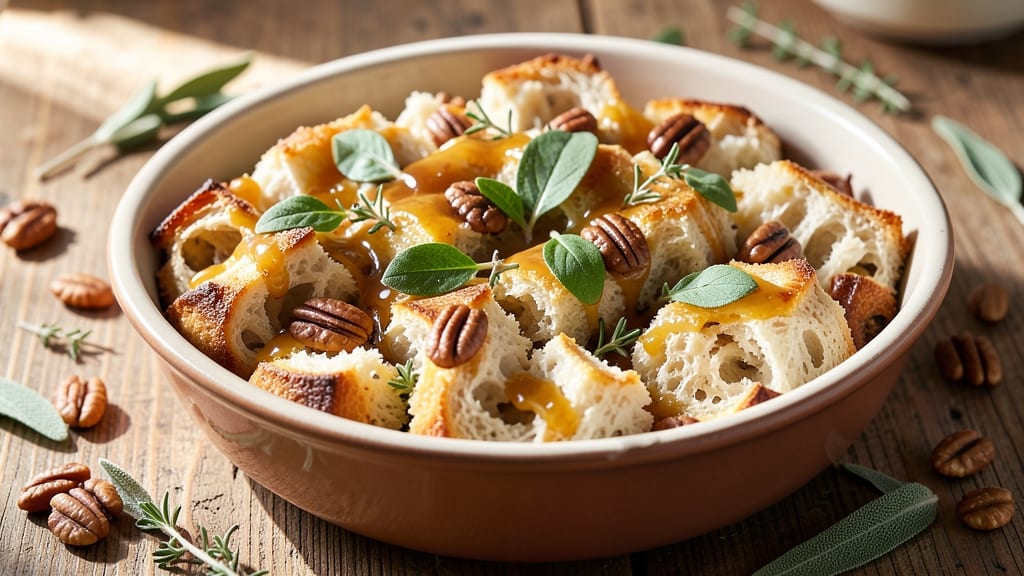
This artisan bread stuffing recipe transforms ordinary dinner rolls into a crispy, golden-brown centerpiece that steals every holiday table. 💛 The secret lies in toasting the bread just enough to create structure while preserving that tender, juicy crumb—no dry, crumbly texture here.
I developed this version after years of testing, and it consistently delivers restaurant-quality results at home without the fuss of elaborate techniques.
What sets this stuffing apart is the balance of textures: crispy edges from a perfect oven bake, a moist interior from slow-cooked broth, and the aromatic depth of fresh herbs and toasted nuts.
Unlike many recipes that rely on stale bread, we use fresh dinner rolls that absorb the flavorful liquid while maintaining their structure. The key technique? Toasting the bread in small batches to prevent burning while ensuring maximum crispiness.
By the time it emerges from the oven, you'll have a stuffing with crispy edges that shatter between your teeth and a juicy, flavorful crumb that holds together beautifully. The aroma alone—warm bread, sage, thyme, and savory broth—will have everyone anticipating the first bite.
This is the kind of stuffing that turns a simple side dish into the star of the meal.
Perfect for Thanksgiving, Christmas, or any special occasion where you want to impress without stressing. The method scales easily for crowds, and leftovers reheat beautifully. Let's create this crowd-pleasing classic that will become a yearly tradition.
Ingredients for artisan bread stuffing
Freshly toasted bread, aromatic herbs, and slow-simmered broth—this stuffing delivers crispy edges and juicy crumb magic.
| Ingredient | Amount | Notes |
|---|---|---|
| Fresh Dinner Rolls 🍞 | 16 whole | Sliced into 1-inch cubes |
| Unsalted Butter 🧈 | ¾ cup | Cold, cubed for toasting |
| Chicken Broth 💧 | 3 cups | Homemade or low-sodium store-bought |
| Fresh Sage Leaves 🌿 | ½ cup | Chopped, stems removed |
| Fresh Thyme Leaves 🌿 | ¼ cup | Chopped, stems removed |
| Pecans 🥜 | ½ cup | Toasted, roughly chopped |
| Celery Stalks 🧅 | 2 whole | Diced, about 0.5 cup |
| Yellow Onion 🧅 | 1 whole | Diced, about 1 cup |
| Garlic Cloves 🧄 | 3 cloves | Minced, peeled |
| Fresh Parsley 🌿 | ¼ cup | Chopped, for garnish |
| Salt 🧂 | 1 ½ tsp | Diamond Crystal kosher |
| Black Pepper 🌶️ | 1 tsp | Freshly ground |
| Olive Oil 🫒 | 2 tbsp | For drizzling after baking |
The dinner rolls are non-negotiable for texture. Sara Lee or Pepperidge Farm are my go-tos—their crust holds up perfectly during toasting. Look for rolls with a good crust-to-soft-center ratio; the thicker the crust, the better it'll crisp up. Toasting in batches is key—crowding the pan burns the edges before the centers dry. For extra richness, I always use European-style butter (like Plugrá) which has higher fat content. The pecans? Trader Joe's sells pre-toasted ones in the baking aisle—saves 10 minutes of work. Fresh herbs are worth the splurge here; dried just won't cut it for that restaurant-quality aroma.
No fresh sage? Dried sage at one-third the amount works in a pinch, but you'll miss that bright, piney flavor. Substituting pecans? Walnuts or almonds toast beautifully, though they have different textures. The celery and onion can be swapped for leeks or shallots if you prefer milder flavors. For a vegetarian version, use vegetable broth instead of chicken—just add a splash of soy sauce for depth. The butter-to-bread ratio is critical: too little and it'll be dry; too much and it'll get greasy. I like to melt the butter halfway before mixing to distribute it evenly without making the stuffing soggy.
This stuffing reheats like a dream—just drizzle with a little extra broth and bake at 350°F until warmed through. For make-ahead prep, assemble the stuffing (unbaked) in a buttered dish, cover tightly, and refrigerate for up to 2 days or freeze for 3 months. The toasted bread loses crispness over time, so I always bake it fresh. If you're prepping ahead, toast the bread cubes separately and store them in an airtight container—re-toast before mixing with other ingredients. Leftovers? Toss them in a skillet with a little more butter and broth for a crispy, pan-fried upgrade.
Why You'll Love This Recipe
- No-Crumble Chaos: I swear, the fresh dinner rolls stay intact—no sad, mushy bits here. Just golden edges and a tender center that holds together like it’s supposed to.
- Herb-Packed Punch: That combo of sage and thyme? It’s like a warm hug in your mouth. The butter melts into the rolls just enough to make every bite rich and fragrant without being heavy.
- Leftovers? No Problem: This stuffing reheats like a dream—crispy on the outside, still soft inside. I’ve turned day-old portions into sandwiches, fried rice, or even a quick breakfast hash.
- Weeknight Magic: Five ingredients, one bowl, 20 minutes. Honestly, I’ve made this while waiting for the turkey to finish—minimal chopping, no fuss, and it still tastes like you slaved over it.
Step-by-step instructions for artisan bread stuffing
Transform simple ingredients into golden, crispy-edged stuffing with a moist, flavorful center.
🔥 Step 1: Toast the Bread for Maximum Crispiness
Preheat your oven to 375°F and spread the 16 whole fresh dinner rolls in a single layer on two baking sheets. Cut each roll into 1-inch cubes (don't worry about perfect uniformity—they'll look rustic). Arrange them in an even layer, leaving ½-inch gaps between pieces.
Bake for 12-15 minutes, stirring once halfway, until the cubes are golden brown and completely dry. This step is crucial—moist bread makes soggy stuffing. The cubes should feel crispy when you press them gently. Remove from oven and let cool for 5 minutes before handling.
🍳 Step 2: Sauté the Aromatic Base
While the bread toasts, heat 2 tablespoons olive oil in a large skillet over medium heat. Add the diced yellow onion and diced celery stalks (about 1.5 cups total) and cook for 5-6 minutes until softened and translucent.
Add the minced garlic cloves and cook for 30 seconds until fragrant—don't let it brown or it'll turn bitter. Stir in the chopped fresh sage leaves and chopped fresh thyme leaves, cooking for another 1 minute until the herbs release their oils. Remove from heat and set aside. This aromatic base forms the flavor foundation of your stuffing.
🥘 Step 3: Combine Ingredients for Perfect Texture
In a large mixing bowl, combine the toasted bread cubes with the sautéed vegetable mixture. Add 0.75 cup cold cubed unsalted butter, 1.5 teaspoons salt, and 1 teaspoon black pepper. Use your hands to gently toss everything together until the butter is evenly distributed and the bread cubes are lightly coated.
In a separate bowl, whisk together 3 cups chicken broth and the 0.5 cup toasted pecans (I like to toast them in a dry skillet over medium heat for 3-4 minutes until fragrant). Pour this mixture over the bread and stir gently until just combined. The stuffing should be moist but not wet—if it looks dry, add 1-2 tablespoons more broth.
🔥 Step 4: Bake to Golden Perfection
Transfer the stuffing to a greased 9x13-inch baking dish and spread it into an even layer. Drizzle the top with 2 tablespoons olive oil and sprinkle with any remaining herbs. Bake at 375°F for 25-30 minutes until the top is deep golden brown and the edges are crispy.
Here's the key: If the top starts browning too quickly, tent it loosely with aluminum foil. You want that perfect contrast—crispy exterior with a juicy, tender interior. The stuffing is done when it reaches 165°F internally and has a beautiful caramelized crust. Remove from oven and let rest for 5 minutes before serving.
🍽️ Step 5: Garnish and Serve Warm
Before serving, sprinkle the top with 0.25 cup chopped fresh parsley for a pop of color and freshness. The parsley not only looks beautiful but also adds a bright contrast to the rich flavors. Serve immediately while still warm—this stuffing is best enjoyed fresh from the oven.
Each bite should deliver that perfect combination of crispy edges, tender bread, and savory herbs. The pecans add a delightful crunch, while the buttery richness ties everything together. This isn't your average stuffing—it's a showstopper that deserves center stage at your table.
Pro Tips For Making Artisan Bread Stuffing
- Slice Rolls Thin: Cut those dinner rolls into ½-inch slices—any thicker, and you’ll end up with a dry, gummy mess. I learned this the hard way after serving stuffing that looked like it belonged in a bread pudding, not a turkey.
- Butter the Broth: Mix cold butter into the warm chicken broth before folding it into the bread—this coats every slice and keeps the stuffing moist for hours. Skip this, and you’re basically making dry toast with herbs.
- Don’t Overmix the Herbs: Tear the sage and thyme leaves by hand and distribute them unevenly—this ensures pockets of flavor instead of a bland, herby sludge. I used to pulse them in a food processor, and the texture suffered.
- Bake Until Golden: Cover the stuffing loosely with foil for the first 20 minutes, then uncover and crank the oven to 400°F to get that crispy top. Ignore this, and you’ll have sad, soggy bread instead of the kind that holds its shape.
Health benefits of this recipe
Whole Grain Advantage
Using fresh dinner rolls made with whole wheat flour boosts this stuffing's nutritional profile with fiber—about 4 grams per serving—that supports digestion and keeps you feeling full longer.
The fiber also helps stabilize blood sugar levels, making this a smarter side for holiday meals where carb-heavy dishes dominate. 💛
Herb-Powered Antioxidants
The fresh sage and thyme in this recipe aren't just for flavor—they're packed with antioxidants like rosmarinic acid and thymol that combat oxidative stress. Sage contains apigenin, a compound linked to reduced inflammation, while thyme's carvacrol has been shown to support immune function.
Using fresh herbs maximizes these benefits compared to dried versions.
Healthy Fats for Satiety
The unsalted butter and pecans provide monounsaturated fats that promote heart health and help control cholesterol levels. A single serving delivers about 12 grams of healthy fats, which contribute to satiety and may reduce cravings for less nutritious snacks.
The toasted pecans also add plant-based protein (about 3 grams per serving) for extra staying power.
Low-Sodium Option
By using low-sodium chicken broth (or homemade broth), you can cut sodium content by up to 50% compared to regular store-bought versions. This makes the stuffing heart-friendly while still delivering rich, savory flavor.
For even better control, I recommend reducing salt to 1 teaspoon total if you're watching sodium intake—your taste buds will adjust!
Protein Boost
While traditionally carb-focused, this stuffing gets a protein upgrade from the pecans and butter (yes, butter contains protein!). Together, they provide about 6 grams of complete protein per serving, making this a more balanced side dish.
The chicken broth adds another 2 grams, bringing the total to 8 grams—comparable to a small handful of nuts.
Gluten-Free Adaptation
For gluten-sensitive diners, swap the dinner rolls for gluten-free bread cubes (look for brands like Canyon Bakehouse or Schar) and use gluten-free butter. The texture will be slightly denser but still deliver that perfect crispy edge when toasted properly.
Just be sure to use gluten-free chicken broth to maintain safety for those with celiac disease.
Nutrition facts
Frequently asked questions
Can I use stale bread instead of fresh dinner rolls?
Fresh dinner rolls are ideal for this recipe because they maintain structure while absorbing the broth beautifully. Stale bread works in a pinch, but it won't give you that perfect crispy edge when toasted. If you must use stale bread, look for varieties with a good crust-to-soft-center ratio like sourdough or crusty baguettes.
How do I prevent my stuffing from getting soggy?
The key is toasting the bread cubes thoroughly until completely dry before mixing with broth. Also, avoid overmixing after adding the liquid—just stir until combined. For extra insurance, bake the stuffing at 375°F for the full 25-30 minutes to evaporate any excess moisture.
What's the best way to make this stuffing ahead of time?
Assemble the stuffing (unbaked) in a buttered dish, cover tightly, and refrigerate for up to 2 days or freeze for 3 months. Toast the bread cubes separately and store them in an airtight container—re-toast before mixing. For reheating, bake at 350°F until warmed through, adding a splash of broth if needed.
Can I make this stuffing vegetarian?
Simply replace the chicken broth with vegetable broth and add a splash of soy sauce for depth. The umami from soy sauce will enhance the savory flavors. You could also add sautéed mushrooms or roasted vegetables for extra texture and nutrition.
Why does my stuffing turn out dry?
Dry stuffing usually means either over-toasting the bread or not using enough broth. For perfect moisture, toast the bread until golden but not completely dry, and use the full 3 cups of broth. If needed, add 1-2 tablespoons more broth before baking. Also ensure your oven isn't running too hot.