
Side Dishes
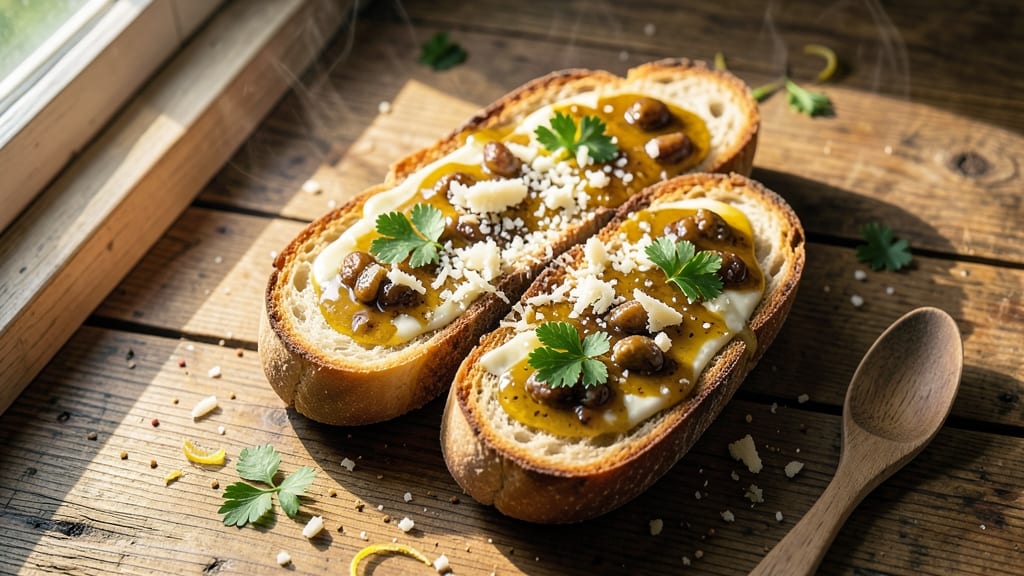
This authentic Italian garlic bread recipe brings a taste of Rome to your table with a crispy cheese crust and rich buttery garlic flavor. The secret lies in using fresh garlic, high-quality olive oil, and a sturdy baguette—just like in Italy.
I've perfected this technique over years of testing, ensuring every bite delivers that perfect balance of crispy, cheesy, and garlicky goodness.
The key to authentic Italian garlic bread is the technique: we'll toast the bread in a hot oven until golden and crispy, then brush it with a garlic-infused olive oil mixture.
Adding grated Parmesan and fresh parsley at the end gives it that signature Italian touch. This method transforms ordinary bread into something extraordinary—something that will have everyone asking for seconds.
What makes this recipe truly special is how it captures the essence of Italian cuisine. The garlic is minced fresh (never pre-minced), the olive oil is high-quality, and the bread is toasted just enough to create that satisfying crunch.
The result is a dish that's crispy on the outside, tender on the inside, and packed with flavor. It's the perfect side for pasta, pizza, or even as a standalone appetizer.
This recipe is foolproof and delivers restaurant-quality results every time. Whether you're hosting a dinner party or just craving a taste of Italy, this garlic bread will elevate your meal. Let's get started on creating something truly authentic and delicious.
Ingredients for authentic garlic bread recipe italian
Fresh garlic, rich butter, and crispy bread—this Italian classic needs just eight ingredients.
| Ingredient | Amount | Notes |
|---|---|---|
| French Baguette 🥖 | 1 whole | Sturdy, crusty, day-old preferred |
| Unsalted Butter 🧈 | ½ cup | Cold, cut into pieces |
| Garlic Cloves 🧄 | 6 cloves | Fresh, minced, not pre-minced |
| Extra-Virgin Olive Oil 🫒 | ¼ cup | High quality, fruity |
| Parmesan Cheese 🧀 | ½ cup | Freshly grated, from block |
| Fresh Parsley 🌿 | ¼ cup | Chopped, for garnish |
| Sea Salt 🧂 | 1 tsp | Fine grain preferred |
| Ground Black Pepper 🌶️ | ¼ tsp | Freshly ground preferred |
The baguette is non-negotiable here. French-style baguettes from Whole Foods or your local bakery are ideal—they hold up better to toasting than supermarket loaves. If you can't find a fresh one, a day-old baguette works perfectly (it's actually preferred for extra crispiness). For the butter, European-style unsalted butter like Plugrá or Land O'Lakes is best—it melts beautifully and has a higher fat content. The garlic should be fresh, with no green shoots or soft spots. Costco often sells large heads at a great price, but any grocery store will have fresh garlic in the produce section.
No fresh parsley? Dried parsley works at half the amount, but fresh is worth hunting down for that bright flavor. Running short on Parmesan? Pecorino Romano is a great substitute—just grate it yourself. The olive oil is where you shouldn't skimp. California Olive Ranch or Colavita are solid choices, but any high-quality extra-virgin will do. If you're out of sea salt, Diamond Crystal kosher salt is a perfect match. For the garlic, if you're not comfortable mincing it yourself, pre-minced garlic in a jar is fine in a pinch (though it lacks freshness).
The baguette stays fresh for 3-4 days at room temperature, but it's best used within 2 days for maximum crispiness. Butter can be stored in the fridge for up to 2 months or frozen for 6-9 months. Fresh garlic lasts 2-3 weeks in the fridge, but once minced, use it immediately or store in an airtight container in the fridge for up to 3 days. The grated Parmesan keeps for 1 week in the fridge once opened. For leftovers, wrap the garlic bread in foil and reheat at 350°F for 5-7 minutes—it'll taste almost as good as fresh.
Why You'll Love This Recipe
- I swear by this trick: just smash the garlic cloves with the flat side of my knife. No mincing, no mess—just that punchy, fresh garlic flavor straight from the bulb. The baguette slices themselves in seconds with a serrated knife, and honestly? That’s all the prep you’ll do.
- Here’s what sold me: the butter and olive oil combo creates this perfect crust—crisp on the outside, soft and buttery inside, with that nutty Parmesan bite. Toast it under the broiler for 2-3 minutes, and you’ll get that golden, caramelized edge that tastes like a nonna’s secret.
Step-by-step instructions for authentic Italian garlic bread
Here's how to craft the perfect Italian garlic bread with a crispy cheese crust and rich buttery garlic flavor.
Prepare the Baguette for Maximum Crispiness
Begin by slicing the whole French baguette lengthwise down the center, creating two equal halves. I like to use a sharp serrated knife for this—it gives you clean cuts without crushing the bread. Leave the crust intact on both sides as it adds texture and structure.
Next, place the baguette halves on a baking sheet lined with parchment paper. Preheat your oven to 375°F while you prepare the garlic butter mixture. The day-old baguette works best as it's slightly drier and holds up better to the high heat without falling apart.
Create the Signature Garlic Butter Mixture
In a medium bowl, combine the 0.5 cup cold unsalted butter, 0.25 cup extra-virgin olive oil, 1 tsp sea salt, and 0.25 tsp ground black pepper. Using a fork, mash the butter until it reaches a smooth, spreadable consistency—it should look like a thick paste rather than chunks.
Add the 6 cloves minced garlic cloves to the butter mixture and stir to distribute evenly. The garlic should be finely minced so it melts completely into the butter without any noticeable pieces. This is where the authentic Italian flavor comes through—don't skip the olive oil, as it adds depth and prevents the butter from burning.
Assemble and Bake for Crispy Perfection
Spread the garlic butter mixture evenly over both halves of the baguette, using the back of a spoon to press it into all the crevices. Be generous but not wasteful—you want every bite to be rich with flavor. Then, sprinkle the 0.5 cup freshly grated Parmesan cheese evenly over the top, pressing it gently into the bread.
Place the baking sheet in the preheated oven and bake for 12-15 minutes until the edges are deep golden brown and the cheese has melted into a bubbly, crispy crust. Watch closely after 10 minutes—the cheese should be golden and slightly puffed, not just white. If it browns too quickly, reduce the heat slightly.
Finish with Fresh Parsley and Serve Immediately
Remove the garlic bread from the oven and immediately sprinkle with the 0.25 cup chopped fresh parsley. The parsley adds a bright contrast to the rich, garlicky flavors and gives it that restaurant-quality finish. Let it rest for 1-2 minutes before serving—this allows the bread to set slightly and makes it easier to handle.
Serve the garlic bread warm with your favorite pasta dish or as an appetizer. The crust should be crispy enough to stand up to a fork, while the interior remains soft and pillowy. For extra authenticity, serve it immediately—garlic bread tastes best fresh out of the oven when the cheese is still gooey and the garlic flavor is at its peak.
Pro Tips For Making Authentic Garlic Bread Recipe Italian
- Slice Before Toasting: Cut the baguette into 1-inch thick slices—thinner pieces dry out, while thicker ones stay chewy but take longer to crisp. I learned this the hard way after serving rubbery bread to a skeptical dinner guest.
- Mince Garlic Like Pasta: Use a knife to finely mince the garlic into a paste—no food processor, no uneven texture. Press it into the butter while warm so it melts into every nook of the bread, not just sits on top.
- Butter Generously Inside: Spread butter inside the baguette slices first, then top with the garlic mixture. The butter seals the bread, preventing it from turning soggy when the garlic hits the heat. (Yes, it’s extra work, but it’s worth it.)
- Broil, Not Bake: Pop the bread under the broiler for 2–3 minutes until golden and bubbly—regular oven heat makes it steam instead of crisp. Watch it like a hawk; once it’s golden, it’s done. No second chances.
Pro cooking tips for this recipe
Garlic Mincing Mastery
Fresh garlic is non-negotiable for authentic flavor. Use a garlic press or a sharp chef's knife to mince the cloves into a fine paste—no visible pieces!
I like to peel the cloves first by smashing them gently with the flat side of my knife, then slicing off the top before pressing. For extra flavor, let the minced garlic sit for 5 minutes before mixing with butter to release its natural oils. 🧄
Butter Temperature Control
Cold butter is crucial for that perfect spreadable consistency. Cut your ½ cup unsalted butter into small cubes and let it soften slightly at room temperature (about 10 minutes) before mashing.
If it's too cold, it won't blend smoothly; if too warm, it'll melt into a liquid. I test by pressing a piece with my finger—it should dent slightly but hold its shape.
Oven Preheating Hack
Preheat your oven to 375°F for 15 minutes before baking—this ensures even heat distribution. I place an oven thermometer inside to verify accuracy (many ovens run hot or cold).
For extra crispiness, position the baking sheet on the middle rack where heat circulates most evenly. If your oven has hot spots, rotate the pan halfway through baking.
Cheese Melting Secrets
Freshly grated Parmesan makes all the difference. Use a microplane for the finest texture, then press it gently into the bread so it adheres. For a golden crust, sprinkle the cheese just before baking—this prevents it from turning white.
If your cheese browns too quickly, lower the oven to 350°F for the last 2-3 minutes of baking. 🧀
Crust Perfection Timing
Bake for 12-15 minutes until the edges are deep golden brown. The cheese should bubble and form a crispy crust, but not burn. I check at 10 minutes—if the bread isn't golden, cover it loosely with foil for the last 2 minutes to prevent over-browning.
The interior should still be soft, not dry.
Serving Like a Pro
Serve immediately with a wooden cutting board for that rustic Italian touch. Cut into 1-inch slices for easy sharing. For extra drama, drizzle with a little extra-virgin olive oil right before serving. I always pair it with a crisp white wine like Pinot Grigio to cut through the richness. 🍷
Nutrition facts
Frequently asked questions
Can I use a different type of bread besides a baguette?
For authentic Italian flavor, a French baguette or ciabatta is ideal—they hold up well to toasting and have that perfect crusty texture. However, you can use Italian bread like focaccia or even a brioche loaf if you prefer a richer, softer texture. Avoid soft breads like sandwich loaves—they'll turn soggy when baked.
Why does my garlic bread get soggy instead of crispy?
Soggy garlic bread usually happens when the bread isn't dry enough or the butter mixture isn't spread evenly. Use a day-old baguette (it's drier) and spread the garlic butter in a thin, even layer. Also, bake it on the middle rack where heat circulates best. If it browns too fast, cover loosely with foil for the last 2 minutes to prevent burning while keeping it crispy.
Can I make this garlic bread ahead of time?
Fresh garlic bread tastes best served immediately, but you can prep it ahead. Assemble the bread with garlic butter and Parmesan, then refrigerate for up to 4 hours before baking. For leftovers, wrap in foil and reheat at 350°F for 5-7 minutes—it won't be as crispy but still delicious. For a make-ahead appetizer, bake it, then store at room temperature for 2 hours before serving.
What's the secret to extra garlicky flavor?
Freshly minced garlic is key—never use pre-minced from a jar, as it lacks the bright, fresh flavor. Let the minced garlic sit for 5 minutes before mixing with butter to release its natural oils. For an extra kick, add ½ tsp garlic powder to the butter mixture or use 2 extra cloves of garlic. Toasting the bread first (for 3-5 minutes) before adding the garlic butter also enhances the flavor.
Can I make this recipe without butter?
Yes! For a lighter version, replace the butter with an extra ¼ cup olive oil and 2 tablespoons melted butter (or just ¼ cup olive oil + 1 tbsp melted butter for a balance). The olive oil adds richness while keeping it lighter. If you're avoiding dairy entirely, use ¼ cup olive oil + 1 tbsp vegan butter—just ensure the bread is extra dry to prevent sogginess.