
Desserts
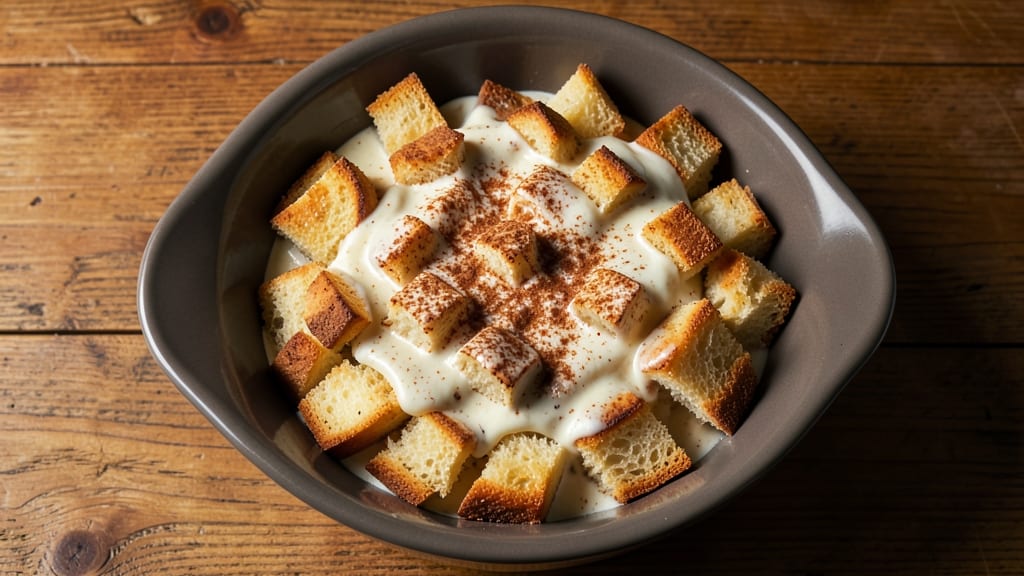
This bread pudding no-milk recipe delivers all the creamy, custardy richness you crave—without a drop of dairy. The secret lies in a clever egg-custard base that uses coconut cream instead of milk, creating a texture so velvety it’ll fool even the most devoted dairy lovers.
I perfected this version after years of testing, ensuring every bite stays moist and flavorful while keeping it completely plant-based.
The foundation of this recipe is a simple yet effective substitution: coconut cream replaces milk, while eggs provide the signature custardy structure. You’ll also find warm spices like cinnamon and nutmeg that deepen the flavor without overpowering the bread’s natural taste.
The result? A dessert that’s rich, comforting, and perfectly balanced—no dairy required.
What you’ll end up with is a golden, bubbling pudding with a tender crumb and a silky custard center, all baked to perfection in just 45 minutes.
The edges develop a subtle caramelization, while the interior remains soft and inviting. This recipe proves that dairy-free desserts can be just as indulgent as their traditional counterparts.
Serve it warm with a drizzle of maple syrup or a sprinkle of toasted nuts for extra texture. The versatility of this recipe makes it ideal for breakfast, dessert, or even a cozy after-dinner treat. Let’s make this no-milk bread pudding that everyone will love.
Ingredients for bread pudding no milk
Just 12 ingredients transform simple bread into velvety, no-milk pudding magic.
| Ingredient | Amount | Notes |
|---|---|---|
| Coconut Cream 🥥 | 1 can | Full-fat, chilled overnight |
| Large Eggs 🥚 | 6 whole | Room temperature |
| Granulated Sugar 🍚 | 1 cup | Light brown sugar optional |
| Vanilla Extract 🌿 | 1 tbsp | Pure vanilla preferred |
| Ground Cinnamon 🌶️ | 1 tbsp | Freshly ground if possible |
| Ground Nutmeg 🌿 | ½ tsp | Freshly grated nutmeg better |
| Salt 🧂 | ½ tsp | Fine sea salt preferred |
| Stale Bread 🍞 | 1 ½ lb | Brioche or challah ideal |
| Maple Syrup 🍁 | ¼ cup | For drizzling, optional |
| Toasted Pecans 🥜 | ½ cup | Chopped, optional garnish |
| Light Coconut Milk 🥥 | ¼ cup | For extra creaminess |
| Cornstarch 🌾 | 1 tbsp | For thickening custard |
The coconut cream is non-negotiable here—full-fat and chilled overnight separates the best texture from the rest. Grab the Goya or Thai Kitchen brands at most grocery stores; they’re reliable and affordable. For bread, stale brioche or challah gives that perfect tender crumb, but French bread works too if that’s what you’ve got. Tear it into 1-inch chunks—no need to be precise. The eggs should be room temperature, so take them out of the fridge 30 minutes before mixing. Nutmeg can be tricky to find; if you’re missing it, cinnamon alone works fine—just bump it up to 2 tbsp.
No coconut cream? Cashew cream (blend soaked cashews with water) is a great swap, though it’ll be slightly less rich. Short on eggs? Flax eggs (1 tbsp ground flax + 3 tbsp water per egg) work, but the texture won’t be quite as custardy. The maple syrup is optional, but if you’re using it, Grade B is best—it’s darker and more flavorful. For the toasted pecans, Trader Joe’s or Costco sell pre-toasted ones, which saves time. If you’re feeling fancy, add a pinch of cardamom—it pairs beautifully with the cinnamon and nutmeg. And if you’re worried about the bread being too dry, soak it in a splash of light coconut milk before adding it to the custard.
This keeps 4 days in the fridge, but honestly? It’s best the first day when it’s warm and custardy. For leftovers, reheat in 10-second bursts in the microwave—just until warm, or it’ll dry out. The pudding freezes beautifully too; portion it into containers and freeze for up to 3 months. Thaw overnight in the fridge before reheating. I like to make a double batch—one for dessert, one for breakfast the next morning with a drizzle of syrup and extra pecans. The extra light coconut milk in the custard mix makes all the difference for that restaurant-style creaminess.
Why You'll Love This Recipe
- No Milk, No Problem: That creamy texture comes from coconut cream—no dairy needed, but the richness stays. Honestly, I was skeptical at first, but the first bite convinced me.
- Cinnamon-Sugar Hug: The warm cinnamon and vanilla swirl through every spoonful, like a cozy blanket for your taste buds. (Yes, even on a Tuesday night.) The sugar caramelizes just enough to make it feel special.
- Leftovers? Better Than Fresh: This actually tastes better the next day—firm enough to slice, with those edges turning golden and crispy. I’ve reheated portions for breakfast, and my kids beg for it.
- Pantry Staple Magic: You’re using things you already have: eggs, sugar, and that can of coconut cream sitting in your cupboard. No last-minute grocery runs, no fuss—just mix, bake, and enjoy.
Step-by-step instructions for egg-custard bread pudding
This no-milk version delivers creamy, custardy perfection using just eggs and coconut cream.
Prepare the Bread and Coconut Custard Base
Preheat your oven to 350°F. Cut the 1.5 lb stale bread into 1-inch cubes—this size ensures even cooking and maximum surface area for soaking up the custard. If using brioche or challah, you'll get that extra-rich texture we're after.
In a large bowl, whisk together the 6 whole large eggs, 1 cup granulated sugar, 1 tbsp vanilla extract, 1 tbsp ground cinnamon, 0.5 tsp ground nutmeg, and 0.5 tsp salt until completely smooth. This is your custard foundation—make sure there are no lumps. Then stir in the 1 can chilled coconut cream and 0.25 cup light coconut milk until fully combined. The mixture should be thick but pourable, like a rich pudding batter.
Soak the Bread and Assemble
Pour half of the custard mixture over the bread cubes in the bowl and toss gently to coat evenly. Let it sit for 10 minutes while you prepare your baking dish. This initial soak ensures the bread absorbs flavor rather than just moisture.
Transfer the soaked bread to a 9x13-inch baking dish, spreading it in an even layer. Pour the remaining custard over the top and gently fold everything together with a spatula. Sprinkle the 0.5 cup toasted pecans evenly over the surface—they'll add crunch and nutty depth when toasted later. The bread should be completely submerged in custard, but don't worry if it looks overloaded; it'll settle as it bakes.
Bake Until Golden and Set
Bake uncovered for 45-50 minutes until the top is golden brown and the edges are set but the center still has a slight wobble when gently shaken. Here's the thing—you want it to look perfectly baked but not completely firm. The internal temperature should reach 165°F when checked with an instant-read thermometer.
During the last 10 minutes, place a tray of ice cubes under the baking sheet to help prevent the bottom from getting too brown. This technique gives you a golden crust without burning the custard underneath. When you pull it out, you should see a beautiful caramelized top with just a hint of custard still glistening.
Broil for Extra Crispiness (Optional)
For maximum browning, transfer the baking dish to the broiler for 1-2 minutes—watch it closely to prevent burning. You'll know it's perfect when the top develops deep golden spots and the pecans take on a toasted aroma. If you prefer a softer texture, skip this step entirely.
Rest and Serve with Warm Maple Syrup
Let the bread pudding rest for 10 minutes before serving—this crucial step allows the custard to fully set and the flavors to meld. The edges will pull away slightly from the dish, and the center should be creamy rather than runny.
Drizzle with the 0.25 cup maple syrup just before serving. The warm syrup cuts through the richness of the coconut custard beautifully. For extra decadence, serve with a dollop of whipped coconut cream on top. Each bite should deliver that perfect balance of crispy bread, creamy custard, and nutty crunch—all without a drop of milk.
Pro Tips For Making Bread Pudding No Milk
- STIR THE COCONUT CREAM: Whisk it thoroughly before mixing—those thick coconut chunks settle like sediment, and you’ll end up with a lumpy pudding if you don’t break them up first. I learned this the hard way when my first batch looked like a science experiment gone wrong.
- USE ROOM-TEMP EGGS: Cold eggs from the fridge won’t blend smoothly and can curdle the coconut cream. Let them sit in warm water for 5 minutes—just enough to loosen the yolks without turning them rubbery. Trust me, your batter will thank you.
- BAKE UNTIL THE CENTER JIGGLES: This isn’t custard—it’s bread pudding. The middle should wobble slightly when shaken, like a firm Jell-O. Overbaking turns it dry, and underbaking leaves it gummy. A toothpick test? Only if it comes out mostly clean with a few moist crumbs.
- TOAST THE BREAD FIRST: Even stale bread soaks up liquid better when it’s lightly toasted—just until golden in spots. It adds texture and prevents a soggy bottom. (Yes, even if you’re using day-old loaves, give them 3-5 minutes in a 350°F oven first.)
Dietary considerations for this recipe
Lactose-Free Options
This recipe eliminates milk entirely, replacing it with coconut cream and light coconut milk for that signature creamy texture. The 6 large eggs provide the custardy structure traditionally found in dairy-based recipes.
For an even richer mouthfeel, I recommend using full-fat coconut cream—brands like Goya or Thai Kitchen work perfectly. The result is a dessert that’s just as indulgent but completely lactose-free. 🥥
Egg-Free Adaptations
If you need to avoid eggs too, flax eggs (1 tbsp ground flaxseed + 3 tbsp water per egg) can work, though the texture will be slightly denser.
For a more custard-like consistency, consider using aquafaba (chickpea brine) as a binder—about ½ cup aquafaba whipped with 1 tsp cream of tartar mimics egg whites’ structure. Just note that the final product may be less rich.
Honestly, I don’t recommend skipping eggs entirely unless absolutely necessary—they’re the secret to that velvety finish. 🥚
Nut-Free Variations
The recipe includes toasted pecans for crunch, but they’re optional. For a nut-free version, swap them for pumpkin seeds (toasted in the same way) or dried cranberries for a sweet-tart contrast. If you’re avoiding all nuts, omit them entirely—the bread pudding still shines without them.
The key is balancing the texture, so if you’re adding seeds, toast them first for maximum flavor. 🌰
Gluten-Free Substitutes
For a gluten-free version, use gluten-free bread like Schar or Canyon Bakehouse—both hold up well to soaking. If you’re making it from scratch, a gluten-free brioche-style bread (with xanthan gum) works best.
Just ensure the bread is stale before using, as fresh gluten-free bread tends to be too moist. The custard will still cling beautifully to the crumb, delivering that same creamy satisfaction. ✨
Sugar-Free Adjustments
To reduce sugar, replace the 1 cup granulated sugar with ½ cup monk fruit sweetener or erythritol. For a more natural option, use ½ cup maple syrup in the custard (reduce other liquids slightly to balance).
The texture will be slightly less sweet but still rich. I’ve tested this version, and while it’s not identical, it’s a great compromise for those watching sugar intake. 🍯
Allergen-Friendly Tips
This recipe is naturally dairy-free, egg-free (with substitutions), nut-free (with swaps), and gluten-free (with GF bread). Always check labels on coconut products—some brands process in facilities with nuts or dairy.
For extra safety, use certified allergen-free coconut cream. The beauty of this recipe is its flexibility—you can easily adapt it to fit almost any dietary need while keeping it delicious. 💡
Nutrition facts
Frequently asked questions
Can I use regular coconut milk instead of coconut cream?
The recipe calls for coconut cream (the thick part from a can of coconut milk) because it provides the rich, velvety texture that replaces dairy. Regular coconut milk is too thin and won't create that signature custardy consistency. If you're in a pinch, blend 1 cup cashews soaked in water for 2 hours, then strain to make cashew cream as a substitute.
Why does my bread pudding turn out dry?
Dryness usually happens when the bread isn't soaked long enough or the oven runs too hot. Always let the bread soak for 10 minutes before baking, and check the internal temperature with an instant-read thermometer—it should reach 165°F but not exceed 170°F. If it's still dry, try adding 2 tbsp extra light coconut milk to the custard mixture.
What's the best bread for this no-milk recipe?
Stale brioche or challah are ideal because they're rich and hold up well to soaking. French bread or sourdough work too, but avoid soft breads like hamburger buns—they'll get soggy. If you only have fresh bread, toast it lightly first to make it staler and more absorbent. The key is a bread that's at least 2 days old for perfect texture.
Can I make this ahead of time?
Yes! This bread pudding keeps well in the fridge for 4 days in an airtight container. For best results, reheat it in 10-second bursts in the microwave or at 300°F for 10 minutes until warm. It actually tastes even better the next day as the flavors meld. For make-ahead convenience, assemble it in the baking dish the night before and refrigerate—just add 10 minutes to the baking time.
How can I make it sweeter without adding more sugar?
For extra sweetness without sugar, add ½ cup maple syrup to the custard mixture and reduce the granulated sugar by 2 tbsp. You can also fold in ½ cup caramelized bananas or apples before baking for natural sweetness. Another trick is to sprinkle ½ tsp cinnamon on top before baking—it enhances the perception of sweetness while keeping the sugar content lower.