
Side Dishes
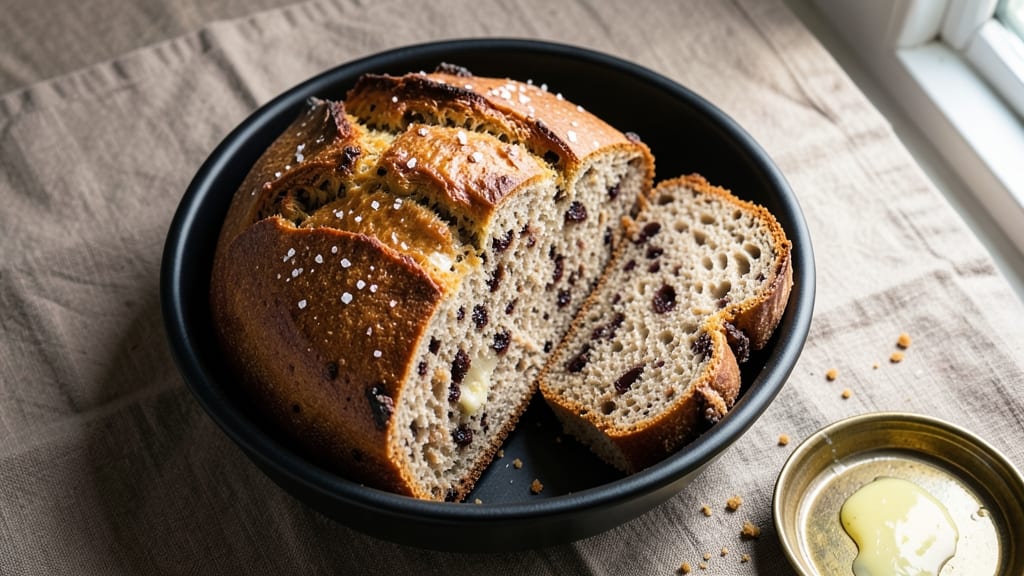
This Guinness brown bread recipe delivers the perfect balance of rich, malty Guinness flavor and a satisfyingly crunchy crust—ideal for pairing with soups, stews, or simply slathered in butter.
The secret lies in swirling the stout through the dough before baking, creating those signature dark streaks while keeping the crumb tender and moist.
Traditional Irish soda bread gets an upgrade here with the deep, slightly bitter notes of Guinness, which adds complexity without overpowering. Unlike dense soda bread, this version has a golden crust that contrasts beautifully with the soft, slightly tangy interior.
The recipe uses simple ingredients—flour, yeast, butter, and of course, Guinness—but the technique ensures professional-quality results every time.
What makes this bread truly special is its versatility. Serve warm with Irish butter for breakfast, alongside hearty beef stews for dinner, or even as a side for corned beef and cabbage.
The aroma alone will fill your kitchen with the comforting scent of freshly baked bread infused with stout, making it a standout addition to any meal.
Baking takes about 45 minutes at 375°F, with minimal prep work—just mix, shape, and let the oven do the rest. The proofing time is quick, and the dough comes together in under 10 minutes, making this a surprisingly easy yet impressive recipe for any occasion.
Ingredients for guinness brown bread
Eight essential ingredients transform into rich, malty Guinness brown bread with a signature crunchy crust.
| Ingredient | Amount | Notes |
|---|---|---|
| All-Purpose Flour 🌾 | 4 cups | Sifted for optimal texture |
| Active Dry Yeast 🍞 | 2 ¼ tsp | Freshly packaged for viability |
| Granulated Sugar 🍚 | ¼ cup | For yeast activation |
| Salt 🧂 | 1 ½ tsp | Diamond Crystal preferred |
| Unsalted Butter 🧈 | ½ cup | Cold and cubed |
| Guinness Draught 🍺 | 1 ½ cups | Chilled for swirling |
| Buttermilk 🥛 | ¾ cup | Room temperature |
| Milk 🥛 | ¼ cup | Whole milk preferred |
| Large Egg 🥚 | 1 whole | Room temperature |
| Cornmeal 🌽 | ¼ cup | For dusting surface |
| Sesame Seeds 🌻 | 1 tbsp | Optional for topping |
| Poppy Seeds 🌻 | 1 tbsp | Optional for topping |
The Guinness is non-negotiable for authentic flavor—Guinness Draught delivers the deepest malt notes, but Guinness Foreign Extra works in a pinch. For the flour, King Arthur or Gold Medal brands yield the best crumb structure. Yeast quality matters: Saf-Instant or Red Star are reliable choices. The butter should be cold when cubbed—this ensures proper development during mixing. If your buttermilk curdles, whisk it vigorously to restore smoothness before using. For the milk, whole milk produces a richer crumb compared to reduced-fat options.
No Guinness on hand? Stout beer or even dark ale can substitute, though the flavor will differ slightly. Using yogurt plus milk mimics buttermilk if needed. For a gluten-free adaptation, King Arthur gluten-free flour blend works well, though texture will vary. The sesame and poppy seeds are optional but add a delightful crunch—toasted seeds enhance flavor further. If your dough feels too sticky, add 1 tbsp more flour incrementally. For a sweeter loaf, increase the sugar to 0.5 cup—though traditional versions rely on the stout's natural malt sweetness.
This dough requires 1 hour of proofing at room temperature, then an additional 30 minutes in the fridge before baking for optimal rise. Store wrapped at room temperature for 2 days or freeze for 3 months. For reheating, wrap in foil and warm at 350°F for 10 minutes. The bread freezes exceptionally well—slice before freezing for easy serving. To enhance the crust, brush with melted butter immediately after baking. The aroma alone makes this worth the effort.
Why You'll Love This Recipe
- No-Knead Magic: I swear by this—just mix the flour, yeast, sugar, and butter, let it rise overnight, and bake. The dough is so forgiving, even if I forget to punch it down.
- Rich, Toasty Depth: That Guinness swirl (even if you skip it) gives this bread a malty, caramelized edge. The butter keeps it tender, but the crust? Crisp enough to hold soup.
- Weeknight & Picnic Star: Toss slices in a lunchbox or serve warm with butter. Honestly, it’s my go-to for breakfast, sandwiches, or even toasted with jam when I’m in a hurry.
- Budget-Friendly Staple: Uses pantry basics—no fancy ingredients—and a single loaf stretches for days. Freeze half for lazy mornings; the flavor only gets better as it sits.
Step-by-step instructions for Guinness brown bread
This method delivers a perfectly textured loaf with deep Guinness flavor and a crackly crust.
Activate the Yeast and Prepare the Dough Base
In a small bowl, combine the 1.5 cups Guinness Draught, 0.25 cup Granulated Sugar, and 2.25 tsp Active Dry Yeast. Let this mixture sit for 5-10 minutes until it develops a frothy, bubbly surface—this confirms the yeast is active. The Guinness should smell rich and slightly malty, not flat or sour.
In a large mixing bowl, whisk together the 4 cups All-Purpose Flour and 1.5 tsp Salt. Create a well in the center and pour in the activated yeast mixture, 0.75 cup Buttermilk, 0.25 cup Milk, and 1 whole Large Egg. Using a wooden spoon or dough whisk, gradually incorporate the dry ingredients until a shaggy dough forms. The dough will be sticky but manageable—this is normal due to the Guinness and buttermilk.
Incorporate Butter and Develop the Dough
Cut the 0.5 cup Unsalted Butter into small cubes and add them to the dough one at a time. Gently work the butter into the dough using your hands or a dough scraper, pressing and folding until fully incorporated. The butter should begin to coat the dough evenly, creating a slightly glossy surface. If the dough feels too stiff, add 1 tablespoon of Milk at a time until it reaches a soft, pliable consistency.
Transfer the dough to a lightly floured surface and knead for 8-10 minutes by hand or 5-6 minutes in a stand mixer with a dough hook. Knead until the dough is smooth, elastic, and springs back slowly when pressed. The Guinness will make the dough slightly denser than traditional bread dough, so don’t over-knead—just until it holds its shape. Shape the dough into a round loaf and place it back in the mixing bowl.
First Rise and Prepare for Shaping
Cover the bowl with a damp kitchen towel or plastic wrap and let the dough rise in a warm place for 1-1.5 hours, or until it has nearly doubled in size. The dough should feel light and airy when pressed gently—it should leave a slight indentation but not collapse completely. If the dough rises too quickly (within 45 minutes), it may need a cooler environment to prevent overproofing.
While the dough rises, preheat your oven to 375°F. Line a baking sheet with parchment paper and sprinkle evenly with 0.25 cup Cornmeal. This will create a crispy, golden crust on the bottom of the loaf. Once the dough has risen, turn it out onto a lightly floured surface and gently shape it into a round loaf, about 3 inches tall. Place it seam-side up on the prepared baking sheet.
Create the Guinness Swirls and Bake
Using a sharp knife or bench scraper, cut 4-6 vertical slits through the top of the dough, about 1 inch deep. Gently press the sides of the slits outward to create a slight well in the center of each. Pour 0.5 cup of the remaining Guinness Draught (reserved from the original 1.5 cups) into the center of the loaf. Let it sit for 5 minutes to absorb slightly.
Bake the loaf for 45-50 minutes until the top is deep golden brown and crackly, and the internal temperature reaches 190-195°F when measured with an instant-read thermometer. The bread should sound hollow when tapped on the bottom. If the top browns too quickly, loosely cover it with foil for the last 10-15 minutes of baking to prevent over-browning.
Cool and Finish with Seeds
Remove the loaf from the oven and let it cool on the baking sheet for 10 minutes. Transfer it to a wire rack to cool completely. The bread will continue to firm up as it cools, and the interior will develop a tender, moist crumb with pockets of Guinness-infused richness.
Once cooled, brush the top of the loaf with a little Milk (if desired) and sprinkle evenly with 1 tbsp Sesame Seeds and 1 tbsp Poppy Seeds. These seeds add a subtle nutty crunch that contrasts beautifully with the soft, chewy interior. Serve warm or at room temperature, sliced into thick pieces for the best texture.
Pro Tips For Making Guinness Brown Bread
- Bloom the Yeast First: Skip mixing yeast straight into dry flour—it’s a rookie move. Proof it in warm Guinness (about 105°F/40°C) with a pinch of sugar for 5-10 minutes until frothy. This guarantees your bread rises right; I learned this the hard way after baking a dense brick once.
- Butter Must Melt Slowly: Don’t toss cold butter chunks into the dough and hope for the best. Warm the butter to room temp (68°F/20°C) first, then cut it into small cubes. This ensures even distribution—no greasy patches or uneven texture. (Yes, even if you’re impatient like me.)
- Don’t Overmix the Dough: Mix just until the flour is incorporated—about 2 minutes by hand or 3-4 with a dough hook. Overworking it develops gluten too much, and your bread turns out tough. The dough should be sticky but cohesive; resist the urge to add extra flour mid-mix.
- Steam the First 15 Minutes: Place a metal tray on the oven rack before baking, then pour boiling water into it when the bread goes in. The steam creates that signature crackly crust and keeps the crumb soft. I was skeptical until I tried it—now it’s non-negotiable.
Dietary considerations for this dish
Gluten-Free Adaptation
For a gluten-free version, replace the 4 cups all-purpose flour with 3 cups King Arthur gluten-free flour blend and add 1 tsp xanthan gum to improve elasticity. The dough will be denser, so reduce the Guinness Draught to 1 cup and increase the buttermilk to 1 cup for moisture.
Proofing time may extend to 2 hours, and baking at 350°F for 55-60 minutes prevents over-browning. 🌾
Dairy-Free Modifications
Swap the butter for ½ cup dairy-free margarine (like Earth Balance) and use 1 cup unsweetened almond milk instead of buttermilk and milk. For richness, add 2 tbsp ground flaxseed mixed with 6 tbsp water to replace the egg.
The texture remains tender, though slightly less buttery. Always check labels for hidden dairy in substitutes.
Lower-Carb Option
Reduce the flour to 3 cups and add ½ cup finely ground almond flour for a lower-carb version. Replace the sugar with 2 tbsp monk fruit sweetener and use ½ cup unsweetened applesauce instead of buttermilk.
The loaf will be denser but still packed with Guinness flavor. Proofing time stays the same, but baking at 375°F for 40 minutes ensures a crisp crust. 🥖
Vegan Considerations
For a vegan loaf, use ½ cup nutritional yeast to replace the egg and ½ cup coconut milk instead of buttermilk. Substitute the butter with ½ cup vegan butter (like Miyoko’s) and ensure the yeast is vegan-certified.
The flavor remains rich, though the texture will be slightly denser. Brush the baked loaf with coconut oil instead of milk for finishing.
Nut-Free Seeds
Skip the sesame and poppy seeds or replace them with toasted pumpkin seeds or sunflower seeds for a nut-free option. Toast the seeds in a dry pan for 2-3 minutes until fragrant, then sprinkle over the cooled loaf.
This adds crunch without allergens while keeping the presentation elegant. Always check seed labels for cross-contamination warnings. ✨
Nutrition facts
Frequently asked questions
Can I substitute Guinness with another beer?
While Guinness delivers the signature malty depth, you can use stout or dark ale in a pinch. For best results, choose a beer with similar roasted notes—avoid light lagers or pilsners, which won’t replicate the rich flavor. Adjust the amount to 1.5 cups total (including swirls) to maintain moisture balance.
Why does my dough feel too sticky?
The Guinness and buttermilk create a naturally sticky dough—this is normal! If it’s unmanageable, add 1 tbsp flour at a time until pliable. Avoid over-flouring, as this can make the crumb dense. Work quickly to minimize gluten development, which makes the dough even stickier.
How do I store leftover Guinness bread?
Wrap cooled slices in plastic wrap and store at room temperature for 2-3 days or freeze for 3 months. For reheating, wrap slices in foil and warm at 350°F for 5-7 minutes to restore freshness. The texture stays moist when properly stored—freezing works best for long-term preservation.
Can I make this bread without an egg?
Yes! Replace the 1 egg with 2 tbsp ground flaxseed + 6 tbsp water (let sit for 5 minutes to gel). For a dairy-free version, also swap butter for vegan margarine and buttermilk for unsweetened almond milk + 1 tbsp vinegar. The structure will hold, though the crumb may be slightly denser.
What’s the best way to serve this bread?
Slice thickly and serve warm with Irish butter, cheddar cheese, or alongside beef stews and corned beef. The rich stout flavor pairs beautifully with savory dishes. For breakfast, toast slices and top with honey or jam—the malty notes balance sweetness perfectly.