
Side Dishes
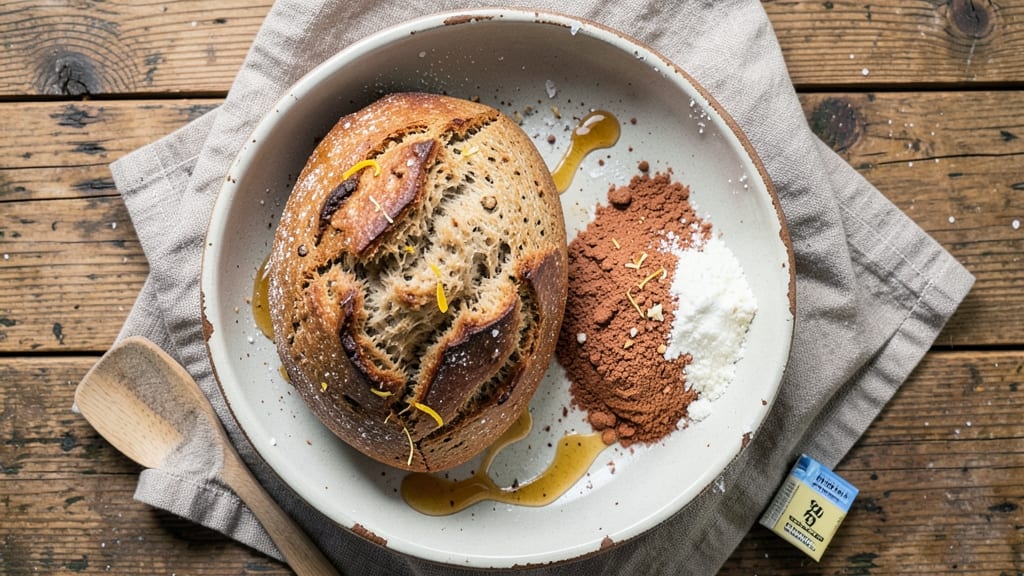
The 50/50 whole wheat bread recipe transforms simple pantry staples into artisanal loaves with a crisp golden crust and tender interior. This method blends whole wheat flour with all-purpose flour for perfect texture—no kneading required. The hands-off approach makes it ideal for busy schedules while delivering bakery-quality results.
What sets this recipe apart is its balance—whole wheat flour adds nutrition and depth, while all-purpose flour ensures a light, airy crumb. The dough develops naturally through a slow rise, creating flavor without effort. A simple scoring technique before baking guarantees that signature golden crust and even oven spring.
By the time you pull this loaf from the oven, you'll have a crispy, aromatic bread with a satisfying crunch and soft interior. The flavor is rich yet approachable, making it perfect for sandwiches, toast, or serving alongside soups.
This recipe proves homemade bread doesn't require complicated techniques—just patience and precision.
Store leftovers at room temperature for 2-3 days or freeze for up to 3 months. For variations, try adding seeds or herbs to the dough for extra texture and flavor. Let's get started on creating your perfect loaf.
Ingredients for 50 50 whole wheat bread
Simple flours meet magic in this hands-off 50/50 loaf—golden crust, tender crumb, zero fuss.
| Ingredient | Amount | Notes |
|---|---|---|
| All-Purpose Flour 🌾 | 4 cups | Sifted for even texture |
| Whole Wheat Flour 🌾 | 4 cups | Unbleached preferred for flavor |
| Active Dry Yeast 🍞 | 2 ¼ tsp | Ensure it's fresh (test in warm water) |
| Granulated Sugar 🍚 | ¼ cup | White or brown sugar |
| Instant Potato Flakes 🥔 | ½ cup | For tender, airy crumb |
| Salt 🧂 | 2 tsp | Diamond Crystal preferred |
| Extra-Virgin Olive Oil 🫒 | ¼ cup | High quality for flavor |
| Warm Water 💧 | 1 ½ cups | 110°F for yeast activation |
| Honey 🍯 | 1 tbsp | For yeast feeding |
| Cornmeal 🌽 | ½ cup | For dusting baking sheet |
| Large Egg 🥚 | 1 whole | For egg wash |
| Sesame Seeds 🌻 | 2 tbsp | Optional for topping |
The flours are the foundation, so King Arthur or Bob's Red Mill are my go-tos—they bake consistently. Whole wheat flour varies wildly by brand, so stick with reliable names—none of that mystery bulk bin stuff unless you're sure it's high-quality. Instant potato flakes might seem odd, but they're the secret to that bakery-style softness. Bob's Red Mill makes the best I've found, and it keeps for months in your pantry. Yeast is non-negotiable—if it doesn't foam in warm water within 5 minutes, toss it and start over. That's your dough's future we're talking about.
No instant potato flakes? Substitute with 1 tbsp baking powder—it won't be identical but works in a pinch. Swapping whole wheat for spelt flour? Use the same ratio, but expect a denser crumb. Olive oil can be swapped for melted butter (same amount), though it'll taste slightly richer. The honey is crucial—it's what feeds the yeast during that first rise. Agave nectar works too if you're avoiding honey. And if you're feeling fancy, add 1 tbsp of toasted sesame oil to the dough for nutty depth.
This dough is a patient's game—let it rise at least 2 hours (overnight in the fridge is ideal). The longer it rests, the more flavor develops. Shape it gently but firmly; you're creating structure for that oven spring. For scoring, use a razor blade or sharp knife—anything less will leave uneven cuts. The loaf keeps best in a bread box or paper bag at room temp for 2-3 days. Freeze slices wrapped in plastic for up to 3 months—toast straight from frozen for crispy results.
Why You'll Love This Recipe
- No Yeast Hassle: I mix the dough, let it rise once, then bake—no punching down, no waiting hours. The potato flakes add just enough moisture to keep it tender without extra fuss, and honestly? My bread maker does most of the work.
- Rich, Hearty Crunch: That 50/50 flour split gives it a satisfying bite, while the sugar and yeast create a subtle sweetness. It’s not dense or heavy—just sturdy enough for sandwiches but still light enough to enjoy on its own.
- Meal Prep Magic: Slice it fresh, toast it later. I freeze half the batch and pull out slices for quick PB&Js or grilled cheese when I’m too tired to bake. The whole wheat keeps it filling, so it actually feeds me, not just my hunger pangs.
- Budget-Friendly Staple: Whole wheat flour and potato flakes stretch my grocery dollars, and this recipe makes two loaves. I’ve used it for breakfast, lunch, and even as a side for dinner—no waste, just versatility. (Yes, even on a Tuesday night.)
Step-by-step instructions for 50/50 whole wheat bread
This bread delivers that perfect golden crust and tender crumb without the fuss—just follow these precise steps.
Activate the Yeast for Maximum Rise
In a small bowl, combine the 1.5 cups warm water (tested at 110°F), 1 tbsp honey, and 2.25 tsp active dry yeast. Let it sit for 5-10 minutes until bubbly and foamy. This step ensures your yeast is alive and ready to work its magic—if it doesn't bubble, start over with fresh yeast.
While waiting, whisk together the 4 cups all-purpose flour, 4 cups whole wheat flour, 0.25 cup granulated sugar, 0.5 cup instant potato flakes, and 2 tsp salt in a large bowl. The potato flakes will create a tender, airy crumb that balances the heartiness of the whole wheat. Sift the dry ingredients lightly to aerate the flour and prevent dense bread.
Mix and Knead for Perfect Texture
Make a well in the center of the dry ingredients and pour in the yeast mixture along with the 0.25 cup extra-virgin olive oil. Using a wooden spoon or dough whisk, gradually incorporate the wet ingredients into the dry until a shaggy dough forms. The olive oil adds richness and helps create that golden crust we're after.
Transfer the dough to a lightly floured surface and knead for 8-10 minutes until smooth and elastic. You'll know it's ready when it springs back slowly when poked. If the dough feels too sticky, add flour 1 tablespoon at a time—but don't overdo it, or you'll compromise the bread's texture. The goal is a dough that's soft but not tacky.
First Rise for Optimal Flavor Development
Lightly grease a large bowl with olive oil, place the dough inside, and cover with a damp kitchen towel. Let it rise in a warm place for 1-1.5 hours, or until it has nearly doubled in size. The dough should feel light and airy when pressed gently—this indicates proper fermentation.
Here's the thing—whole wheat dough rises more slowly than all-purpose, so patience is key. If your kitchen isn't warm enough, place the bowl near a slightly warm oven (with the light on) or on top of your fridge's warming drawer. The ideal temperature for rising is 75-80°F, and you'll see that beautiful, puffy transformation when it's ready.
Shape and Second Rise for Structure
Punch down the risen dough gently to release air, then divide it into 4 equal portions. Shape each into a smooth, round loaf about 8 inches long. Place them on a parchment-lined baking sheet, seam-side up, and cover loosely with the towel. Let them rise again for 30-45 minutes until they've puffed up noticeably.
While the dough rises, preheat your oven to 375°F. This second rise is crucial for developing that open crumb structure we want in our bread. If your kitchen is cold, you might need the full 45 minutes—the dough should look noticeably larger and feel springy when pressed lightly.
Bake to Golden Perfection with Crispy Crust
Brush the loaves lightly with the beaten 1 whole large egg (discard the shell) for a beautiful golden finish. Sprinkle with 2 tbsp sesame seeds if using, then bake for 30-35 minutes until the internal temperature reaches 190-195°F and the crust is deep golden brown. The bread should sound hollow when tapped on the bottom.
For that professional bakery look, I like to sprinkle 0.5 cup cornmeal on the baking sheet before adding the dough. This creates a crispy, golden crust that contrasts beautifully with the tender interior. If the tops brown too quickly, tent loosely with foil after 20 minutes to prevent over-browning while the center finishes baking.
Pro Tips For Making 50 50 Whole Wheat Bread
- MEASURE FLOUR BY WEIGHING: I learned this the hard way—cupping whole wheat flour leads to a dense, brick-like loaf. Use a kitchen scale for both flours (AP and whole wheat) to hit that perfect 50/50 ratio by weight, not volume. Whole wheat packs differently, and that throws off hydration.
- HYDRATE THE POTATO FLAKES FIRST: Skip the temptation to toss instant potato flakes dry into the dough. Mix them with the warm water first—let them sit for 2-3 minutes to fully rehydrate. This guarantees even moisture distribution and prevents gummy spots in the crumb.
- LET THE DOUGH RISE UNTIL IT’S Almost Too Much: Whole wheat dough rises slower and collapses easier. Stop when it’s puffed but still has a slight dip in the center when pressed gently. Overproofing is the fast track to a dense, flat loaf—don’t let it sit until it looks ready.
- USE COLD WATER FOR THE YEAST: I was skeptical until I tried it: dissolve the yeast in cold water (around 85°F) instead of warm. The slower activation gives you more control over the rise, especially with whole wheat’s tendency to absorb moisture unevenly. Your dough will thank you with better structure.
Troubleshooting perfect results
Dense Dough Fix
If your dough feels too dense or heavy after mixing, you likely need more gluten development. Knead for an extra 2-3 minutes or let it rest for 10 minutes before shaping—this relaxes the gluten.
Whole wheat flour absorbs more water, so if the dough feels sticky, add just 1 tbsp flour at a time until it's smooth but not dry. Overworking it can make it tough, so stop when it springs back slowly when poked. 💪
Flat or Puffy?
A loaf that rises unevenly or stays flat often means the yeast didn’t activate properly. Double-check your water temperature—it should be 110°F (like warm bathwater). If the dough didn’t double in size during the first rise, your yeast may be dead.
For future bakes, test yeast by mixing 1 tsp yeast + 2 tbsp warm water—it should foam in 5 minutes. Also, ensure your kitchen is warm enough (75-80°F) for rising. 🌡️
Pale Crust Woes
For a pale crust despite baking, your oven might be too hot or the bread could be underbaked. Preheat your oven for at least 30 minutes before baking, and use an oven thermometer to confirm it’s 375°F.
Brush the loaves with egg wash twice—once before baking and again halfway through—for extra browning. If the crust still won’t darken, broil for 1-2 minutes at the end (watch closely!). 🔥
Gummy or Raw Center
A gummy center usually means the bread didn’t bake long enough. Use an instant-read thermometer to check the internal temperature—it should reach 190-195°F. If your oven runs hot, reduce the temperature to 350°F and bake for 5-10 minutes longer.
For even cooking, rotate the baking sheet halfway through. If you’re short on time, finish baking with the oven light on (it adds 25°F of heat). ⏱️
Dry or Crumbly Texture
Over-kneading or using too much flour can make bread dry. Stick to the 8-10 minutes kneading time and avoid adding extra flour unless absolutely necessary. For a softer crumb, ensure your oven is fully preheated and the dough is at room temperature before shaping.
If the bread turns out dry, try adding 1 tbsp extra olive oil to the dough next time for moisture. 💧
Sticky Dough Nightmare
Sticky dough is normal with whole wheat flour, but it shouldn’t be impossible to handle. Wet your hands slightly and use a dough scraper to lift and fold the dough gently.
If it’s still too sticky, let it rest for 15-20 minutes covered with a damp towel—this helps the gluten relax. For shaping, roll the dough into a ball and tuck the edges under firmly.
If all else fails, dust your work surface with semolina or rice flour instead of all-purpose flour for less stickiness. 🧤
Nutrition facts
Frequently asked questions about 50/50 whole wheat bread
Why use a 50/50 blend of whole wheat and all-purpose flour?
This ratio balances nutrition and texture—whole wheat adds fiber and hearty flavor while all-purpose creates that tender, airy crumb. Pure whole wheat bread often turns dense, but the 50/50 mix keeps it light and easy to slice. The potato flakes in this recipe further enhance the texture for that bakery-style softness.
Can I make this bread without instant potato flakes?
Yes! Substitute with 1 tbsp baking powder for similar results, though the crumb won't be identical. The potato flakes create steam during baking, which is key for that open, airy texture. For a richer flavor, you could also add 1 tbsp vital wheat gluten to compensate for the missing structure.
How long can I keep this bread fresh?
Store at room temperature in a bread box or paper bag for 2-3 days to maintain freshness. For longer storage, freeze sliced bread wrapped in plastic for up to 3 months. Toast straight from frozen for crispy results—no thawing needed! The whole wheat flour helps preserve moisture better than 100% all-purpose bread.
What's the best way to test if my yeast is active?
Mix 1 tsp yeast + 2 tbsp warm water (110°F) and wait 5 minutes. If it foams vigorously, your yeast is alive and ready. No bubbles? Toss it and start fresh—dead yeast means your dough won't rise properly. Always check yeast freshness before mixing, especially if your pantry is cool.
Can I add seeds or herbs to this dough?
Try 2 tbsp sesame seeds, sunflower seeds, or chopped rosemary for extra flavor. Fold them in during the final kneading stage—just reduce the all-purpose flour by 1 tbsp to maintain dough consistency. For herbs, use 1 tbsp finely chopped (like thyme or oregano) and mix gently to avoid overpowering the bread.