
Side Dishes
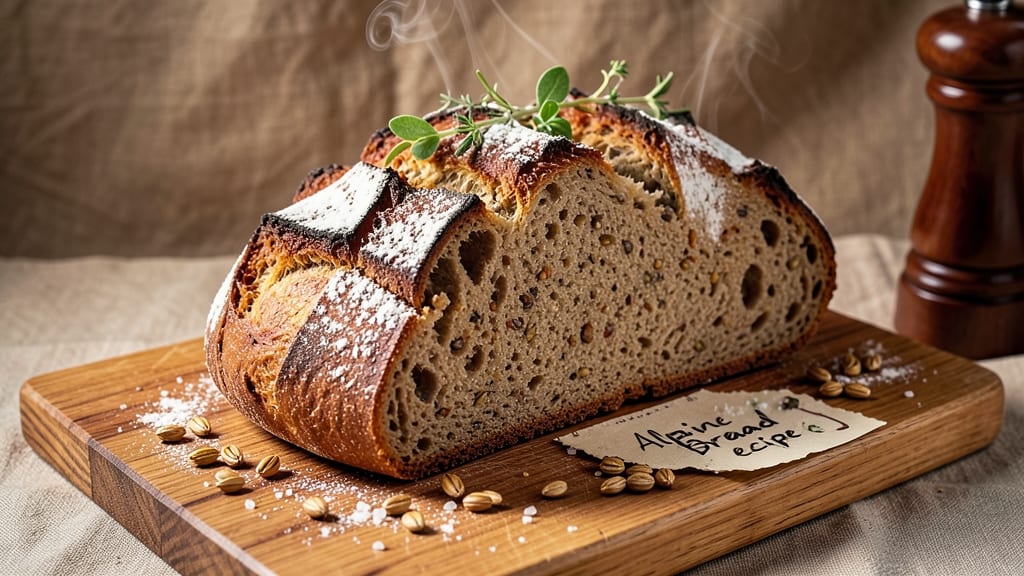
This Alpine bread recipe brings the rustic charm of the Swiss mountains to your kitchen with its signature golden crust and airy, crispy crumb. 🌟 The secret lies in a blend of traditional Alpine ingredients like rye flour and barley malt, which create a rich, nutty depth that sets it apart from standard bread recipes.
What makes this recipe truly special is the steam-infused baking method, which mimics the traditional Alpine oven techniques. The dough undergoes a slow fermentation, developing complex flavors and a light, open crumb.
Whether you're shaping it into a classic round loaf or a rustic braided style, the result is always impressive.
Once baked, you'll be rewarded with a crusty exterior that crackles with every bite and a tender interior that's perfect for soaking up soups or pairing with hearty Alpine dishes. The aroma alone will transport you to the Swiss countryside, making it a centerpiece for any meal.
This recipe is designed to be foolproof for home bakers, with clear instructions for fermentation, shaping, and baking. Whether you're using a traditional sourdough starter or a modern yeast-based approach, the result is consistently delicious. Let's get started!
Ingredients for alpine bread
Four loaves of Alpine magic start with these rustic ingredients—each one chosen for that signature crusty crumb and nutty depth.
| Ingredient | Amount | Notes |
|---|---|---|
| Bread Flour 🌾 | 3 ½ cups | High protein for structure |
| Rye Flour 🌾 | 1 cup | For Alpine nutty depth |
| Barley Malt Powder 🌾 | ¼ cup | Traditional Alpine flavor |
| Active Dry Yeast 🍞 | ¼ oz | Or 2 packets instant yeast |
| Granulated Sugar 🍚 | ½ tbsp | Feeds yeast for rise |
| Salt 🧂 | 1 ½ tsp | Diamond Crystal preferred |
| Whole Milk 🥛 | ¾ cup | Warmed to 110°F |
| Water 💧 | 1 ½ cups | Lukewarm, filtered preferred |
| Unsalted Butter 🧈 | ½ cup | Cold, cubed for lamination |
| Cornmeal 🌽 | ¼ cup | For dusting parchment |
| Ice Water ❄️ | ½ cup | For dough stiffness |
| Coarse Sea Salt 🧂 | 1 tbsp | For final crust |
The rye flour and barley malt are non-negotiable for that authentic Alpine flavor. King Arthur or Bob's Red Mill are my go-tos for quality—both have great rye blends. Barley malt powder can be tricky to find, but Amazon or specialty baking stores usually stock it. If you can't find malt powder, a pinch of coffee grounds adds depth in a pinch (trust me, it works). The bread flour should be high-protein—King Arthur or Caputo are perfect. For the yeast, Saf-Instant is foolproof, but traditional active dry works too if you proof it in warm milk first.
No rye flour? Substitute half with whole wheat, but expect a denser crumb. Barley malt powder missing? Malt vinegar or dark beer can mimic the maltiness—just a teaspoon or two. The milk can be any kind, but whole gives the best flavor. For a dairy-free version, use unsweetened almond milk warmed to 110°F. The butter is key for that tender crumb—European-style butter like Plugrá melts beautifully. And if you're short on time, pre-fermented dough from a sourdough starter works wonders for flavor development.
This dough is a beast—it needs time. Shape it, let it rest, then bake it. Store any leftovers in a paper bag at room temperature for up to 3 days, or freeze for 3 months. The crust stays crispy if you reheat slices in a 350°F oven for 5 minutes. For extra crunch, brush warm bread with melted butter right after baking. And if you're making a big batch, double the recipe—it's worth it.
Why You'll Love This Recipe
- No-Knead Magic: The barley malt powder does all the work—no standing at the counter, no aching arms. Just mix, let it rise overnight, and bake while you sleep. That’s not a dream; it’s how I actually make bread.
- Earthy Crusty Gold: The rye flour gives it a deep, nutty bite that pairs perfectly with butter, while the barley malt adds a subtle sweetness. You’ll want to eat it straight from the oven, crust still crackling—trust me, I’ve tried.
- Weeknight Lifesaver: Slice it for toast in the morning, pack it for lunch, or use it to mop up soup. It’s my go-to when I forget to buy bread, and honestly? It’s better than store-bought every time.
- Budget-Friendly Staple: A single batch costs less than two loaves from the bakery, and it lasts forever if you freeze slices. My wallet and my pantry thank me every time I pull this dough together.
Step-by-step instructions for Alpine bread
Let's bake a rustic Alpine loaf with its signature crispy crust and airy crumb.
👨🍳 Step 1: Activate the Yeast and Mix Wet Ingredients
In a large mixing bowl, combine the 1.5 cups water and 0.5 tbsp granulated sugar. Sprinkle the 0.25 oz active dry yeast on top and let it sit for 5-10 minutes until it becomes foamy. This tells you your yeast is alive and ready to work its magic.
In a separate small bowl, warm the 0.75 cup whole milk to 110°F—just warm enough to dissolve the 0.5 cup unsalted butter cubes. The milk should feel pleasantly warm to the touch, not hot. Add this milk-butter mixture to the yeast mixture along with the 1.5 tsp salt and 0.25 cup barley malt powder. Stir gently to combine—this forms your flavorful wet base.
👨🍳 Step 2: Combine Dry Ingredients and Form the Dough
In a separate bowl, whisk together the 3.5 cups bread flour, 1 cup rye flour, and remaining 0.25 cup barley malt powder (if any was left). This blend gives Alpine bread its signature nutty depth and chewy texture. Gradually add the dry ingredients to your wet mixture, stirring with a wooden spoon until a shaggy dough forms.
Transfer the dough to a lightly floured surface and knead for 8-10 minutes until smooth and elastic. You'll know it's ready when it springs back when poked gently. If the dough feels too sticky, add 1-2 tablespoons of the 0.5 cup ice water at a time until it comes together nicely. The ice water helps stiffen the dough for better lamination later.
🥘 Step 3: First Rise and Laminate for Alpine Texture
Shape the dough into a rectangle about 12x8 inches on a floured surface. Using a rolling pin, roll it out to about ¼-inch thickness. Sprinkle ¼ of the 0.5 cup unsalted butter (about 2 tablespoons) evenly over the dough, leaving a ½-inch border uncovered. Fold the sides inward, then fold the top and bottom down like an envelope.
Repeat this process two more times, each time using the remaining butter and folding the dough in thirds. After each fold, let the dough rest for 10 minutes before rolling and folding again. This lamination creates the signature flaky layers of Alpine bread. After the final fold, let the dough rest for 1 hour covered with a damp towel until it nearly doubles in size.
🔥 Step 4: Shape and Final Proof
After the first rise, punch down the dough and divide it into 4 equal pieces (about 8 oz each). Shape each piece into a 12-inch round by pressing the edges inward to create a slight well in the center. This shape helps create the bread's distinctive open crumb structure.
Place the shaped dough rounds on a parchment-lined baking sheet, cover with a damp towel, and let them proof for 1-1.5 hours until they've risen to about 1.5 times their original size. The dough should look puffy and slightly jiggly when gently touched. While they proof, preheat your oven to 425°F with a Dutch oven inside for 30 minutes to get it piping hot.
🔥 Step 5: Bake for Crispy Crust and Airy Crumb
Carefully transfer the Dutch oven to a stovetop burner (use oven mitts—it's hot!). Brush the tops of the dough rounds with a little water, then sprinkle generously with 1 tbsp coarse sea salt. Cover the Dutch oven and bake for 25 minutes. Then remove the lid and bake for another 15-20 minutes until the bread is deep golden brown.
You'll know it's done when the crust sounds hollow when tapped and has a beautiful deep golden color. Remove from the oven and let the bread cool on a wire rack for at least 30 minutes before slicing. The interior should be airy with an open crumb structure, while the exterior should be crispy and crackly—just like traditional Alpine bread.
Pro Tips For Making Alpine Bread
- Weigh Your Flours: Alpine bread’s texture hinges on the rye-to-bread flour ratio—don’t eyeball it. A kitchen scale guarantees consistency, especially when rye’s density throws off volume measurements. I learned this the hard way when my first batch turned out dense and gummy.
- Bloom the Malt Early: Mix the barley malt powder with warm water before adding yeast—this activates its enzymes right away. Skip this, and you’ll miss the subtle sweetness and better rise. (Yes, even if you’re impatient like me.)
- Don’t Over-Knead the Dough: Alpine bread’s rustic charm comes from its chewy, slightly dense crumb—overworking it will toughen the texture. Knead just until the rye flour stops sticking to your hands (about 8-10 minutes by hand). More isn’t better here.
- Use a Dutch Oven for Crust: If you don’t have one, line a heavy pot with foil and preheat it with boiling water for 5 minutes—this mimics the steam trap. The crust will still be crisp, even if it’s not perfect. (Your future self will thank you.)
Regional styles of this dish
Swiss Mountain Style
In the Swiss Alps, bread isn't just food—it's tradition. The classic Swiss Alpine loaf uses 100% rye flour with barley malt for that deep, caramelized sweetness. I've baked this version with whole milk and cold butter for a dense, hearty texture perfect for pairing with Swiss raclette or fondue.
The key is a longer fermentation—let it rise for 24 hours in the fridge before baking for maximum flavor development. 🏔️
Austrian Rustic Twist
Austrian bakers take Alpine bread to the next level with sunflower and flax seeds pressed into the dough before baking, creating a beautiful textured crust. I like to add 1 tbsp sunflower seeds and 1 tbsp flaxseeds to the dough after the first rise.
Shape it into a long oval instead of rounds for a more rustic look. Brush the baked loaf with melted butter and sprinkle with extra coarse salt for that authentic Austrian touch. The seeds add crunch and a nutty contrast to the soft interior.
Italian Alpine Fusion
Northern Italian regions like Trentino blend Alpine techniques with Italian flair. Their version replaces rye flour with semolina and adds rosemary and black pepper to the dough.
I use 1 tbsp finely chopped fresh rosemary and ½ tsp cracked black pepper in the dough, then shape it into a braided loaf for a stunning presentation. Bake it in a clay baking stone for an extra crispy crust.
This fusion works beautifully with Italian sausage or truffle oil drizzled on top after baking. 🌿
German Black Forest Adaptation
In Germany's Black Forest region, Alpine bread gets a dark, dense twist with melted black chocolate and orange zest in the dough. Add 2 oz dark chocolate (70% cocoa) melted into the warm milk mixture and 1 tsp orange zest to the dry ingredients.
Shape into small round rolls and bake until the crust is deep brown. These are perfect for Christmas markets or as a dessert bread with a dusting of powdered sugar. The chocolate adds richness that pairs perfectly with mulled wine.
Modern Sourdough Alpine
For a contemporary take, replace commercial yeast with a sourdough starter for tangy depth. Use 1 cup active sourdough starter (fed and bubbly) instead of the yeast. Let the dough ferment at room temperature for 8 hours, then cold-proof overnight. The result is a lighter crumb with complex flavors.
I love adding 1 tsp honey to the wet ingredients for extra sweetness that caramelizes beautifully during baking. This version works perfectly for artisan sandwiches or as a side with Alpine cheeses.
Gluten-Free Alpine Option
For those avoiding gluten, blend 1 cup gluten-free bread flour, ½ cup almond flour, and ½ cup tapioca starch to replace the wheat flours. Use 1 tsp xanthan gum to improve elasticity. The dough will be stickier, so work quickly and use extra cornmeal when shaping.
Bake in a preheated Dutch oven for 10 minutes longer than regular dough to ensure full gluten-free flour hydration. The texture won't be identical, but it's still delicious with butter and jam for breakfast. 💪
Nutrition facts
Frequently asked questions
What makes Alpine bread different from regular bread?
Alpine bread stands out with its crusty exterior and open, airy crumb, thanks to ingredients like rye flour and barley malt that add nutty depth. The lamination technique with cold butter creates flaky layers, while the steam-infused baking in a Dutch oven mimics traditional Alpine ovens. This gives it a rustic, hearty texture perfect for soups or pairing with Alpine cheeses.
Can I make Alpine bread without a Dutch oven?
Yes! If you don't have a Dutch oven, use a baking stone or cast-iron skillet and create steam by placing a tray of boiling water in the oven during the first 15 minutes of baking. For extra crustiness, brush the baked loaf with melted butter right after removing it from the oven. The texture won't be identical, but it'll still be delicious.
Why does my Alpine bread come out dense instead of airy?
Dense bread usually means the dough didn't ferment long enough or wasn't kneaded properly. Ensure your dough rises until it nearly doubles in size (1-1.5 hours for this recipe). Also, don't skip the lamination steps—the butter folds create those signature flaky layers. If the dough feels too sticky, add ice water gradually to stiffen it before shaping.
How long can I store baked Alpine bread?
Store wrapped in a paper bag at room temperature for 3-4 days—it stays fresh longer than plastic! For longer storage, freeze the bread for up to 3 months. To reheat, warm slices in a 350°F oven for 5 minutes or toast in a dry pan for a crispy crust. The flavor actually improves over 24 hours as the crust firms up.
What's the best way to use leftover Alpine bread?
Toast slices for French toast with eggs and cinnamon, or make croutons by cubing and baking at 375°F for 10 minutes with olive oil and herbs. For a sweet twist, layer with butter and jam or use as a base for open-faced sandwiches with Alpine cheeses like Gruyère. The crusty texture makes it perfect for dipping in soups too!