
Side Dishes
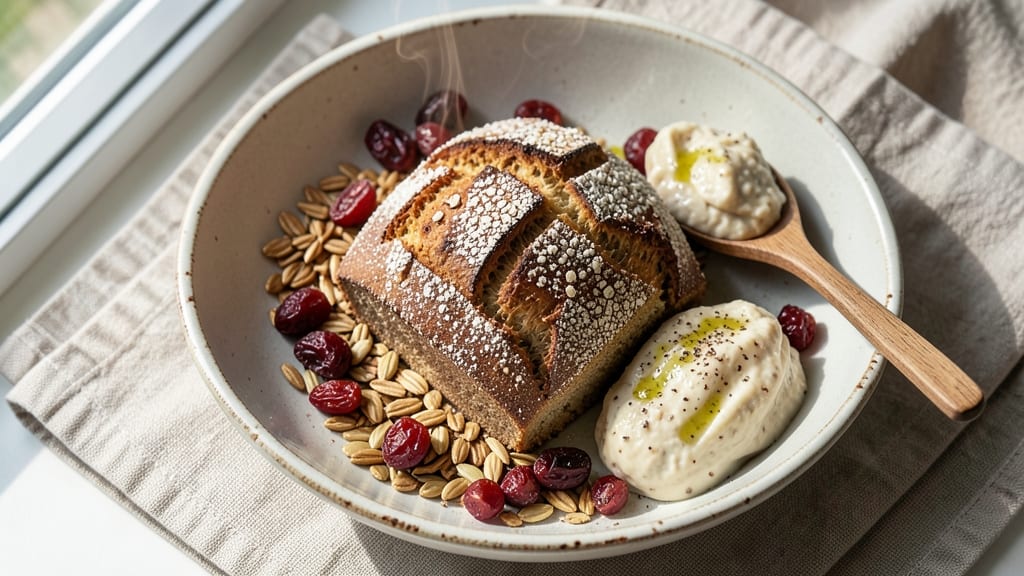
This 8-grain bread recipe delivers a nutty, seeded crust with a hearty texture that transforms any meal. The blend of whole wheat, rye, barley, and five other grains creates a complex flavor and satisfying bite—perfect for sandwiches, toast, or serving alongside soups.
Each grain contributes unique benefits: whole wheat adds fiber, rye boosts digestibility, and barley brings a subtle malty depth.
The process is straightforward but requires patience—hydration ratios are key to achieving a soft yet sturdy crumb. You'll mix, knead, proof, shape, and bake a loaf that yields crisp edges and a tender interior.
The seeds (sunflower, flax, sesame, and more) not only enhance texture but also add visual appeal and extra nutrition.
What sets this bread apart is its versatility—slice it for toast, use it for garlic bread, or serve it warm with butter. The grains absorb moisture beautifully, ensuring every bite is flavorful and satisfying.
Whether you're a home baker or a bread enthusiast, this recipe delivers professional-quality results with simple techniques.
Ready in about 3 hours (including fermentation), this bread is ideal for meal prep or gifting. The nutty aroma alone will have everyone asking for seconds. Let's get started—your kitchen will soon smell like an artisan bakery.
Ingredients for 8 grain bread
Eight grains and seeds blend for a nutty, hearty loaf that's perfect for toast or sandwiches.
| Ingredient | Amount | Notes |
|---|---|---|
| All-Purpose Flour 🌾 | 2 cups | For structure and lightness |
| Whole Wheat Flour 🌾 | 2 cups | Adds fiber and heartiness |
| Rye Flour 🌾 | 1 cup | Boosts digestibility and flavor |
| Barley Flour 🌾 | ½ cup | Subtle malty depth |
| Oat Flour 🌾 | ½ cup | Softens texture |
| Spelt Flour 🌾 | ½ cup | Nutty flavor profile |
| Buckwheat Flour 🌾 | ¼ cup | Earthy richness |
| Millet Flour 🌾 | ¼ cup | Light and slightly sweet |
| Active Dry Yeast 🍞 | 2 ¼ tsp | Ensures proper rise |
| Granulated Sugar 🍚 | 1 tbsp | Feeds yeast for fermentation |
| Salt 🧂 | 2 tsp | Kosher or sea salt |
| Sunflower Seeds 🥜 | ¼ cup | Toasted for extra crunch |
| Flaxseeds 🌿 | ¼ cup | Ground for nutrition boost |
| Sesame Seeds 🌾 | ¼ cup | Toasted for nutty flavor |
| Poppy Seeds 🌾 | ⅛ cup | For subtle sweetness |
| Water 💧 | 3 ¼ cups | Room temperature preferred |
| Olive Oil 🫒 | 2 tbsp | Enhances flavor and texture |
The flours are the backbone here. King Arthur or Bob's Red Mill flours work best—they're finely milled and consistent. For the seeds, Bob's Red Mill has pre-ground flaxseeds, but I always grind mine fresh for extra nutrition. Toasting seeds (sunflower, sesame) in a dry pan for 2-3 minutes before adding brings out their flavor—don't skip this part. If you can't find buckwheat or millet flour, substitute with more rye—it's the closest in flavor. The yeast should be fresh, not the ancient kind in your pantry from 2018.
No rye flour? Substitute with whole wheat—it's the next closest in texture. Short on seeds? Use half the amount of sesame seeds and skip the poppy seeds. The olive oil can be swapped for vegetable or canola oil, but olive adds that nice fruity depth. Water temperature matters—too hot kills yeast, too cold slows fermentation. Aim for room temperature (70-75°F). If your kitchen's cold, warm the water slightly in the microwave. For extra flavor, add 1 tsp dried rosemary or thyme to the dough.
This dough is sticky—expect it. Cover it with a damp towel and let it rest for 1 hour before shaping. The seeds keep best in the fridge for 1 week in an airtight container, but the flour loses potency after 3 months. For longer storage, freeze the dough before baking—thaw overnight in the fridge. The bread reheats beautifully in a 350°F oven for 5-10 minutes to revive that fresh-baked aroma. Slice it thick for toast—trust me, it's worth the extra minute.
Why You'll Love This Recipe
- No-Fuss Mixing: The flours blend together in minutes—just toss them in a bowl, add water and yeast, and stir. No complicated kneading or waiting for dough to relax. Honestly, I’ve made it while scrolling through my phone.
- Earthy Depth: That rye and barley? They add a nutty, slightly sweet bite that’s way more interesting than plain white bread. The oat flour gives it a satisfying chew, too—like a hug for your sandwich.
- Weeknight Workhorse: Toss slices in a pan for toast, use it for grilled cheese, or pack it for lunches. It’s my go-to for breakfast burritos or even as a crust for meatloaf. (Yes, even on a Tuesday night.)
- Budget-Friendly Staple: Whole grains are cheaper than you’d think, and this loaf lasts forever. Freeze half the batch for toast later—no waste, just flavor. My wallet and I both appreciate it.
Step-by-step instructions for 8 grain bread recipe
Mix, knead, and bake this hearty seeded loaf with confidence—every step ensures that nutty crust and satisfying texture.
Activate the Yeast and Mix the Wet Ingredients
In a large bowl, combine the 3.25 cups water, 1 tbsp granulated sugar, and 2.25 tsp active dry yeast. Let it sit for 5-10 minutes until the mixture becomes frothy and bubbly—this tells you the yeast is alive and ready to work. If it doesn’t bubble, your yeast might be old, and you’ll need to start over.
While waiting, toast the sunflower seeds, sesame seeds, and flaxseeds in a dry skillet over medium heat for 3-4 minutes until golden and fragrant. This step adds depth of flavor and prevents the seeds from staying raw in the final bread. Let them cool completely before adding to the dough.
Combine Dry Ingredients and Form the Dough
In a separate large mixing bowl, whisk together all the flours: 2 cups all-purpose flour, 2 cups whole wheat flour, 1 cup rye flour, 0.5 cup barley flour, 0.5 cup oat flour, 0.5 cup spelt flour, 0.25 cup buckwheat flour, and 0.25 cup millet flour. Add the 2 tsp salt, the toasted seeds, and 0.125 cup poppy seeds to the dry mix.
Make a well in the center and pour in the yeast-water mixture along with the 2 tbsp olive oil. Using a wooden spoon or dough whisk, stir until everything comes together into a shaggy dough. The texture will be sticky—this is normal with all these whole grains and seeds. Let it rest for 10 minutes while you prep your workspace.
Knead the Dough Until Smooth
Lightly flour a clean surface and turn out the dough. Knead for 8-10 minutes by hand, folding and pressing the dough until it becomes smooth and elastic. You’ll know it’s ready when it springs back slightly when pressed. If the dough feels too sticky, wet your hands slightly to help it come together without adding extra flour.
Here’s the thing—this dough won’t be as stretchy as regular bread dough because of all the whole grains. Instead of focusing on elasticity, aim for a cohesive, slightly tacky ball that holds its shape when pressed. Wrap the dough tightly in plastic wrap and let it rise in a warm place for 1-2 hours, or until it has nearly doubled in size.
Shape and Proof the Loaf
Punch down the risen dough to release any air bubbles, then shape it into a round loaf or a free-form boule. Place it seam-side up in a lightly oiled 9x5-inch loaf pan or on a parchment-lined baking sheet if making a free-form loaf. Cover loosely with a damp towel and let it proof for another 30-45 minutes until it’s puffy and jiggly when gently pressed.
Preheat your oven to 375°F with a Dutch oven inside for 20 minutes if using one—this creates steam for a crispy crust. If baking free-form, place the loaf on a baking sheet and score the top with a sharp knife in a crosshatch pattern for even rising.
Bake to Golden Perfection
Carefully transfer the loaf to the preheated oven (or Dutch oven) and bake for 35-40 minutes until the top is deep golden brown and sounds hollow when tapped on the bottom. If the crust isn’t browning quickly enough, tent the loaf with foil for the last 10 minutes to prevent over-browning.
Remove the bread from the oven and let it cool on a wire rack for at least 30 minutes before slicing. The internal temperature should register 190-200°F—this ensures a fully baked crumb. Slice into thick pieces to enjoy that nutty, seeded crust and hearty texture at its best.
Pro Tips For Making 8 Grain Bread
- Sift the Barley First: Barley flour is heavier and grittier—if you skip sifting it, your dough will feel dense and fight you during mixing. I learned this the hard way when my first batch turned into a brick. Toss it through a fine-mesh sieve with the all-purpose flour before measuring, even if it feels like extra work.
- Hydrate the Oat Flour: Oat flour absorbs moisture like a sponge and can turn your dough into a sticky mess. Mix it with warm water (about ½ cup per 1 cup of oat flour) before adding it to the dry ingredients—this keeps the texture consistent and prevents a gummy loaf.
- Don’t Over-Knead the Rye: Rye flour has a low gluten content, so kneading too long will make your bread tough instead of chewy. Stop when the dough pulls cleanly away from the bowl—usually around 8-10 minutes by hand. If it’s still sticky, let it rest 10 minutes before judging.
- Preheat the Dutch Oven: If you’re baking in a Dutch oven, get it scorchingly hot—450°F (230°C) for at least 30 minutes. I used to rush this, and my bread would steam instead of crisp up. A hot pot = that perfect crackly crust you’re after. (Yes, even if you’re impatient like me.)
Common mistakes when making perfect results
Over-Mixing the Dough
This dough is delicate with all those whole grains and seeds—over-kneading develops too much gluten, making it tough instead of tender. Stop when it springs back slightly when pressed (8-10 minutes max).
The sticky texture is normal; don't add extra flour, or you'll dilute the nutty flavor. I've ruined batches by kneading too long, so trust your hands over a timer. 💫
Skipping Seed Toasting
Raw seeds add bitterness and don't contribute much flavor. Toast them in a dry skillet for 3-4 minutes until golden—they'll release their natural oils and nutty aroma. I once made this bread without toasting and was disappointed by the bland crust. Pro tip: Toast seeds in batches to avoid burning.
Incorrect Hydration
This recipe uses 3.25 cups water—don't eyeball it! Whole grains absorb moisture differently than all-purpose flour. Too little water makes the dough dry and crumbly; too much creates a gummy mess. Measure precisely and let the dough rest 10 minutes before kneading to help it absorb evenly.
Underproofing the Dough
Rushing the 1-2 hour rise leads to dense bread. The yeast needs time to develop flavor and create that light, airy crumb. Look for nearly doubled size and jiggly tops—this means it's ready.
I've learned the hard way that skipping proofing time results in a brick-like loaf. Cover with a damp towel to maintain humidity.
Improper Oven Prep
Baking without preheating the Dutch oven or oven creates steam essential for that crisp crust. Preheat for 20 minutes with the Dutch oven inside. If using a baking sheet, score the loaf before baking to guide expansion.
I once forgot to preheat and ended up with a sad, pale loaf that lacked character.
Cutting Too Soon
Bread continues cooking as it cools—slicing too early releases steam and makes it gummy. Wait 30 minutes minimum for the internal temp to reach 190-200°F.
The crust will firm up as it cools, giving you that perfect crunch. I've sliced too soon and regretted it every time—patience pays off here. 🍞
Nutrition facts
Frequently asked questions
Can I substitute any of the grains in this recipe?
If you're missing a grain, rye flour is the best substitute for most others since it adds similar heartiness. For buckwheat or millet flour, use extra whole wheat flour instead. Just remember: each grain contributes unique flavor and texture, so substitutions may slightly alter the final product.
How long can I store this bread?
At room temperature, this bread stays fresh for 3-4 days in an airtight container. For longer storage, freeze the baked loaf for up to 3 months—thaw overnight in the fridge. The crust stays crispy when reheated in a 350°F oven for 5 minutes with a damp paper towel.
Why does my dough feel so sticky?
The high grain content absorbs more moisture, creating a naturally sticky dough. This is normal! Don't add extra flour—it weakens the structure. Wet your hands slightly when handling and let the dough rest 10 minutes before kneading to help it absorb moisture evenly.
Can I make this bread without a Dutch oven?
Yes! Use a baking sheet with a metal bowl inverted over the loaf during the first 20 minutes to create steam. Score the top before baking to help it rise properly. The crust may be slightly less crispy but still delicious. For extra browning, brush with water before baking.
What's the best way to serve this bread?
Slice thick for toast with butter or olive oil, or use for hearty sandwiches. The nutty flavor pairs perfectly with soups or as a side with roasted meats. For extra flair, sprinkle with flaky sea salt and fresh herbs. The seeds add great texture to charcuterie boards too!