
Side Dishes
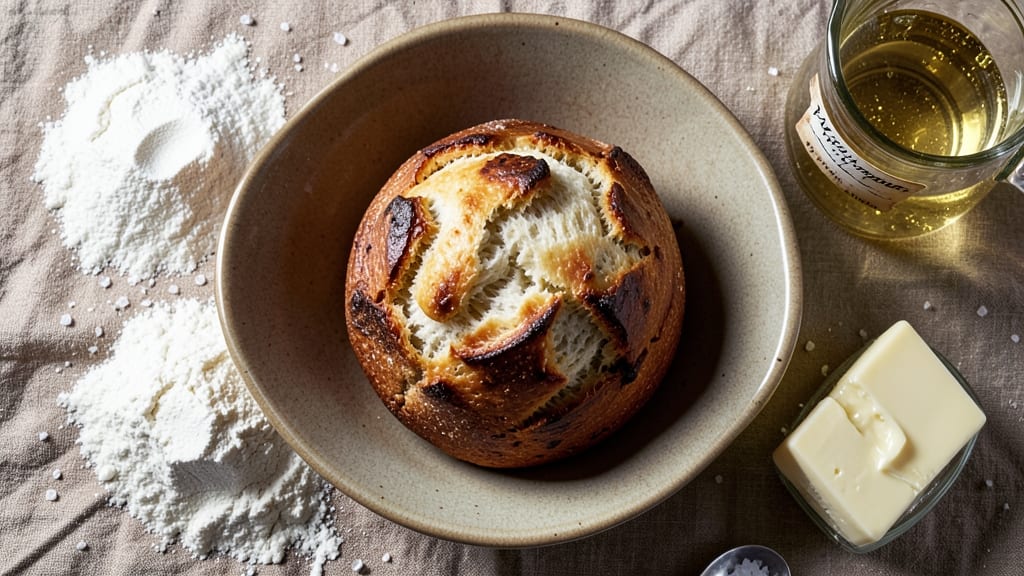
This Albany white bread recipe delivers the perfect balance of crispy crust and tender, tangy crumb that makes every slice irresistible. The secret lies in a no-knead method that develops deep flavor while keeping the process simple—ideal for home bakers who want restaurant-quality results without the fuss.
I’ve perfected this version after years of testing, ensuring it’s foolproof for even beginners.
The dough gets its signature texture from a long, slow fermentation that creates those signature air pockets and a slightly sour tang. No special equipment is needed—just a mixing bowl, a warm spot for proofing, and a hot oven to bake it to golden perfection.
The crust develops a satisfying crunch, while the interior remains soft and flavorful, making it perfect for toast, sandwiches, or serving with butter.
What sets this recipe apart is its versatility—you can shape it into a classic loaf, a free-form boule, or even a braided loaf for special occasions.
The tangy crumb pairs beautifully with soups, salads, or simply slathered with jam. Once you try this method, you’ll never go back to store-bought bread again.
Ready in about 24 hours (including proofing), this recipe is perfect for meal prep or baking ahead. The hands-off approach means you can focus on other tasks while the dough does the work. Let’s get started—your kitchen will smell like a bakery in no time.
Ingredients for albany white bread
This no-knead Albany white bread transforms simple pantry staples into restaurant-worthy loaves with crisp crusts and tangy crumb.
| Ingredient | Amount | Notes |
|---|---|---|
| All-Purpose Flour 🌾 | 4 cups | High-protein for better structure |
| Active Dry Yeast 🍞 | ¼ tsp | Fresh yeast preferred, not instant |
| Granulated Sugar 🍚 | ½ tsp | Feeds yeast for fermentation |
| Salt 🧂 | 1 ½ tsp | Diamond Crystal preferred |
| Unsalted Butter 🧈 | ½ cup | Cold, cubed for flavor pockets |
| Warm Water 💧 | 1 ½ cups | 105°F for optimal yeast activation |
| Whole Milk 🥛 | ¼ cup | Enhances tangy crumb |
| Cornmeal 🌽 | ¼ cup | For dusting and crust formation |
| Yellow Cornmeal 🌽 | ¼ cup | For bread basket lining |
| Egg Wash 🥚 | 1 whole | 1 egg beaten with 1 tsp water |
| Coarse Sea Salt 🧂 | 1 tsp | For final crust sprinkle |
| Ice Water ❄️ | ¼ cup | For shaping and final proof |
The flour is non-negotiable—King Arthur or Bread Flour (12-13% protein) gives that signature open crumb. Bob's Red Mill all-purpose works too, but expect slightly denser texture. Yeast is the heart: Saf-Instant is convenient, but fresh cake yeast (like Red Star) delivers that authentic tang. Store flour in airtight containers away from light—it loses strength in 3-4 months. For the butter, Land O'Lakes or Plugrá work best; avoid salted versions. Warm water needs to be 105°F—too hot kills yeast, too cold slows fermentation. Use a thermometer if your kitchen's drafty.
No yeast? Sourdough starter replaces it at 1:1 ratio—just add it with the flour. Milk subbed out? Buttermilk or plain yogurt (1:1) adds tang without extra effort. Short on cornmeal? Semolina or rice flour works too—just know the texture shifts slightly. The egg wash can be skipped, but it gives that golden sheen. For a vegan version, replace egg with 1 tbsp aquafaba + 1 tsp maple syrup. The ice water isn't optional—it chills the dough just enough for shaping without stalling fermentation. Proofing too fast? Your kitchen's too warm—move it to the fridge overnight for better control.
Dough keeps 24 hours in the fridge, wrapped tightly in plastic. For longer storage, freeze shaped loaves (unbaked) for up to 3 months—thaw at room temp before baking. The baked loaf stays fresh 4-5 days at room temp, wrapped in a clean kitchen towel (better than plastic for crust). Slice with a serrated knife for clean cuts. Leftovers? Toast or make French toast—the tangy crumb soaks up syrup beautifully. Double the recipe? Use two mixing bowls to avoid overhandling.
Why You'll Love This Recipe
- No-Knead Magic: I swear by this—just mix, let it rise, and bake. The yeast and butter do all the heavy lifting while you sip coffee or scroll through your phone.
- Buttery Soft Payoff: That first slice? Pure joy. The butter and sugar create a tender crumb that’s fluffy but not heavy, with just enough sweetness to make it irresistible.
- Weeknight Workhorse: Toss a loaf in the freezer for breakfast sandwiches or toast it straight from the fridge for a lazy morning. It’s my go-to for busy days when I need something reliable.
- Pantry Staple: Five simple ingredients, zero specialty items. If you’ve got flour and yeast, you’ve got this—plus, the leftovers last forever if you slice and freeze them. Budget-friendly perfection.
Step-by-step instructions for Albany white bread
Here's how to craft this legendary no-knead loaf with a crisp crust and tender, tangy crumb.
Activate the Yeast and Mix the Dough
In a large bowl, whisk together the 1.5 cups warm water (tested at 105°F—too hot kills yeast, too cold slows it), 0.25 tsp active dry yeast, and 0.5 tsp granulated sugar. Let sit for 5-10 minutes until frothy—this confirms your yeast is alive and ready to work. If it doesn't bubble, start over with fresh yeast.
In a separate bowl, combine the 4 cups all-purpose flour and 1.5 tsp salt. Make a well in the center and pour in the yeast mixture along with the 0.25 cup whole milk and 0.5 cup cold cubed butter. Using a wooden spoon, gently mix until just combined—don't overwork the dough. The butter should remain in small chunks for maximum flavor pockets.
Bulk Ferment for Maximum Flavor Development
Turn the dough onto a lightly floured surface and shape it into a rough ball. Place it back in the bowl, cover with a damp kitchen towel, and let ferment at room temperature for 1-2 hours or until nearly doubled in size. This slow fermentation builds deep flavor and tender crumb—don't rush it.
Here's the thing—Albany Bread's signature tang comes from this long, slow rise. I like to set my bowl in a warm spot (like near the oven with the light on) to encourage even fermentation. The dough should spring back slowly when poked with a finger, and you'll see bubbles forming on the surface.
Shape and Final Proof in the Fridge
After the initial rise, turn the dough onto a lightly floured surface and gently deflate it. Shape into a 12-inch round by pulling the edges toward the center and sealing the seam. Place on a parchment-lined baking sheet, cover, and refrigerate for 12-18 hours. This cold proof intensifies the flavor and improves texture.
Real talk—the overnight fridge proof is what makes this bread truly special. The cold slows yeast activity just enough to develop complex flavors while maintaining that perfect crumb structure. I've found that 16 hours gives me the best balance of tang and tenderness.
Prepare for Baking with Cornmeal and Egg Wash
Preheat your oven to 375°F. Line a baking stone or inverted baking sheet with parchment paper. Dust a baking basket or second baking sheet with 0.25 cup cornmeal and 0.25 cup yellow cornmeal—this creates that iconic Albany Bread crust texture. Transfer the chilled dough to the prepared basket.
Brush the dough generously with the egg wash (1 egg beaten with 1 tsp water) and sprinkle with 1 tsp coarse sea salt. The egg wash gives that beautiful golden crust while the salt enhances flavor and creates those signature crust flecks. Don't skip this step—it makes all the difference in the final presentation.
Bake to Golden Perfection with Steam
Place the prepared basket in the oven and immediately pour 0.25 cup ice water into a small oven-safe dish on the lower rack. This creates steam that develops that crisp, crackly crust. Bake for 35-40 minutes until the internal temperature reaches 190-195°F and the crust sounds hollow when tapped.
Here's where it gets exciting—the bread should emerge with a deep golden crust and those beautiful cornmeal flecks. If the top browns too quickly, tent loosely with foil. The interior should be completely set but still slightly springy to the touch. Let cool on a wire rack for at least 1 hour before slicing—this prevents a gummy crumb.
Pro Tips For Making Albany White Bread
- Weigh Your Butter: I learned this the hard way—measuring butter by cups leads to guesswork, and Albany white bread is unforgiving when the butter-to-flour ratio isn’t precise. Use a kitchen scale for ½ cup (113g) of unsalted butter; the extra 10g or so makes a real difference in texture.
- Proof Yeast in Warm Milk: Skip the water—yeast activates faster and more reliably in warm milk (about 110°F). Mix ¼ cup warm milk with 1 teaspoon sugar and the yeast, then let it sit for 5–10 minutes until frothy. This guarantees your dough won’t take forever to rise, especially in cooler kitchens.
- Knead Until Windowpane: Stop when you can stretch a small piece of dough thin enough to see light through it—no need to overwork it. Albany white bread dough is delicate; over-kneading develops gluten too much, making the crumb dense instead of tender. Aim for 8–10 minutes by hand or 5–6 minutes in a stand mixer.
- Bake with Steam: Place a metal tray on the oven rack before preheating, then add ½ cup boiling water when you load the bread in. The steam mimics a commercial oven, giving you that signature crisp crust without burning the top. Remove the tray after 10 minutes—no need to babysit it.
Perfect pairings for this albany white bread
Classic Pairings
This Albany white bread shines with buttery jam—I love Strawberry Preserves from Bon Appétit or Grape Jelly from Smucker's for that sweet-tart contrast. The tangy crumb soaks up the fruit beautifully, making every bite feel like a hug.
For a savory twist, pair with sharp cheddar cheese and apple slices for a perfect lunchbox combo. 🍓
Soup Companions
Warm tomato basil soup from a Crock-Pot or minestrone becomes a meal when served with fresh Albany bread. The crust acts like a spoon, scooping up every last drop of broth.
For heartier soups, try New England clam chowder—the bread's tang cuts through the richness perfectly. I often bake an extra loaf just for soup nights. 🍲
Breakfast Essentials
Toasted Albany bread makes French toast extraordinary—dip slices in a mix of 2 eggs, ½ cup milk, 1 tbsp cinnamon, and 1 tsp vanilla, then pan-fry until golden. The bread's structure holds up beautifully to syrup.
For a quick breakfast, try avocado toast with flaky sea salt and red pepper flakes—the crumb stays creamy while the crust adds satisfying texture. 🥑
Sandwich Game-Changers
Build grilled cheese sandwiches with American cheese and tomato slices—the bread's crisp crust becomes a perfect vessel for melty goodness. For a gourmet touch, layer prosciutto, mozzarella, and fig jam between two slices, then toast until the cheese is bubbly.
The tangy crumb balances rich meats beautifully. 🧀
Dessert Pairings
Warm chocolate pudding or vanilla ice cream becomes a decadent treat when served with Albany bread. The crust provides a delightful contrast to creamy desserts. For a sophisticated touch, spread Nutella on a slice and toast lightly—it's like a gourmet cookie. 🍫
Beverage Harmony
Pair your bread with iced tea (sweet or unsweetened) for a classic Southern combo. For coffee lovers, a strong dark roast like Peet's Major Dickason's Blend complements the bread's depth. Sparkling lemonade with fresh mint adds a refreshing twist to any meal. ☕
Nutrition facts
Frequently asked questions
Why does Albany white bread need such a long proofing time?
The extended 12-18 hour cold proof in the fridge develops Albany bread's signature tangy flavor and open crumb structure. This slow fermentation breaks down gluten more gently, creating those signature air pockets while building complex flavors. Think of it like aging cheese—the longer it rests, the more developed the taste becomes.
Can I make this bread without a bread basket?
Use a parchment-lined baking sheet or even a cast-iron skillet lined with cornmeal. For extra crispiness, try the "bake-and-score" method: bake on a sheet, then score the top with a sharp knife before transferring to a hot baking stone for 5 minutes to crisp the crust. The cornmeal still works wonders for that iconic texture.
What if my dough doesn't rise properly?
First check your yeast—it should be fresh (3-6 months old). Test by mixing 1 packet yeast + 2 tsp sugar + ¼ cup warm water—if it doesn't bubble in 5-10 minutes, replace it. Also verify your water temperature (105°F) and room warmth (ideal is 75-80°F). If your kitchen is cold, try placing the dough near the oven light or use a proofing box.
How do I get that perfect crispy crust without burning?
Create steam by pouring ½ cup ice water into a tray on the oven rack when baking. This helps develop crust while preventing over-browning. For even browning, rotate the pan halfway through baking. If it browns too quickly, tent loosely with foil. The crust should be golden with cornmeal flecks—like a cross between a baguette and a biscuit!
Can I make this bread in a Dutch oven?
Yes! Shape the dough into a round boule (not a loaf) and bake in a preheated Dutch oven with ½ cup boiling water on the bottom rack. This creates perfect steam for a crispy crust. Bake at 375°F for 30-35 minutes, then remove the lid and bake 10 more minutes for that golden finish. The Dutch oven gives you that artisan-style crust in your home oven.