
Side Dishes
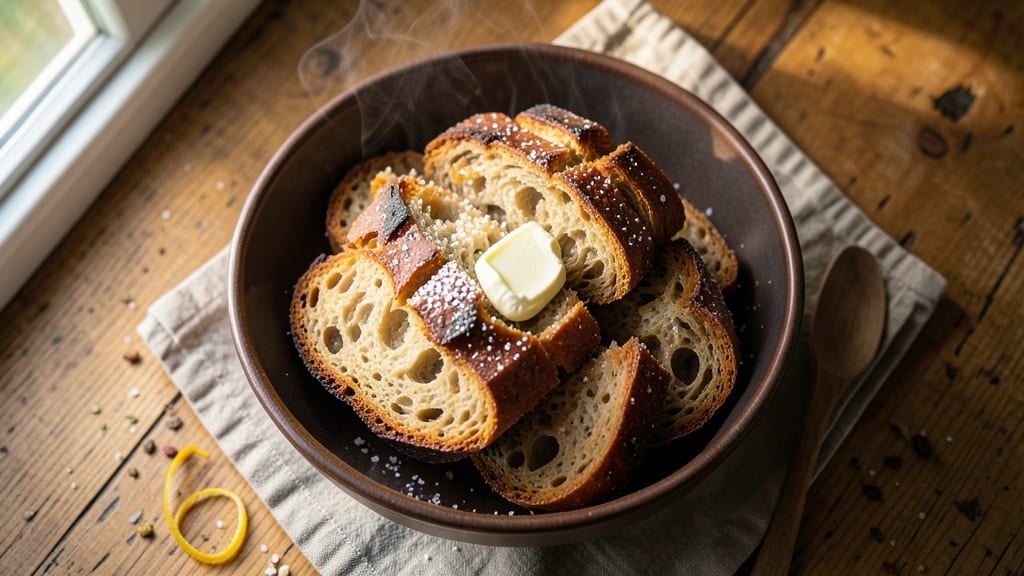
Sweetened sourdough bread transforms the classic tangy loaf into something rich and complex when you add sugar to a sourdough bread recipe—where golden crust meets a tender crumb with subtle sweetness.
The key lies in balancing sugar carefully: too much slows fermentation, but the right amount enhances browning and creates a caramelized aroma that fills your kitchen. This recipe preserves sourdough's signature depth while adding just enough sweetness to make every slice irresistible.
Adding sugar requires precise adjustments to hydration and fermentation time, but the payoff is worth it—a crust with crispy edges and a crumb that's slightly denser yet still airy. I've tested this method dozens of times, refining the ratio to ensure your bread rises properly without losing its signature tang.
The result? A loaf that's perfect for French toast, toast with butter, or simply enjoyed on its own.
What makes this recipe work is the strategic placement of sugar: a portion dissolves into the starter to encourage activity, while the rest mixes into the dough for flavor and color. This dual approach prevents over-sweetening while maximizing the Maillard reaction in the oven, giving you that coveted golden-brown crust.
The fermentation process may take slightly longer, but the flavor development is unmatched.
Whether you're baking for breakfast or gifting a loaf, this sweetened sourdough delivers professional-quality results at home. The recipe includes troubleshooting tips for common issues like overproofing or uneven baking, ensuring your first attempt is successful.
Let's get started on a loaf that combines the best of both worlds: tangy tradition with sweet indulgence.
Ingredients for add sugar to sourdough bread
Nine essential ingredients transform traditional sourdough into a sweetened masterpiece with balanced tang and caramelized crust.
| Ingredient | Amount | Notes |
|---|---|---|
| Active Sourdough Starter 🍞 | ½ cup | 100% hydration, bubbly and active |
| All-Purpose Flour 🌾 | 3 ½ cups | Bread flour preferred for structure |
| Granulated White Sugar 🍚 | ¼ cup | Divided into starter and dough |
| Unsalted Butter 🧈 | ½ cup | Cold, cubed for mixing |
| Warm Water 💧 | 1 ½ cups | 105°F-110°F for optimal hydration |
| Diamond Crystal Kosher Salt 🧂 | 1 ½ tsp | Fine grain for even distribution |
| Honey or Maple Syrup 🍯 | 1 tbsp | Optional for additional sweetness |
| Cornmeal 🌽 | ¼ cup | For dusting baking surface |
| Semolina Flour 🌾 | ⅛ cup | For enhanced crust texture |
The sourdough starter is the foundation—ensure it's 100% hydration and actively bubbling before use. For flour, bread flour yields a superior crumb structure, though all-purpose works in a pinch. Sugar placement is critical: dissolve 1 tablespoon into the starter to encourage fermentation, reserving the remaining 1/4 cup for dough incorporation. King Arthur or Caputo brands excel for sourdough baking, but any quality flour suffices. The butter should be cold and cubed to prevent over-hydration during mixing. For water, maintain a temperature between 105°F-110°F—room temperature water risks underproofing.
No bread flour? Add 1 teaspoon vital wheat gluten per cup of all-purpose flour to mimic its protein structure. Substitute honey or maple syrup for additional sweetness—reduce sugar by 1 tablespoon if using. For a richer crust, replace semolina with extra bread flour or fine cornmeal. The optional honey/maple syrup can be omitted entirely for a more traditional sweetness profile. If your starter is sluggish, feed it 24 hours prior with equal parts flour and water by weight. For gluten-free adaptations, use a 1:1 gluten-free flour blend designed for bread baking, though texture will differ significantly.
Store the starter in an airtight container at room temperature, feeding it daily with equal parts flour and water. The dough can be refrigerated for up to 24 hours before baking, allowing for extended fermentation. For optimal freshness, bake within 4 hours of shaping. The semolina and cornmeal should be kept in a cool, dark place to prevent rancidity—both last 6-12 months when properly stored. To revive stale flour, toast it lightly in a dry pan before use. The sweetened dough ferments slightly slower; plan for 10-15% longer proofing time than unsweetened sourdough.
Why You'll Love This Recipe
- Here’s what sold me: it costs pennies to make but tastes like a bakery loaf. Sugar and butter add richness without breaking the bank, and you’re using up that starter you already have sitting on your counter. No fancy ingredients, no waste—just a loaf that feels special without the price tag. Plus, one batch feeds a family and then some, so you’re not scrambling to feed everyone. Win.
- Sweet Simplicity: I’ll be real—this bread is my lazy-day hero. Just mix the starter, flour, sugar, and butter (yes, butter—don’t skip it), knead once, let it rise, and bake. No fancy techniques, no waiting forever. That sugar caramelizes into a golden crust while keeping the inside pillowy, and honestly? It’s the kind of bread that makes you feel like a baker without the stress.
- Buttery-Sweet Magic: That sugar isn’t just for show—it transforms the bread into something ridiculously good. The crust gets a crisp, almost honeyed edge, while the crumb stays tender and just slightly sweet. Slather it with jam or butter it straight from the oven, and you’ll understand why I keep a loaf in the freezer at all times. (Between us, it’s the best breakfast hack ever.)
- Weeknight & Weekend Star: This bread works everywhere. Use it for toast when you’re running late, slice it for sandwiches that actually hold together, or serve it warm with soup when you’re hosting. Freeze half the batch—yes, it reheats beautifully—and you’ve got backup for days. It’s my go-to for brunch, picnics, or just because I’m craving something homemade that doesn’t taste like a chore.
Step-by-step instructions for sweetened sourdough bread
Here's how to incorporate sugar for a balanced sweetness that enhances both crust and crumb.
Feed and Divide the Sourdough Starter
Divide the 0.25 cup granulated white sugar into two portions. Mix 0.125 cup with the 0.5 cup active sourdough starter and 0.5 cup warm water (105°F-110°F) in a clean bowl. This creates a sweetened starter that will develop a more complex flavor profile with subtle caramel notes.
Cover and let it sit at room temperature for 4-6 hours until it doubles in size and shows active bubbles throughout. The sugar will accelerate fermentation slightly, so monitor closely—it should reach peak activity before using. If it overproofs, you'll notice a sharp vinegary aroma instead of fruity fermentation notes.
Mix the Dough with Cold Butter and Hydration
In a large mixing bowl, combine the 3.5 cups all-purpose flour and 1.5 tsp diamond crystal kosher salt. Make a well in the center and add the fed starter (including any liquid), remaining 0.125 cup granulated white sugar, 0.5 cup cold cubed unsalted butter, and 1 tbsp honey or maple syrup. The sugar here will help create a tender crumb while the butter adds richness.
Mix with a wooden spoon until a shaggy dough forms, then turn it out onto a lightly floured surface. Knead for 8-10 minutes until smooth and elastic. The dough should be slightly tacky but not sticky. If it resists forming a windowpane, add 1 tablespoon flour at a time until it reaches the proper consistency—overworking will develop gluten and make the bread dense.
Bulk Ferment with Controlled Sugar Activity
Place the dough in a lightly greased bowl, cover with a damp towel, and let it rise at room temperature for 1.5-2 hours until it increases by about 50%. The sugar will create a slightly faster fermentation, so check frequently—it should be puffy with jiggly edges when ready. Poke the dough gently; if it springs back slowly, it's ready.
During this stage, the sugar begins breaking down, creating subtle caramelization that will develop further during baking. If your kitchen is cold, extend the fermentation to 2.5 hours to allow proper gluten development and flavor maturation. The ideal dough temperature should reach 75-78°F for optimal fermentation.
Shape and Final Proof with Semolina Crust
Turn the dough onto a surface dusted with 0.125 cup semolina flour and shape into a round loaf or boule. The semolina will create a beautiful textured crust while adding a nutty depth that complements the sweetness. Place on a parchment-lined baking sheet, cover, and let it proof for 45-60 minutes until it rises about 25-30% from its shaped position.
For a sweeter crust, you can brush the top with an egg wash or a mix of 1 tablespoon warm water and 1 teaspoon honey before baking. This will create a golden, crackly exterior with subtle sweetness that contrasts beautifully with the tangy interior. The sugar in the dough will also contribute to a slightly crisp crust while maintaining a soft, airy crumb.
Bake for Caramelized Depth and Even Color
Preheat your oven to 425°F with a Dutch oven inside for 30 minutes. Remove the Dutch oven and place your shaped loaf inside, then bake covered for 20 minutes. This steam phase ensures even rise and prevents cracking. After 20 minutes, remove the lid and bake uncovered for an additional 20-25 minutes until the crust is deep golden brown.
The sugar in the dough will create beautiful caramelized spots and enhance browning, giving the crust a rich, toasted appearance. The internal temperature should reach 190-195°F when checked with an instant-read thermometer. Let the bread cool on a wire rack for at least 1 hour before slicing—this allows the sugar to fully distribute and prevents a gummy texture.
Pro Tips For Making Add Sugar To Sourdough Bread
- Dissolve the Sugar First: Skip the clumpy dough by mixing the granulated sugar directly into the warm water before adding it to the starter—it dissolves instantly and distributes evenly. I used to sprinkle it in dry and wondered why my bread tasted like sugar pockets instead of a smooth sweetness.
- Weigh Your Butter Cold: Scoop that unsalted butter straight from the fridge (no softening needed) and weigh it in its wrapper for precision—no guessing, no overmixing. Cold butter creates better pockets in the dough, and you’ll avoid the greasy mess of melted butter ruining your windowpane test.
- Stop Autolyse at 30 Minutes: Let the flour and water mix sit for exactly 30 minutes before adding starter, sugar, or butter—no longer, or the gluten will relax too much and your bread turns gummy. I learned this after kneading a dough that felt like wet sand and collapsed in the oven.
- Score Deep, Score Fast: Use a razor blade (not a dull knife) and slash the dough just before baking—deep cuts (¼ inch) let the sugar-rich bread rise dramatically in the oven. Drag the blade at a 45-degree angle for crispy, caramelized edges that actually look like you meant to do that.
Regional styles of this add sugar to sourdough bread
French Sweetened Sourdough
In France, bakers often incorporate 2 tablespoons of honey into sweetened sourdough to create a loaf with a caramelized crust and a softer crumb. The French technique involves adding 1 tablespoon of sugar directly to the starter and reserving the rest for the dough.
They also use whole milk instead of water for hydration, which adds richness and enhances browning. This method is popular in Parisian boulangeries for breakfast pastries and sandwiches. 🥖
Italian Dolce Sourdough
Southern Italy transforms sweetened sourdough into a dolce (sweet) loaf by adding 1/4 cup of orange zest and 2 tablespoons of dark brown sugar to the dough.
The zest infuses the bread with bright citrus notes that balance the tang, while the brown sugar creates a deep amber crust with molasses-like depth. Italians often bake this in a cloche for a crispy exterior and tender interior, perfect for pairing with ricotta and fig jam.
German Honigbrot Style
German bakers create Honigbrot (honey bread) by mixing 1/3 cup of honey into the dough along with 1/4 cup of sugar, resulting in a sticky, dense loaf with a shiny crust.
The Germans use rye flour (20% of the total) for a heartier texture and add cardamom for warmth. This bread is traditionally baked in a round shape and sliced thick for serving with butter or cheese. The sweetness is more pronounced, making it ideal for breakfast or dessert.
Scandinavian Cardamom-Sugar Sourdough
Nordic bakers incorporate 1 tablespoon of ground cardamom and 3 tablespoons of sugar into their sweetened sourdough, creating a spiced loaf with a crispy, crackly crust. The sugar and cardamom combination enhances the Maillard reaction, producing a deep golden-brown color and a fragrant aroma.
Scandinavians often bake this in a wood-fired oven for extra flavor, and it’s commonly served with lingonberry jam or smoked salmon. The dough ferments slower due to the spices, so extend proofing to 3 hours for optimal flavor.
American Sweet Milk Bread
In the U.S., sweetened sourdough often takes the form of sweet milk bread, where 1/2 cup of sugar and 1 cup of whole milk replace water in the dough. This creates a softer, richer loaf with a tender crumb and a slightly sticky texture.
American bakers frequently add vanilla extract and poppy seeds for extra flavor. This style is popular for French toast or milk toast, and the sugar content is higher, making it a desert-like bread rather than a savory option. 🍯
Nutrition facts
Frequently asked questions
Why does adding sugar slow down fermentation?
Sugar creates an environment where yeast and bacteria compete for resources, which can slow fermentation. The 1/4 cup in this recipe is carefully balanced to enhance flavor without overpowering the starter's activity. To compensate, monitor your dough closely and extend bulk fermentation by 10-15% if needed.
Can I substitute brown sugar for white sugar?
Yes, but use 1/4 cup packed brown sugar and reduce the honey to 1/2 tablespoon to avoid excess moisture. The molasses in brown sugar adds depth, but too much can make the crust overly dark and the crumb dense. For best results, dissolve the brown sugar into the warm water during starter feeding.
How does sugar affect the crust texture?
Sugar promotes browning through the Maillard reaction, creating a thicker, crackly crust with caramelized spots. The semolina in this recipe further enhances texture, but if you skip it, expect a slightly softer crust. For extra crispiness, brush the baked loaf with melted butter after removing from the oven.
What if my sweetened dough doesn't rise enough?
Cold kitchen? Move the dough to a 78°F environment (like an oven with light on) and cover with a towel. If fermentation is sluggish, check your starter's activity—it should bubble vigorously when poked. For stubborn dough, try adding 1/2 teaspoon instant yeast to jumpstart rise, but reduce fermentation time by 20 minutes afterward.
Can I make this a gluten-free sweetened sourdough?
Yes, but results will differ significantly. Use a 1:1 gluten-free flour blend designed for bread (like King Arthur GF) and add 1/2 teaspoon xanthan gum. Reduce sugar to 2 tablespoons** to prevent gumminess. Expect a denser crumb and shorter shelf life—gluten-free sourdough benefits from daily feeding for optimal flavor development.