
Breakfast & Brunch
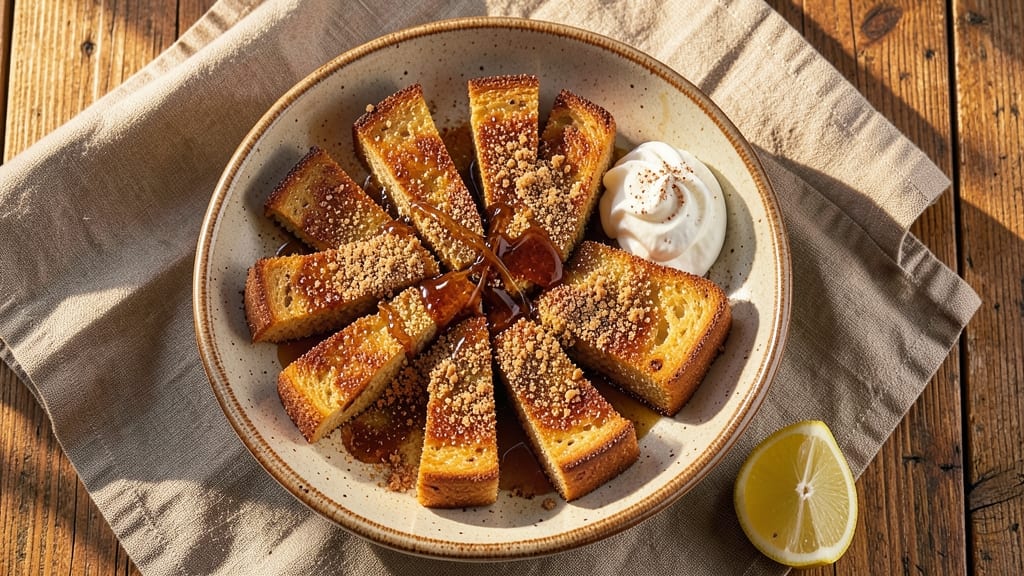
This artisan bread French toast recipe transforms dense, crusty loaves into golden, caramelized perfection with crispy edges and a custardy center. The secret lies in soaking thick slices just long enough to absorb the egg mixture without turning soggy—a technique that elevates ordinary breakfast into a showstopping dish.
I developed this method after years of experimenting with different breads and custard ratios, ensuring every bite delivers that perfect balance of texture and flavor.
What sets this recipe apart is the attention to detail: using high-quality artisan bread (like sourdough or brioche) creates a rich, complex flavor, while a lightly spiced egg batter with vanilla and cinnamon adds warmth without overpowering.
The key is frying in butter at medium-low heat—this ensures even cooking and that signature golden-brown crust. Toppings like maple syrup, powdered sugar, and fresh berries complete the dish, but modern twists like avocado or spiced syrups can take it even further.
By the time you finish, you’ll have French toast that’s crispy on the outside, tender inside, and packed with caramelized sweetness—far from the heavy, greasy versions you might find elsewhere.
The custardy texture holds up beautifully, making it perfect for brunch gatherings or a luxurious weekend treat. This isn’t just breakfast; it’s a restaurant-quality experience you can make at home.
Whether you’re serving a crowd or indulging in a solo breakfast, this recipe delivers foolproof results every time. The method is simple, but the outcome is anything but ordinary—think golden-brown slices with caramelized cinnamon swirls and a buttery aroma that fills your kitchen.
Let’s get started on turning your bread stash into something extraordinary.
Ingredients for artisan bread french toast
Golden crusts and custardy centers start with these quality ingredients—nothing fancy, just perfect French toast.
| Ingredient | Amount | Notes |
|---|---|---|
| Artisan Sourdough Bread 🍞 | 1 loaf | Stale or day-old preferred |
| Large Eggs 🥚 | 4 whole | Room temperature for even cooking |
| Heavy Cream 🥛 | ½ cup | Full-fat for creaminess |
| Whole Milk 🥛 | ½ cup | Warmed slightly for better mixing |
| Pure Vanilla Extract 🍯 | 1 tbsp | High-quality for best flavor |
| Ground Cinnamon 🌿 | 1 tsp | Freshly ground preferred |
| Pure Maple Syrup 🍁 | 2 tbsp | Grade A for delicate flavor |
| Unsalted Butter 🧈 | 4 tbsp | Cold for even frying |
| Powdered Sugar 🍚 | ¼ cup | For dusting and serving |
| Fresh Blueberries 🫐 | ½ cup | Or any fresh berries |
| Salt 🧂 | ¼ tsp | Fine sea salt preferred |
| Brioche Bread 🍞 | 1 loaf | Stale or day-old preferred |
| Granulated Sugar 🍚 | 1 tbsp | For extra caramelization |
The bread is everything here. Sourdough or brioche from a great bakery—Whole Foods or local artisan bakeries have the best—makes all the difference. Look for loaves with a thick, crisp crust and dense crumb. If you've got stale bread lying around, even better—it soaks up the custard perfectly. I always buy an extra loaf when I see a fresh batch at Trader Joe's because it keeps well for days. For brioche, avoid the pre-sliced kind—it dries out too fast. Grab a whole loaf, slice it yourself, and you'll notice the difference immediately.
No heavy cream? Full-fat coconut milk works in a pinch, though it won't be quite as rich. Fresh vanilla extract is non-negotiable—imitation stuff tastes like perfume. Short on butter? Olive oil or ghee will work, but butter gives that unmistakable golden crust. The sugar is where you can get creative: turbinado or brown sugar adds deeper caramel notes. For the berries, frozen works fine if you're in a rush, but fresh blueberries or raspberries add that bright, juicy contrast. And if you're feeling fancy, toss in a handful of toasted pecans or candied walnuts for crunch.
This custard mixture keeps for 2 days in the fridge, but it's best used fresh. The bread? Store it in a paper bag at room temperature for up to 3 days—it'll stale faster if sealed in plastic. For make-ahead prep, slice the bread the night before and store it in an airtight container. The French toast itself reheats beautifully—pop slices in a 200°F oven for 5-10 minutes to restore that crispy texture. Leftovers? I portion them into single servings and freeze them—just reheat in a skillet with a little butter for that fresh-out-of-the-pan feel.
Why You'll Love This Recipe
- I swear by this trick: the heavy cream and milk soak in overnight, so even day-old bread gets a second life. My kids don’t even notice when I serve up yesterday’s slices—same golden crust, same perfect crunch.
- No Stale Leftovers: I swear by this trick: the heavy cream and milk soak in overnight, so even day-old bread gets a second life. My kids don’t even notice when I serve up yesterday’s slices—same golden crust, same perfect crunch.
- Crusty-Creamy Magic: That artisan sourdough? It’s the star. The crust gets gloriously crisp while the inside stays pillowy—like biting into a warm hug. Honestly, the vanilla extract ties everything together with this subtle, cozy sweetness that makes it feel fancy without trying too hard.
- Weeknight Crowd-Pleaser: Breakfast for dinner? Yes, please. This feeds four easily, and the rich egg-cream custard makes it feel special enough for company. My husband’s first words every time: "This tastes like a restaurant."
Step-by-step instructions for artisan bread French toast
Here's how to transform stale bread into decadent French toast with crispy edges and caramelized swirls.
Prepare the Cinnamon-Sugar Mixture and Soak the Bread
In a small bowl, whisk together the 0.25 cup powdered sugar, 1 tsp ground cinnamon, and 1 tbsp granulated sugar. This sweet-spiced blend will coat our French toast for that signature crunch and flavor. Set aside for now—it's the finishing touch that makes all the difference.
While that mixes, create your custard base by whisking together the 4 whole large eggs, 0.5 cup heavy cream, 0.5 cup whole milk, 1 tbsp pure vanilla extract, and 0.25 tsp salt in a shallow dish. The warm milk helps create a smoother batter, while the vanilla adds depth. Give it a good whisk until everything is fully combined and no egg streaks remain.
Slice the 1 loaf artisan sourdough bread into ½-inch thick pieces—about 16 slices for a standard loaf. For extra crispiness, I like to cut the slices slightly larger than usual. Arrange them in a single layer on a plate and let them sit for 5 minutes to dry out slightly. This step prevents soggy bread and ensures that perfect crunch when frying.
Soak the Bread and Fry to Golden Perfection
Working in batches, dip each slice of bread into the egg mixture, allowing any excess to drip off. I press down gently on the bread for 5 seconds—this ensures even saturation without making it too thick. You'll notice the bread immediately begins to absorb the custard, which is exactly what we want.
Heat 2 tablespoons unsalted butter in a large skillet over medium heat until it melts and begins to foam. This is where the magic happens—the butter should be hot enough to sizzle when the bread touches it, but not so hot that it burns. Add the soaked bread slices and cook for 2-3 minutes per side until they're golden brown and crispy around the edges.
Here's the thing—don't rush this step. You'll see the edges start to crisp and pull away from the pan, and that's your signal to flip. If it's not golden after 2 minutes, turn the heat up slightly. The bread should be cooked through but still tender in the center when you cut into it.
Add Blueberries and Caramelize the Top
Once the first side is golden, add ¼ cup fresh blueberries to the skillet. They'll pop and release their juices, creating a beautiful caramelized topping. Let them cook for 30 seconds until they begin to soften slightly—just enough to release their sweetness without turning mushy.
Flip the French toast onto a plate and immediately sprinkle the top with the cinnamon-sugar mixture. Watch as it melts slightly from the residual heat, creating those gorgeous caramelized swirls. This is the moment that matters: the contrast of crispy edges, creamy custard, and sweet berries makes every bite irresistible.
Repeat with the remaining bread slices, keeping them warm in a 200°F oven while you finish cooking. The residual heat keeps them warm and crispy, not soggy. If the butter starts to brown too quickly, add another 1 tablespoon unsalted butter to maintain even cooking.
Finish with Maple Syrup and Serve Warm
Transfer the French toast to a serving platter and drizzle each piece with 1 tablespoon pure maple syrup. The syrup will pool in the crevices, adding another layer of sweetness and gloss. I like to serve it immediately while the bread is still warm and the syrup is liquid—this ensures the best texture and flavor.
For an extra touch, garnish with additional blueberries or a dusting of powdered sugar. The contrast of the warm, crispy French toast with the cool, juicy berries is what makes this dish truly special. Serve with a side of maple syrup for dipping if you're feeling extra indulgent.
Pro Tips For Making Artisan Bread French Toast
- USE COLD EGGS AND CREAM: I learned this the hard way—room-temperature eggs and cream make the batter too runny, and your sourdough will turn into a soggy mess instead of a crispy, golden slice. Pop both in the fridge for 30 minutes before mixing, even if you’re eager to start.
- CUT BREAD THICK AND UNIFORM: Skip the random slices. Use a serrated knife to cut the sourdough into ½-inch-thick pieces—thinner slices burn before they brown, while thicker ones stay undercooked. A ruler keeps your cuts consistent, and trust me, your stack will look (and taste) way more professional.
- DON’T OVERMIX THE BATTER: The moment you add the eggs and cream to the bread, stop stirring after 2-3 gentle flips per slice. Overmixing turns the batter into glue, and your French toast will clump or fall apart when flipping. Let the bread soak up the liquid naturally—it’s the only way to get that perfect custardy center.
- WATCH THE HEAT: Start with medium-low heat—sourdough’s dense crumb needs time to absorb the batter without scorching. If your pan’s too hot, the outside will burn before the inside cooks. After the first side is golden (about 3 minutes), crank the heat to medium and flip. This two-step method guarantees a crispy exterior and a creamy interior every time.
Regional styles of artisan bread french toast
French-Style Parisien
In Paris, French toast is called pain perdu—"lost bread"—and it’s traditionally made with brioche, which is why I love using it here.
The French version often includes a touch of orange zest in the custard for brightness, and they finish it with a dusting of powdered sugar and a drizzle of honey instead of maple syrup.
For an authentic touch, serve with a side of crème fraîche or a dollop of clotted cream—it’s all about that luxurious texture. 🍯
Southern U.S. Cinnamon Swirl
The Southern U.S. takes French toast to another level with brown sugar in the custard and a cinnamon-sugar swirl that’s almost like a mini cinnamon roll. I’ve seen versions where they even add a splash of bourbon to the egg mixture for depth.
Toppings often include whipped cream, pecans, and warm maple syrup—think of it as a cross between French toast and a cinnamon roll. The key here is to double the cinnamon to 2 teaspoons for that bold, spicy kick. 🌶️
Italian Sticky Buns Twist
In Italy, French toast gets a ricotta and citrus upgrade—think of it as a cross between French toast and crostata. The custard is often enriched with ricotta cheese, and they add zest from a lemon or orange for freshness.
Top it with a sprinkle of turbinado sugar and serve with a side of passionfruit jam or honey. For extra decadence, some versions even add a layer of mascarpone between the bread slices before frying. 🍋
Modern Avocado Toast Fusion
If you’re craving something lighter but still indulgent, try a modern avocado twist. Skip the butter and fry the bread in olive oil, then top with mashed avocado, a sprinkle of flaky sea salt, and a drizzle of chili oil for heat.
Add a poached egg on top for extra richness—it’s like French toast meets avocado toast with a brunch upgrade. This version is perfect for those who want something lighter but still satisfying. 🥑
German Apfelstrudel Inspired
For a cozy, autumnal take, infuse the custard with apple cider and a pinch of cardamom. After frying, top the French toast with thinly sliced apples, a sprinkle of cinnamon, and a drizzle of caramel sauce.
Serve with a side of vanilla ice cream for a dessert-like experience. This version is inspired by Apfelstrudel but with the crispy, custardy texture of French toast—it’s a crowd-pleaser for fall gatherings. 🍎
Nutrition facts
Frequently asked questions about artisan bread French toast
Can I use any type of artisan bread for French toast?
While you can technically use any bread, sourdough or brioche work best due to their dense texture and rich flavor. Avoid overly soft breads like baguettes—they'll turn soggy. For extra flavor, try a whole grain or seeded loaf, but expect a slightly denser bite.
How do I prevent my French toast from getting soggy?
First, use day-old or stale bread—it absorbs custard better without turning mushy. Second, don't over-soak the bread: 5 seconds per side is ideal. Finally, cook at medium-low heat and flip only when edges are golden. Too much heat = crispy outside, raw inside.
What's the secret to getting crispy edges?
Use cold butter (not melted) and cook at medium heat until butter foams but doesn't brown. Let slices cook 2-3 minutes per side until edges pull away from the pan. For extra crunch, add a pinch of baking powder to the egg mixture before dipping.
Can I make this ahead of time?
Yes! Fry the French toast and store in an airtight container for 2 days at room temperature. To reheat, warm in a 350°F oven for 5-10 minutes or fry in butter for 1 minute per side. For make-ahead prep, slice bread the night before and store in a paper bag.
What are some creative topping ideas beyond berries?
Try caramelized bananas with cinnamon, spiced whipped cream, or toasted nuts for crunch. For savory twists, add crumbled bacon and a sprinkle of parmesan. Even a drizzle of honeycomb or balsamic glaze adds unexpected depth.