
Side Dishes
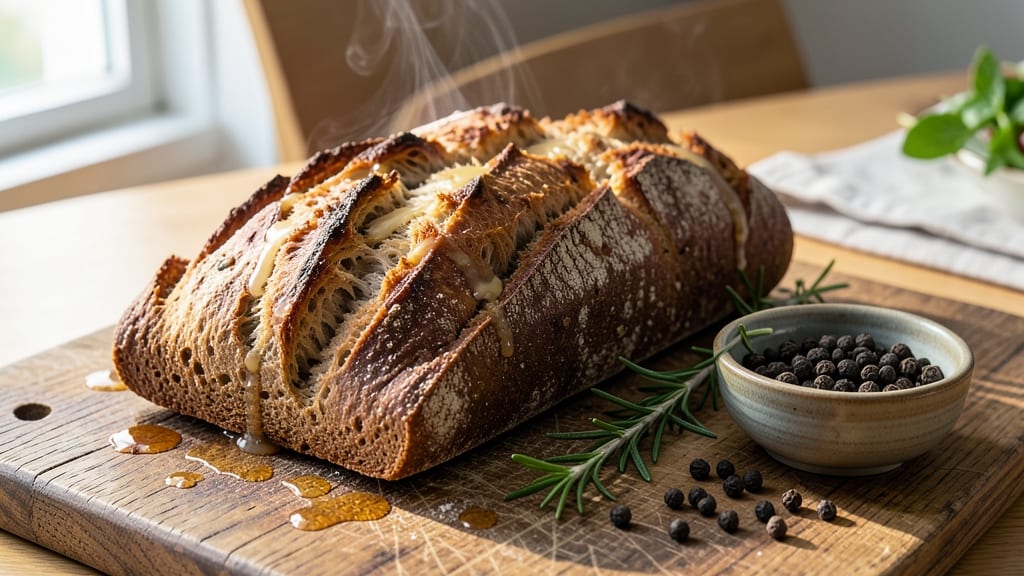
This Alpine grain bread recipe brings the hearty, rustic flavors of the Swiss Alps to your kitchen table, where every slice delivers a nutty, dense crumb and a crispy, golden crust. 🌟 The secret lies in blending whole grains like rye and barley with traditional flour, creating a bread that’s both satisfying and packed with texture. I’ve perfected this recipe over years of baking, ensuring it’s foolproof for home cooks while staying true to its Alpine roots.
The beauty of Alpine grain bread is its versatility—it pairs perfectly with soups, stews, or even as a standalone centerpiece for charcuterie boards. The grains add a subtle earthiness that deepens with each bite, while the crust develops a satisfying crunch when baked just right.
Unlike lighter breads, this one holds up beautifully for days, making it ideal for meal prep or gifting.
What sets this recipe apart is the balance of technique and simplicity. No fancy equipment is needed—just a bowl, a dough scraper, and a little patience. The kneading process develops gluten for structure, while the slow proofing allows flavors to meld naturally.
By the time it emerges from the oven, you’ll have a loaf that looks as impressive as it tastes.
Whether you’re serving it warm with butter or saving slices for toast the next morning, this bread is a game-changer for any kitchen. Let’s get started on creating your own rustic masterpiece.
Ingredients for alpine grain bread
Simple grains and a few pantry staples create this rustic, nutty Alpine bread.
| Ingredient | Amount | Notes |
|---|---|---|
| All-Purpose Flour 🌾 | 3 cups | For structure and lightness |
| Whole Wheat Flour 🌾 | 1 cup | For heartier texture |
| Rye Flour 🌾 | ½ cup | For nutty Alpine flavor |
| Barley Flour 🌾 | ½ cup | For earthy depth |
| Active Dry Yeast 🍞 | 2 ¼ tsp | Ensure it's fresh |
| Granulated Sugar 🍚 | 1 tbsp | Feeds the yeast |
| Salt 🧂 | 1 ½ tsp | Kosher or sea salt |
| Warm Water 💧 | 1 ¼ cups | 105-110°F for yeast activation |
| Extra-Virgin Olive Oil 🫒 | 1 tbsp | For dough elasticity |
| Honey 🍯 | 1 tbsp | Enhances crust color |
| Poppy Seeds 🌻 | 1 tbsp | For Alpine-inspired topping |
| Coarse Sea Salt 🧂 | 1 tsp | For final crust sprinkle |
The flours are what make this bread special. Bob's Red Mill has great whole grain options if you want to grab everything in one place. For the rye and barley, look for King Arthur Flour—their pre-ground flours are consistent and flavorful. If you're feeling adventurous, toast the whole grains lightly before grinding for even deeper flavor. The yeast needs to be fresh—check the date on the package. If it's been sitting in your pantry for months, toss it and grab a new packet. Warm water is key here—too hot and you'll kill the yeast, too cold and it won't activate properly. I always test mine by dropping a bit in the bowl—it should bubble within 5 minutes.
No whole wheat flour? Substitute with white whole wheat if you've got it, or use all-purpose at half the amount. Running low on rye? Buckwheat flour works too—it's got a similar earthy kick. The honey can be swapped for maple syrup if you're avoiding refined sugar, but trust me, the flavor difference is worth it. Olive oil out of stock? Melted coconut oil or butter works in a pinch, though the texture will be slightly different. For the poppy seeds, if you can't find them, sesame seeds or flaxseeds give a nice alternative topping. Just make sure whatever you use is toasted for extra crunch.
This dough is forgiving but benefits from patience. Let it rise in a warm spot—I pop mine in the oven with a bowl of hot water for 10 minutes to get it going. Once shaped, cover with a damp towel and let it proof for 1-2 hours until nearly doubled. For storage, wrap tightly in plastic and keep at room temperature for 3 days. Freeze slices for up to 3 months—just toast straight from frozen. Pro tip: Brush the crust with melted butter right after baking for extra richness. It's worth the extra minute.
Why You'll Love This Recipe
- No-Knead Magic: I swear by this dough—just mix, let it rise, and bake. The blend of rye and barley does the heavy lifting while I sip coffee, no energy required.
- Earthy Crunch: That first bite? The barley and rye add a deep, toasty bite that all-purpose flour alone can’t match. It’s like a rustic hug in bread form.
- Weeknight Workhorse: Toss it in a lunchbox, tear it over soup, or use it as a base for open-faced sandwiches. Honestly, I’ve never met a meal it didn’t improve.
- Budget-Friendly Staple: Pantry staples only—no specialty flours needed. A single batch stretches for days, and the yeast stretches my grocery budget further than store-bought ever could.
Step-by-step instructions for Alpine grain bread
Here's how to craft that perfect rustic crust and nutty crumb—every time.
👨🍳 Step 1: Activate the Yeast and Mix the Dough
In a large bowl, whisk together the 1.25 cups warm water, 1 tbsp granulated sugar, and 2.25 tsp active dry yeast. Let it sit for 5-10 minutes until it becomes foamy—this means your yeast is alive and ready to work. If it doesn't foam, your yeast might be old, and you'll need to start over.
In a separate bowl, combine the 3 cups all-purpose flour, 1 cup whole wheat flour, 0.5 cup rye flour, and 0.5 cup barley flour. Add the 1.5 tsp salt and mix lightly with a wooden spoon. Create a well in the center and pour in the yeast mixture along with the 1 tbsp extra-virgin olive oil and 1 tbsp honey. Mix until a shaggy dough forms.
🥘 Step 2: Knead Until Smooth and Elastic
Turn the dough onto a lightly floured surface and knead for 8-10 minutes until it becomes smooth and elastic. You'll know it's ready when it springs back slowly when poked. The combination of flours gives this dough a slightly denser feel, so don't be tempted to over-knead—just work it until it's cohesive and no longer sticky.
Real talk: This dough is heartier than standard bread dough, so it might feel heavier. That's exactly what we want for that Alpine-inspired texture. Once kneaded, place the dough back in the bowl, drizzle with a little olive oil, cover with a damp towel, and let it rise in a warm place for 1-2 hours or until doubled in size.
🔥 Step 3: Shape and Proof the Loaf
Once the dough has risen, punch it down to release air and shape it into a round loaf. For that rustic look, I like to create a well in the center and let it rise again for 30-45 minutes while we preheat the oven. The dough should puff up noticeably—this is what gives that beautiful Alpine bread shape.
Preheat your oven to 375°F with a Dutch oven inside for 30 minutes. This step is crucial—it gets the oven and pot piping hot so you get that perfect crust. While it heats, brush the risen dough with a little water and sprinkle the 1 tbsp poppy seeds evenly over the top. This gives that Alpine-inspired crunch and visual appeal.
🔥 Step 4: Bake for a Crispy Crust and Hearty Crumb
Carefully transfer the dough to the hot Dutch oven (use oven mitts—it's scorching!). Sprinkle the top with 1 tsp coarse sea salt and bake covered for 30 minutes. After that time, remove the lid and bake for another 15-20 minutes until the bread is golden brown and sounds hollow when tapped on the bottom.
Here's the thing—this bread is all about that contrast between the crispy crust and the soft, nutty interior. The Dutch oven traps steam initially, creating that perfect oven spring, then the uncovered bake develops that beautiful crust. Let it cool on a wire rack for at least 20 minutes before slicing—this prevents the crumb from becoming gummy.
Pro Tips For Making Alpine Grain Bread
- Bloom the Yeast First: Skip mixing yeast directly with flours—it’ll wake up faster in warm water with a pinch of sugar. I learned this the hard way when my dough took three times longer to rise because the yeast was sluggish from dry flour. Five minutes in liquid is all it needs to prove it’s alive before you even touch the grains.
- Sift the Rye Separately: Rye flour is dense and gummy—sifting it alone removes lumps that’ll make your dough sticky and uneven. I used to just dump it in, and my bread ended up with those annoying pockets of uncooked flour. Take the extra 30 seconds; your crumb will thank you.
- Don’t Over-Knead the Barley: Barley flour develops gluten fast—overwork it, and your bread turns tough instead of chewy. Stop when the dough springs back just slightly when poked, not when it’s bouncy like pizza dough. I’ve ruined batches by kneading until my arm gave out.
- Steam the First 10 Minutes: Alpine grain bread’s crust needs that crispy, rustic edge. Fill a baking tray with boiling water, place your loaf on a rack above it, then cover the pan with foil. After 10 minutes, remove the foil and crank the oven to finish browning—this guarantees a crackly exterior without burning the interior. (Yes, even if you’re impatient like me.)
Dietary considerations for this alpine grain bread
Gluten-Free Adaptation
To make this Alpine bread gluten-free, replace the all-purpose and whole wheat flours with a 1:1 gluten-free flour blend like King Arthur Measure for Measure.
Use 4 cups total of the blend, keeping the same ratio of rye and barley flours (0.5 cup each) for that authentic Alpine flavor. Add 1 tsp xanthan gum to help bind the dough—this is key for structure.
The dough will be stickier, so wet your hands when handling it. 🌾
Low-Carb Option
For a lower-carb version, swap the flours for almond flour and coconut flour in a 3:1 ratio, using 3 cups almond flour and 1 cup coconut flour. Reduce the honey to 1 tsp and add 2 extra egg whites for moisture.
This version will be denser but still packed with nutty flavor. Keep in mind it won’t rise as much, so shape it into a flat loaf for even baking.
Dairy-Free Substitutes
This recipe is naturally dairy-free, but if you’re avoiding honey, use maple syrup instead—just reduce it to 1 tsp to match the sweetness. For extra richness in the crust, brush with melted coconut oil instead of olive oil after baking.
The poppy seeds and coarse salt topping remain dairy-free and add that Alpine crunch without any substitutions needed.
Nut-Free Version
Skip the poppy seeds entirely and replace them with toasted sesame seeds or flaxseeds for a nut-free topping. These still give that satisfying crunch while avoiding common allergens. If you’re also avoiding gluten, ensure your sesame seeds are certified gluten-free.
The flavor remains hearty and nutty thanks to the rye and barley flours—just the seeds get the swap.
Allergen-Friendly Tips
For a soy-free version, ensure your yeast is soy-free (check labels) and use olive oil instead of any soy-based oils. If you’re avoiding eggs, this recipe is already egg-free, but if you’re making the low-carb version, stick to the almond/coconut flour blend without extra egg whites.
Always double-check flour blends for cross-contamination warnings if allergies are a concern. 💡
Nutrition facts
Frequently asked questions
Why does this Alpine bread use multiple flours?
The combination of all-purpose, whole wheat, rye, and barley flours creates the signature Alpine texture and flavor. Rye and barley add nutty depth, while whole wheat contributes heartiness. This blend gives the bread its dense yet satisfying crumb that holds up beautifully to soups and stews.
Can I make this bread without a Dutch oven?
Yes! If you don't have a Dutch oven, bake the bread on a baking sheet lined with parchment paper. For extra crustiness, spray the dough with water before baking and place a metal baking tray on the rack below during the first 15 minutes to create steam. The crust won't be as thick, but the flavor will still be fantastic.
How do I know when the bread is fully baked?
The bread is done when it reaches an internal temperature of 190-200°F and sounds hollow when tapped on the bottom. Look for a deep golden-brown crust, and the edges should pull away slightly from the sides. If unsure, bake 5 more minutes—Alpine bread is hard to overbake, but it's easy to underbake.
What's the best way to store leftover Alpine bread?
Wrap cooled slices tightly in plastic wrap or store the whole loaf in an airtight container. It stays fresh for 3-4 days at room temperature. For longer storage, freeze slices for up to 3 months. Toast straight from frozen for maximum crispiness—no thawing needed!
Can I add seeds or nuts to the dough?
Fold in 1/4 cup chopped walnuts, sunflower seeds, or pumpkin seeds during the final kneading. For even distribution, mix them with 1-2 tbsp flour first. Just be mindful of portion sizes—too many can make the dough too dense or affect rising.