
Side Dishes
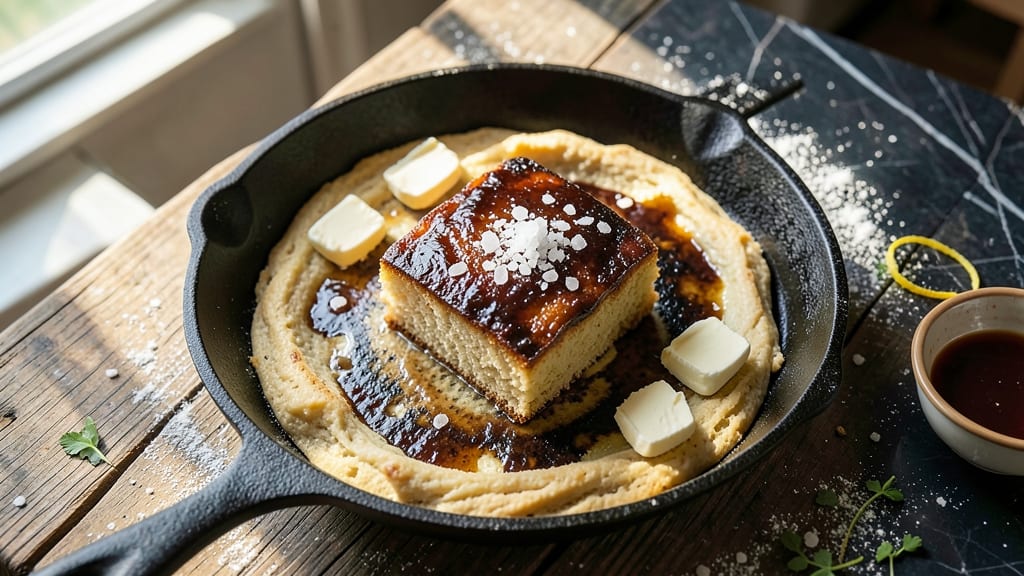
This American soda bread recipe delivers rustic charm with a crisp buttery crust and tender molasses-infused heart—perfect for pairing with soups or slathered in butter. The secret lies in its simplicity: just flour, buttermilk, baking soda, and a touch of molasses for depth.
I’ve perfected this no-knead method over years, ensuring a golden crust and moist interior every time without fuss.
The beauty of soda bread is its versatility—add raisins, seeds, or herbs to customize it, but the classic version speaks for itself. What sets this apart is the tangy molasses that cuts through the richness, creating a balance that’s both comforting and sophisticated.
It rises quickly (no waiting hours) and bakes in under an hour, making it ideal for weeknight meals or holiday tables.
Imagine pulling a warm loaf from the oven, its crust crackling under your fingers while the molasses aroma fills the kitchen. The texture is firm yet tender, with a slight crumb that holds up to butter or jam.
This isn’t just bread—it’s a centerpiece, a tradition, and a testament to how simple ingredients can create something extraordinary.
Serve it fresh with soups, stews, or alongside breakfast—its hearty appeal makes it a staple in American kitchens. The recipe below ensures you’ll achieve that perfect buttery crust and molasses-kissed heart, just like Grandma used to make. Let’s get baking!
Ingredients for american soda bread
Classic pantry staples transform into rustic American soda bread with golden crust and molasses depth.
| Ingredient | Amount | Notes |
|---|---|---|
| All-Purpose Flour 🌾 | 4 cups | Sifted for best texture |
| Buttermilk 🥛 | 1 ½ cups | Room temperature preferred |
| Baking Soda 🧂 | 1 tbsp | Freshly measured for lift |
| Unsalted Butter 🧈 | ½ cup | Cold, cubed for crust |
| Molasses 🍯 | ¼ cup | Dark, not light variety |
| Salt 🧂 | 1 tsp | Fine sea salt preferred |
| Granulated Sugar 🍚 | 2 tbsp | Balances molasses sweetness |
| Large Egg 🥚 | 1 whole | Room temperature for mixing |
| Milk 🥛 | ¼ cup | For dough consistency |
| Poppy Seeds 🌱 | 2 tbsp | Optional for texture |
The flour is non-negotiable here—King Arthur or Gold Medal work best for that tender crumb. Buttermilk should be room temperature for proper gluten development; cold buttermilk can make the dough too stiff. For the molasses, dark amber variety (like Goya) delivers the richest flavor—light molasses tastes flat. The baking soda needs to be fresh; if your stash is over a year old, it’s time to replace it. Poppy seeds are optional but add a lovely crunch—Bob’s Red Mill sells them in bulk if you want to experiment with other seeds like sesame or flax.
No buttermilk? Substitute 1.5 cups milk plus 1 tbsp vinegar or lemon juice, let it sit 5 minutes. Out of molasses? Maple syrup at half the amount works in a pinch, though it lacks the tangy depth. The butter should be cold but not rock-hard—cut it into small cubes and let it sit at room temp for 10 minutes before mixing. For a sweeter loaf, increase the sugar to 3 tbsp. The dough will be sticky, but don’t overmix—just combine until the flour is moistened. If it’s too wet, add 1 tbsp more flour; if too dry, add 1 tbsp milk.
Shape the dough into a round loaf and place it on a parchment-lined baking sheet—this prevents sticking and makes slicing easier. Let it rise uncovered at room temp for 30-45 minutes until puffy. For storage, keep wrapped in a clean kitchen towel at room temp for 2 days, or freeze for up to 3 months. To reheat, wrap in foil and warm at 300°F for 10 minutes. The crust stays crisp for 2 hours after baking, so slice while still warm for the best texture.
Why You'll Love This Recipe
- No Mixer Needed: I swear by this—just flour, buttermilk, and a pinch of baking soda. Mix it in a bowl, shape it, and pop it in the oven. That’s it. No stand mixer, no fuss, just pure simplicity.
- Molasses Magic: Honestly, the molasses transforms this bread. It’s not too sweet—just enough to give it depth, that warm caramel note that makes every bite feel like a hug. The butter keeps it tender, and the soda bread’s signature tang ties it all together.
- Breakfast to Picnic: Between us, I make this for everything. Toast it for breakfast with jam, serve it warm with butter for dinner, or pack slices for a picnic. It’s the one loaf that does it all without feeling like a chore.
- Budget-Friendly Staple: Flour, buttermilk, and butter? Pantry basics. No specialty ingredients, no markup. And a single batch feeds my family for days—leftovers toast up just as well as fresh. My wallet (and my taste buds) thank me every time.
Step-by-step instructions for American soda bread
Here's the method for a tender interior and golden crust—every detail matters.
Mix Dry Ingredients for Optimal Texture
In a large mixing bowl, combine the 4 cups all-purpose flour, 1 tablespoon baking soda, 1 teaspoon salt, and 2 tablespoons granulated sugar. Sift the flour first if possible—this prevents lumps and ensures even distribution of the leavening agents. Use a whisk to break up any remaining clumps, creating a smooth base for the dough.
The baking soda reacts with the buttermilk's acidity to create lift, while the salt balances the molasses' sweetness. Don't skip sifting—those tiny flour pockets trap air, which is crucial for that signature soda bread texture. I like to press down gently with my fingers to aerate the mixture further before adding liquids.
Combine Wet Ingredients for Perfect Dough
In a separate bowl, whisk together the 1.5 cups buttermilk, 0.25 cup molasses, 0.5 cup cold cubed unsalted butter, 1 whole large egg, and 0.25 cup milk. The butter should remain cold—this creates those coveted flaky layers in the crust. Add the 2 tablespoons poppy seeds to this mixture and stir until evenly distributed.
Here's the thing—molasses can be thick, so I recommend thinning it slightly with the milk if needed. The buttermilk should be room temperature but not warm; cold buttermilk makes the dough too stiff. Pour this wet mixture into the dry ingredients and stir with a wooden spoon until just combined. The dough will be shaggy but shouldn't require excessive mixing—overworking develops gluten and makes the bread dense.
Shape and Rest for Ideal Rise
Turn the dough onto a lightly floured surface and gently shape it into a round loaf about 10 inches in diameter. Don't press too hard—this bread relies on its rustic texture. Place the dough on a parchment-lined baking sheet and let it rest at room temperature for 30 minutes. This brief rest allows the gluten to relax slightly, preventing cracking during baking.
I like to make a shallow cross on top with a sharp knife before baking—this creates those beautiful crust patterns while allowing steam to escape. The cross should be about ½ inch deep but not cut all the way through. Cover the dough loosely with a clean kitchen towel and let it rise for an additional 15 minutes in a warm spot—just enough time for the baking soda to activate without overproofing.
Bake to Golden Perfection
Preheat your oven to 375°F with a baking stone or inverted baking sheet on the lower rack—this creates steam for a crisp crust. Bake the bread for 45-50 minutes until the top is deep golden brown and sounds hollow when tapped on the bottom. The internal temperature should reach 190-200°F at its center.
Don't open the oven during baking—you'll lose that critical steam. If the top browns too quickly, loosely tent with foil after 25 minutes to prevent over-browning while allowing the interior to cook through. The bread is done when it springs back slowly when gently pressed and pulls away cleanly from the pan.
Cool and Serve for Maximum Enjoyment
Transfer the bread to a wire rack and let it cool completely for at least 1 hour before slicing. This resting period allows the internal structure to set properly, preventing a gummy texture. The crust should be crisp, the crumb tender with a slight chew, and the molasses flavor balanced by the buttery richness.
Slice with a serrated knife for clean cuts that reveal the beautiful crumb structure. Serve warm with butter or jam for the ultimate experience. The bread keeps well at room temperature for 2-3 days or can be frozen for up to 3 months—just thaw at room temperature before serving.
Pro Tips For Making American Soda Bread
- STIR THE BUTTERMILK FIRST: Cut the cold unsalted butter into the dry flour before adding buttermilk—this creates a crumbly texture that disappears when wet. I used to mix everything at once, and the bread turned out dense; now it’s light and tender.
- MEASURE MOLASSES BY WEIGHT: Molasses varies wildly in thickness—1 tablespoon by volume isn’t always 1 tablespoon by weight. Use a kitchen scale for accuracy; 20 grams (about 1.5 tbsp) is the sweet spot for that classic deep flavor without overpowering.
- DON’T OVERMIX THE DOUGH: Stir just until the flour is barely moistened—lumps are fine. Overworking the dough activates the gluten, and your bread will turn out tough instead of tender. Think "just combined," not "smooth batter."
- BAKE UNTIL 200°F INTERNAL: The bread’s done when the internal temp hits 200°F, not when it looks golden. I learned this after pulling loaves too soon—underbaked soda bread stays gummy. A thermometer takes the guesswork out of it.
Dietary considerations for this dish
Gluten-Free Adaptation
For a gluten-free version, replace the 4 cups all-purpose flour with a 1:1 gluten-free baking flour blend like Bob's Red Mill 1-to-1. Add 1 extra tablespoon of xanthan gum to mimic gluten's structure.
The dough will be stickier, so wet your hands when shaping. Bake at 350°F instead of 375°F for 50-55 minutes—gluten-free breads need lower heat to avoid over-browning. 🌾
Dairy-Free Options
Swap the buttermilk for unsweetened almond milk mixed with 1 tablespoon vinegar (let sit 5 minutes). Use vegan butter like Miyoko's (cold, cubed) instead of unsalted butter. The egg can stay, but for a fully egg-free version, add 1 tablespoon ground flaxseed mixed with 3 tablespoons water as a binder.
The texture will be slightly denser but still delicious. 🧈
Low-Sugar Version
Reduce the granulated sugar to 1 tablespoon and omit the molasses entirely. Instead, add 1 teaspoon cinnamon and ½ teaspoon vanilla extract to the wet ingredients for warmth. Use unsweetened applesauce (2 tbsp) to replace the molasses' moisture. This keeps the bread tender while cutting sugar by 75%. 🍯
Nut-Free Alternative
Skip the poppy seeds and replace them with 2 tablespoons sunflower seeds for a nut-free crunch. Alternatively, add 1 teaspoon dried cranberries (chopped) or 1 tablespoon dried herbs like rosemary or thyme. These additions keep the texture interesting without relying on seeds or nuts. 🌱
Allergen-Friendly Tips
For egg allergies, use the flaxseed binder mentioned earlier. If you're sensitive to molasses, substitute ½ cup unsweetened applesauce or ¼ cup maple syrup. Always check labels on baking soda and spices for hidden allergens.
I keep a dedicated baking station to avoid cross-contamination when switching between allergen-free and regular recipes. ✨
Nutrition facts
Frequently asked questions
Why does my soda bread turn out dense instead of light and tender?
Overmixing the dough develops too much gluten, making the bread dense. Stir just until the flour is moistened—about 20-25 strokes with a wooden spoon. Also, ensure your baking soda is fresh (older soda loses potency) and use room-temperature buttermilk. The dough should be shaggy, not smooth.
Can I make soda bread without buttermilk?
Yes! Mix 1.5 cups milk with 1 tablespoon vinegar or lemon juice, let sit 5 minutes until thickened, then use as a 1:1 substitute. For extra tang, add ½ teaspoon extra molasses to the wet ingredients. The bread will still rise but may have a slightly less tender crumb.
How do I store leftover soda bread to keep it fresh?
Wrap the cooled loaf tightly in a clean kitchen towel or plastic wrap, then place in a paper bag at room temperature for 2-3 days. For longer storage, freeze slices wrapped in foil for up to 3 months. To revive stale bread, warm at 300°F for 10 minutes wrapped in foil.
What's the best way to add raisins or seeds to soda bread?
Fold them into the dough after mixing wet and dry ingredients, but don't overmix. For even distribution, sprinkle ½ cup raisins or 3 tbsp seeds over the shaped loaf before baking. Soak raisins in warm water for 10 minutes first to plump them up.
Why does my soda bread crack on top?
Rapid temperature changes cause cracking. Let the dough rise in a warm (not hot) oven with the light on for 5 minutes before baking, or cover it with a towel during the first 15 minutes of baking. Also ensure your oven isn't too hot—375°F is ideal. A shallow cross cut before baking helps control cracking while adding visual appeal.