
Side Dishes
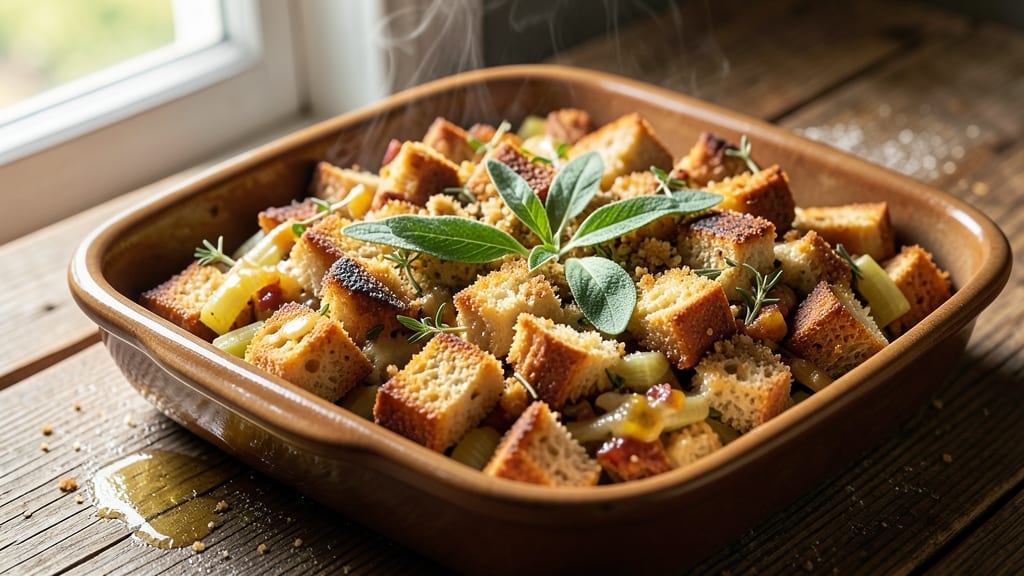
Amish bread stuffing transforms simple ingredients into a dish that’s hearty, fragrant, and impossible to resist—especially when the bread cubes stay juicy and the herb crust crackles with every bite. This recipe preserves the traditional Amish approach while adding a professional touch that elevates it beyond basic stuffing. The secret lies in slow-toasting the bread just enough to absorb flavor without drying out, then baking it with rich broth and aromatic herbs until golden and crisp at the edges.
What sets this recipe apart is the balance of textures: tender, moist bread cubes hold onto the savory broth, while the top layer develops a golden, herb-infused crust that’s irresistibly crisp. The combination of celery, onions, and fresh herbs—like sage and thyme—builds layers of flavor that deepen as it bakes.
It’s the kind of dish that smells like comfort, perfect for Thanksgiving tables or family gatherings where tradition meets modern technique.
This stuffing delivers juicy bread cubes that stay moist even after reheating, thanks to a technique that avoids over-toasting. The result is a dish that’s rich, aromatic, and packed with the kind of homey flavors that make it a centerpiece.
Whether served alongside roasted turkey, ham, or as a standalone side, it’s a recipe that brings warmth to the table—and a little bit of Amish heritage to your kitchen.
Ready in about an hour, it’s a dish that rewards patience with a final product that’s crisp, flavorful, and impossible to skip. The best part? It’s customizable—add sausage for extra heartiness, swap herbs for your favorites, or use vegetable broth for a lighter twist. Let’s make it.
Ingredients for amish bread stuffing
Simple, hearty ingredients create Amish-style stuffing with juicy bread and crisp herb crust.
| Ingredient | Amount | Notes |
|---|---|---|
| Day-Old Bread Cubes 🍞 | 8 cups | Stale or lightly toasted |
| Unsalted Butter 🧈 | ½ cup | Cold, cubed for even toasting |
| Fresh Sage Leaves 🌿 | ½ cup | Chopped, stems removed |
| Fresh Thyme Leaves 🌿 | ¼ cup | Chopped, stems removed |
| Celery Stalks 🧅 | 2 whole | Diced, about 1 cup |
| Yellow Onion 🧅 | 1 whole | Diced, about 1 cup |
| Chicken Broth 💧 | 2 ½ cups | Low-sodium preferred |
| Whole Eggs 🥚 | 2 whole | Beaten for binding |
| Garlic Cloves 🧄 | 4 cloves | Minced, about 1 tsp |
| Salt 🧂 | 1 ½ tsp | Diamond Crystal kosher |
| Ground Black Pepper 🌶️ | 1 tsp | Freshly ground |
| Panko Breadcrumbs 🍞 | ½ cup | For crispy herb crust |
| Fresh Parsley Leaves 🌿 | ¼ cup | Chopped, for garnish |
The bread is the foundation—day-old loaves (like sourdough or French bread) work best, but any stale bread will do. Whole-grain or crusty bread adds texture, while soft white bread stays moister. If you're short on time, lightly toast the cubes in butter for 5-7 minutes until golden. For extra richness, use unsalted butter—it melts beautifully and lets you control the seasoning. Fresh herbs are non-negotiable here; Trader Joe's or local farmers markets have the best quality. If you can't find fresh sage or thyme, dried works at one-third the amount, but the flavor won't be as vibrant.
No chicken broth? Vegetable broth works equally well—just adjust salt to taste. The eggs bind everything together, but if you're avoiding them, 2 tbsp cornstarch or flour mixed with 2 tbsp water does the trick. For a meatier twist, add ½ lb cooked sausage or bacon crumbles. The celery and onion are classic, but leeks or mushrooms add depth. If you're prepping ahead, toast the bread cubes and store them in an airtight container for up to 3 days—just add the wet ingredients when ready to bake. The herb crust? Panko plus extra chopped herbs makes it extra crispy.
This stuffing reheats beautifully—350°F for 20-25 minutes until golden and bubbly. Store leftovers in an airtight container for 4-5 days or freeze for 3 months. For easy reheating, portion into individual containers before freezing. The herb crust gets softer when reheated, so if you're serving it cold, bake it fresh. Fresh parsley at the end? Garnish just before serving—it brightens up the dish and adds a pop of color. Make a double batch; it disappears fast at gatherings.
Why You'll Love This Recipe
- No-Fuss Prep: I’ll admit, I used to dread stuffing—chopping celery, toasting bread, remembering all the steps. But this? Just cube that day-old bread, toss it with butter and herbs, and let the oven do the work. Honestly, I’ve made it while scrolling through my phone.
- Herb-Packed Punch: That combo of fresh sage and thyme? It’s like a warm hug in bread form. The butter melts into the bread just enough to stay moist but not soggy, while the celery adds a satisfying crunch that disappears at the perfect moment.
- Double-Duty Side: Between us, I make this for Thanksgiving, sure—but I also throw it in sandwiches or serve it alongside roasted chicken for a lazy Sunday. The leftovers? Even better reheated with a splash of broth. (Yes, even on a Tuesday night.)
- Budget-Friendly Staples: You’re using ingredients you already have: stale bread, a head of celery, and a few herbs from the garden. No fancy shortcuts, no wasted money—just solid, reliable flavor that won’t break the bank. My wallet thanks me every time.
Step-by-step instructions for Amish bread stuffing
This method delivers moist, flavorful stuffing with a golden herb crust every time.
Toast the Bread Cubes for Perfect Texture
Preheat your oven to 350°F and spread the 8 cups day-old bread cubes evenly on two rimmed baking sheets. Toast for 10-12 minutes until the edges are lightly golden and the cubes feel dry to the touch. This step prevents a gummy texture and ensures each bite stays juicy.
Real talk: Don't skip toasting—it's what transforms soggy bread into the perfect base. Stir the cubes halfway through for even browning. You want them warm but not browned to a crisp. Once toasted, remove them from the oven and let cool slightly while you prepare the other ingredients.
Sauté Aromatics Until Fragrant
In a large skillet, melt the 0.5 cup unsalted butter over medium heat. Add the diced celery stalks and diced yellow onion, cooking for 8-10 minutes until softened and the onion becomes translucent. Stir in the minced garlic cloves and cook for another 30 seconds until fragrant.
Here's the thing—don't walk away. Garlic burns faster than you think. You'll know it's ready when the kitchen smells like a holiday feast. Remove the skillet from heat and let the aromatics cool for 5 minutes before mixing with the bread.
Combine Ingredients and Bind the Mixture
In a large mixing bowl, combine the toasted bread cubes, sautéed aromatics, 0.5 cup chopped fresh sage leaves, 0.25 cup chopped fresh thyme leaves, 1.5 tsp salt, and 1 tsp ground black pepper. In a separate bowl, whisk together the 2 whole eggs and 2.5 cups chicken broth until fully combined.
Pour the egg-broth mixture over the bread mixture and gently fold together using a large spoon or rubber spatula. You want to combine everything just until no dry spots remain—overmixing develops gluten and makes the stuffing tough. The mixture should look moist but not soupy.
Create the Herb Crust and Bake
Transfer the stuffing mixture to a greased 9x13-inch baking dish. In a small bowl, combine the 0.5 cup panko breadcrumbs with 1 tablespoon chopped fresh parsley leaves. Sprinkle this mixture evenly over the top of the stuffing, pressing down gently to create a crispy crust.
Bake uncovered at 375°F for 30-35 minutes until the top is golden brown and the internal temperature reaches 165°F. The edges should pull away slightly from the baking dish, and the stuffing should feel firm to the touch. If the top browns too quickly, tent loosely with foil to prevent over-browning.
Rest and Serve for Maximum Juiciness
Remove the stuffing from the oven and let it rest for 10 minutes before serving. This resting period allows the juices to redistribute throughout the stuffing, ensuring each bite is moist and flavorful. The crust will firm up slightly as it cools, but it will still be crispy and aromatic.
Serve warm from the baking dish, garnished with the remaining 0.15 cup chopped fresh parsley leaves. The stuffing should have a golden crust on top, tender bread cubes, and a rich herbed flavor that complements any holiday meal. Don't skip the resting step—it's what separates good stuffing from exceptional stuffing.
Pro Tips For Making Amish Bread Stuffing
- Dry the bread cubes first: Toss those day-old bread cubes in a single layer on a baking sheet and let them sit for 30-45 minutes before baking. I learned this the hard way—skipping this step means soggy stuffing no matter how much butter you add. Trust me, the extra 10 minutes now saves you from a gummy mess later.
- Sweat the celery right: Cook the chopped celery in butter over medium heat until it’s soft and the edges just start to brown—about 5 minutes. This isn’t just about flavor; it’s the thing that matters most for texture. Raw celery stays crunchy and ruins the whole dish. (Yes, even if you’re impatient like me.)
- Chop herbs at the last minute: Keep those fresh sage and thyme leaves whole until you’re ready to fold them into the stuffing. Once you start baking, the heat will crisp them up perfectly—no need to pre-chop and lose their brightness. Sounds weird, but it works: the leaves stay vibrant and aromatic longer.
- Bake it uncovered the first 10 minutes: Start your stuffing in the oven with the lid off to let moisture escape. After 10 minutes, cover it loosely with foil to trap steam and finish baking. I skip this when I’m lazy, but the dish is noticeably better when I don’t—crispier edges and way less drying out.
Common mistakes when making great amish bread stuffing
Over-Toasting Bread
The biggest mistake is over-toasting the bread cubes, which turns them dry and crumbly. I’ve seen stuffing go from juicy perfection to sad, hard bites because someone left the cubes in the oven too long.
Aim for just 10-12 minutes at 350°F—they should be golden at the edges but still soft in the center. If you’re unsure, test one cube: it should hold its shape when pressed but still feel warm, not crisp. 🔥
Skipping the Resting Step
Rushing to serve stuffing right out of the oven is a classic error. The 10-minute rest lets juices redistribute, so every bite stays moist. I’ve cut into stuffing too soon and ended up with a dry top layer and a soggy bottom.
Let it sit—it’s worth the wait for that perfect texture.
Using Fresh Bread
Fresh bread is a no-go—it’s too moist and will turn your stuffing into a gummy mess. The starches in fresh bread absorb too much liquid, making the texture dense and unpleasant. Stick to day-old bread or lightly toast stale cubes to get that ideal balance of crisp and tender.
Overmixing the Mixture
Vigorously stirring the stuffing after adding the egg-broth mixture develops gluten, which makes it tough. Gently fold just until combined—you should still see pockets of broth. I’ve ruined stuffing by overmixing, and it’s a texture disaster. Think "just combined," not "perfectly blended."
Neglecting the Herb Crust
Skipping the panko-herb topping means missing out on the best part—the crispy, flavorful crust! The panko and parsley combo adds texture and aroma that elevate the dish. Don’t skip it—this is what makes your stuffing stand out from basic recipes.
Underestimating Broth Quantity
Using too little broth makes stuffing dry, while too much turns it soggy. The 2.5 cups in this recipe is perfect for juicy, flavorful results.
If you’re unsure, start with the full amount—you can always add a splash more if needed, but you can’t fix dry stuffing once it’s baked. 💫
Nutrition facts
Frequently asked questions
Can I use any type of bread for Amish bread stuffing?
Stick to day-old bread like sourdough, French, or crusty whole-grain loaves for the best texture. Fresh bread is too moist and will turn your stuffing gummy. If you only have fresh bread, lightly toast cubes in butter for 5-7 minutes to remove excess moisture before using.
How do I make this stuffing gluten-free?
Replace the bread cubes with gluten-free bread or gluten-free cornbread crumbs, and use a gluten-free panko for the crust. The recipe will work with these substitutions, but test your gluten-free bread first to ensure it holds up during baking. Just 10-12 minutes of toasting is key!
Can I prepare this stuffing ahead of time?
Toast the bread cubes and store them in an airtight container for up to 3 days. Assemble the stuffing (without baking) and refrigerate for 24 hours or freeze for 3 months. Bake from frozen at 375°F for 45-50 minutes, adding 5-10 minutes of extra time if needed.
What’s the secret to keeping the bread cubes juicy?
The trick is light toasting (just golden edges) and the right broth-to-bread ratio. The 2.5 cups chicken broth plus 2 eggs create a perfect moisture balance. Over-toasting or underestimating broth will dry out your stuffing—aim for tender, not crispy, bread cubes!
Can I make this stuffing without eggs?
Yes! Mix 2 tbsp cornstarch or flour with 2 tbsp water to replace the eggs. Whisk until smooth and use it just like the egg mixture. This keeps the stuffing bound and moist without the egg flavor. For extra richness, add 1 tbsp melted butter to the mixture.