
Side Dishes
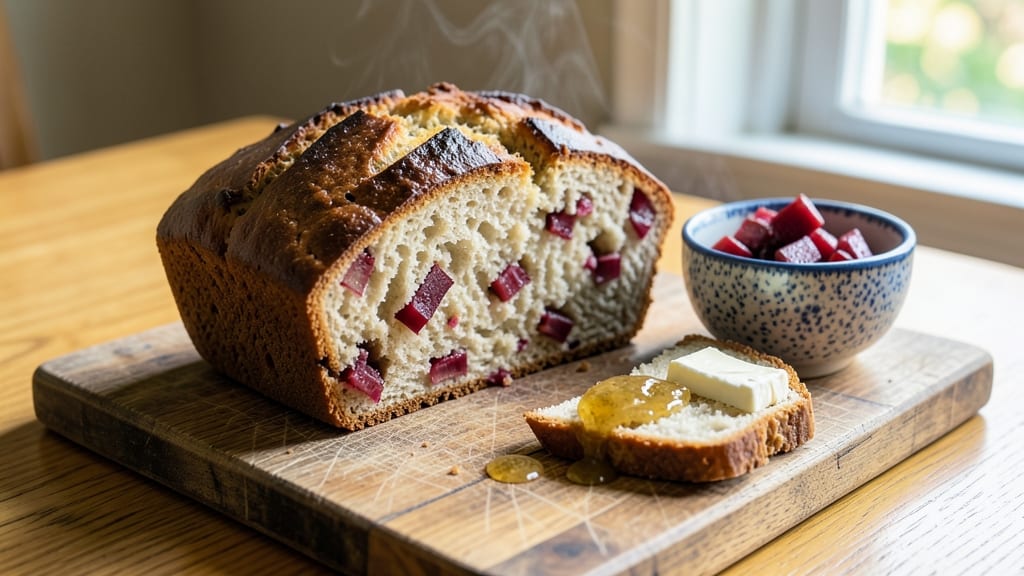
This Amish rhubarb bread recipe brings the warmth of a Pennsylvania farmhouse to your kitchen, where tender crumb meets bursts of tart-sweet rhubarb in every bite. 🌟 The Amish tradition of using fresh, seasonal produce shines here—no yeast, no fuss, just a simple dough and chunks of rhubarb that caramelize beautifully as they bake.
I first tried this recipe during a visit to an Amish community, where homemakers swore by its foolproof method for turning humble ingredients into something extraordinary.
The magic lies in the balance between the buttery, slightly sweet dough and the bright acidity of the rhubarb, which softens just enough to release its natural juices without turning mushy.
This recipe delivers a loaf with a golden crust and a moist interior, where each slice reveals pockets of rhubarb swirled throughout. The best part? It bakes in just 50 minutes, making it perfect for a weekend breakfast or a special side dish that feels like a homemade hug.
What sets this bread apart is its versatility—serve it warm with butter straight from the oven, or let it cool slightly for crispy toast with jam. The rhubarb adds a subtle tang that cuts through the richness, creating a harmony that’s both comforting and refreshing.
Whether you’re baking for a family gathering or treating yourself to a taste of tradition, this recipe delivers results that taste like they came from a farmhouse kitchen.
For those who love to adapt, you can swap in other fruits like apples or blueberries, or even make a vegan version by using flax eggs and plant-based butter.
The instructions are designed to guide you through every step, from mixing the dough to achieving that perfect pull-away-from-the-pan crust. Let’s get baking!
Ingredients for amish rhubarb bread
Fresh rhubarb and buttery dough—this Amish bread recipe brings farmhouse charm to your kitchen with just 11 ingredients.
| Ingredient | Amount | Notes |
|---|---|---|
| All-Purpose Flour 🌾 | 4 cups | Sifted for light texture |
| Granulated Sugar 🍚 | ½ cup | Light brown preferred |
| Unsalted Butter 🧈 | ½ cup | Cold, cubed for mixing |
| Large Eggs 🥚 | 2 whole | Room temperature for blending |
| Vanilla Extract 🌿 | 1 tbsp | Pure, not imitation |
| Baking Powder 🧂 | 1 ½ tsp | Diamond Crystal preferred |
| Salt 🧂 | ½ tsp | Fine sea salt |
| Fresh Rhubarb 🍓 | 2 cups | Chopped into 1-inch pieces |
| Milk 🥛 | ½ cup | Whole milk for richness |
| Cinnamon 🌶️ | 1 tsp | Ground, not cassia |
| Lemon Zest 🍋 | 1 tbsp | Freshly grated |
The rhubarb is the star here, so grab the brightest, firmest stalks you can find—avoid any that feel mushy or have brown spots. Local farmers markets usually have the freshest in spring, but the grocery store works too. For the dough, King Arthur flour is my go-to for that perfect crumb, but any all-purpose will do. The butter? Cold and cubed is key—don't let it melt before mixing, or you'll end up with tough bread. Pro tip: if you can't find fresh rhubarb, frozen works in a pinch (thaw and pat dry).
No rhubarb? Swap in chopped apples or blueberries—just reduce the milk slightly since fruit releases moisture. Running low on vanilla? Almond extract at half the amount gives a nice twist. The cinnamon is non-negotiable for that classic Amish flavor, but if you're out, nutmeg at one-third the amount works. For a vegan version, replace the butter with coconut oil and use flax eggs (1 tbsp ground flax + 3 tbsp water per egg). The lemon zest might seem small, but it brightens up the whole loaf—don't skip it!
This dough keeps 2 days in the fridge wrapped tightly, or 3 months frozen in a loaf pan. The rhubarb can be prepped ahead and stored in the fridge for 3 days if you want to mix and bake later. For best results, bake immediately after shaping—it rises beautifully straight from the fridge. Leftovers? Toast with butter or slice for French toast the next day. The flavor only gets better as it sits!
Why You'll Love This Recipe
- No Fussy Steps: I swear by this recipe because it’s just mixing and baking—no kneading, no fussing with yeast. The butter gets creamed with sugar until fluffy, then you fold in that tangy rhubarb purée (trust me, it’s easier than chopping fruit), and boom. Done in one bowl.
- Sweet-Tart Magic: That balance of vanilla and rhubarb? Chef’s kiss. The sugar caramelizes just enough to make every slice taste like a hug, while the rhubarb keeps it bright—not cloying, not boring. Honestly, the first time I tasted it warm, I nearly burned my tongue.
- Breakfast or Snack: Serve it with coffee for a cozy morning, pack slices for lunch, or toss it in a lunchbox—it’s that reliable. (Yes, even on a Tuesday night when you’re too tired to think.) The texture holds up for days, so it’s my go-to for when I need something effortless but impressive.
- Pantry Staple Gold: You already have the ingredients—flour, sugar, butter—so it’s a budget win. And because it keeps well wrapped, I’ve fed a crowd with half a batch. Between us, this is the kind of bread that makes you look like a baking pro without the stress.
Step-by-step instructions for Amish rhubarb bread
This classic recipe delivers that perfect balance of tender crumb and tangy-sweet rhubarb swirls—every slice is a taste of Amish kitchen tradition!
👨🍳 Step 1: Mix the Dry Ingredients and Prepare the Rhubarb Filling
In a large mixing bowl, whisk together the 4 cups all-purpose flour, 1½ teaspoons baking powder, ½ teaspoon salt, 1 teaspoon cinnamon, and 1 tablespoon lemon zest. Sift the flour first for a lighter texture—this prevents dense bread. In a separate bowl, combine the 2 cups chopped fresh rhubarb, ½ cup granulated sugar, and a pinch of salt. Let this mixture sit for 5 minutes while you prepare the dough—this draws out some of the tartness.
I like to press the rhubarb pieces gently with a fork to release their juices. This creates a more flavorful filling that doesn't stay dry in the bread. The lemon zest adds a bright contrast that cuts through the rhubarb's natural tartness beautifully. Keep this mixture at room temperature while you make the dough—cold rhubarb can make the filling watery.
🍳 Step 2: Cream Butter and Sweeteners for Light Texture
In a stand mixer fitted with the paddle attachment, beat the ½ cup cold unsalted butter and ½ cup granulated sugar on medium speed for 3-4 minutes until light and fluffy. You're looking for a color change from pale to almost white—this incorporates air that helps the bread rise properly. Scrape down the sides of the bowl with a rubber spatula every minute to ensure even mixing.
Here's where it gets fun—the butter should look like whipped cream by the end. If it's still grainy after 4 minutes, let it sit at room temperature for another 5-10 minutes and try again. Cold butter creates pockets of steam during baking, which makes the bread extra tender. Don't rush this step—under-creaming leads to dense, cakey bread instead of that perfect Amish texture.
👨🍳 Step 3: Combine Wet Ingredients and Form the Dough
Add the 2 whole large eggs (at room temperature) and 1 tablespoon vanilla extract to the butter mixture, mixing on low speed until just combined. In a separate small bowl, whisk together the ½ cup milk and 1 tablespoon lemon zest. With the mixer running on low speed, gradually add the dry ingredients to the wet mixture, alternating with the milk mixture.
Mix just until combined—you should still see some flour streaks. Overmixing develops gluten and makes the bread tough. Once the dough comes together, turn it out onto a lightly floured surface and knead gently for 2-3 minutes until smooth. The dough should be slightly sticky but not wet. If it's too dry, add 1-2 teaspoons milk; if too sticky, add 1 tablespoon flour. This ensures the right balance for proper rising.
🥘 Step 4: Layer and Swirl the Rhubarb Filling
Divide the dough in half and roll each portion into a 12-inch circle on a floured surface. Place one circle on a parchment-lined baking sheet. Spread the rhubarb mixture evenly over one half of the dough, leaving a 1-inch border uncovered. Fold the empty half over the filled half and press the edges gently to seal. Repeat with the second dough circle.
This is where the magic happens—the swirl creates those beautiful rhubarb pockets in every slice. I like to use a rolling pin to gently press down on the filled side before folding to ensure even distribution. The rhubarb should peek out slightly from between the folds. Place the shaped loaves on the prepared baking sheet and let them rise at room temperature for 30 minutes until puffy.
🔥 Step 5: Bake to Golden Perfection
Preheat your oven to 375°F while the dough rises. Brush the tops of the loaves with a little milk for a golden finish. Bake for 30-35 minutes until the tops are deep golden brown and a toothpick inserted in the center comes out clean. The bread should sound hollow when tapped on the bottom.
Here's the thing—don't open the oven during the first 20 minutes of baking. The steam is crucial for that tender crumb. If the tops brown too quickly, loosely tent with aluminum foil. When done, transfer to a wire rack to cool for 15 minutes before slicing. The bread will be warm and fragrant, with that perfect balance of sweet dough and tangy rhubarb in every bite!
Pro Tips For Making Amish Rhubarb Bread
- Cream Butter Properly: Use a wooden spoon or your fingers to work the cold butter into the sugar until it’s light and fluffy—not just mixed. I learned this the hard way when my bread turned out dense; the air in that butter-sugar combo is what keeps it tender. (Yes, even if you’re impatient like me.)
- Measure Flour Right: Spoon the flour into the measuring cup and level it off with a knife—don’t scoop directly from the bag. Packing it down changes the texture, and this bread relies on a delicate balance. My grandmother swore by this, and she was right: the crumb stays light.
- Don’t Overmix the Batter: Stop folding in the rhubarb as soon as it’s just combined—lumps are fine. Overmixing develops the gluten, and this bread should be soft, not chewy. I was skeptical until I tried it: the first batch I overworked turned out like a cake, not the tender loaf it’s supposed to be.
- Bake Until Golden: Check the bread at 325°F (160°C) for 45–50 minutes, then crank the oven to 375°F (190°C) for the last 10 minutes to get that deep golden crust. Sounds weird, but it works: the extra heat caramelizes the sugar just enough to make it irresistible. (Your future self will thank you.)
Best sauces and condiments for this amish rhubarb bread
Classic Butter Spread
Nothing complements Amish rhubarb bread like a generous slab of cultured butter straight from the fridge. I recommend Land O'Lakes Cultured Butter or Plugrá for their rich, slightly tangy flavor that enhances the rhubarb's tartness.
Warm the bread slightly before spreading to soften the butter and create that perfect melt-in-your-mouth texture. For extra indulgence, sprinkle with a pinch of flaky sea salt—it balances the sweetness beautifully. 🧈
Honey-Lemon Glaze
This bright, citrusy glaze elevates the bread to restaurant-quality status. Mix ¼ cup raw honey with 1 tablespoon fresh lemon juice and 1 teaspoon lemon zest, then brush it over warm slices. The honey's floral notes complement the rhubarb while the lemon cuts through the richness.
For a more robust flavor, add ½ teaspoon ground cinnamon to the mixture. Store any leftover glaze in an airtight container for up to 1 week in the fridge.
Rhubarb Compote
Use the leftover rhubarb from your bread to make a quick compote that pairs perfectly with slices. Simmer 1 cup chopped rhubarb with 2 tablespoons brown sugar and 1 tablespoon water for 10 minutes until softened. Finish with a splash of lemon juice and a pinch of salt.
This jammy topping adds another layer of rhubarb flavor that enhances every bite of bread. The sugar helps balance the tartness without overpowering the bread's natural sweetness.
Maple Cream Cheese
For a creamy, slightly sweet spread, mix 8 oz softened cream cheese with 2 tablespoons pure maple syrup and ½ teaspoon vanilla extract. Spread this on toasted bread slices for a luxurious breakfast or snack.
The maple syrup adds depth that pairs wonderfully with the rhubarb's acidity. For a protein boost, fold in 1 tablespoon chopped walnuts or pecans for crunch. This spread keeps well for 5 days in the fridge.
Caramelized Onion Jam
Sweet, jammy onions take this bread to new heights. Sauté 1 cup thinly sliced yellow onions in 1 tablespoon butter over low heat for 45 minutes until deeply caramelized. Stir in 1 tablespoon balsamic vinegar and 1 teaspoon brown sugar, then cook for another 5 minutes.
Spread on warm bread for a savory-sweet contrast that's absolutely irresistible. This jam stores beautifully in the fridge for 1 week in an airtight container.
Nutrition facts
Frequently asked questions
Can I substitute rhubarb with another fruit?
Yes! For a similar texture, try chopped apples, peaches, or blueberries. Reduce the milk by 1-2 tablespoons since fruits release moisture. For tartness, add ½ teaspoon lemon juice to the fruit mixture. Avoid overly wet fruits like cherries or pineapple—they can make the dough soggy.
Why did my bread turn out dense instead of light?
Dense bread usually means overmixing the dough (developing too much gluten) or under-creaming the butter and sugar. Mix just until combined when adding dry ingredients, and cream the butter and sugar until light and fluffy (3-4 minutes). Also, ensure your baking powder is fresh—old leavening loses potency.
How do I store leftover Amish rhubarb bread?
Wrap tightly in plastic wrap or foil and store at room temperature for 2-3 days. For longer storage, freeze slices in a sealed bag for up to 3 months. To reheat, wrap slices in foil and warm in a 350°F oven for 5-10 minutes or microwave for 10-15 seconds.
Can I make this bread vegan?
Replace the butter with ½ cup coconut oil (solid at room temp) and use 2 flax eggs (2 tbsp ground flax + 6 tbsp water). For the milk, use ½ cup almond or oat milk. The texture will be slightly denser but still delicious. Add ½ teaspoon apple cider vinegar to the plant milk to mimic dairy's tang.
What's the best way to serve this bread?
Warm slices with butter or honey-lemon glaze make perfect breakfast toast. For brunch, serve with scrambled eggs or bacon. The bread also pairs beautifully with cheese plates or as a side for roast chicken. Try it with vanilla ice cream for dessert—it's a crowd-pleaser!