
Side Dishes
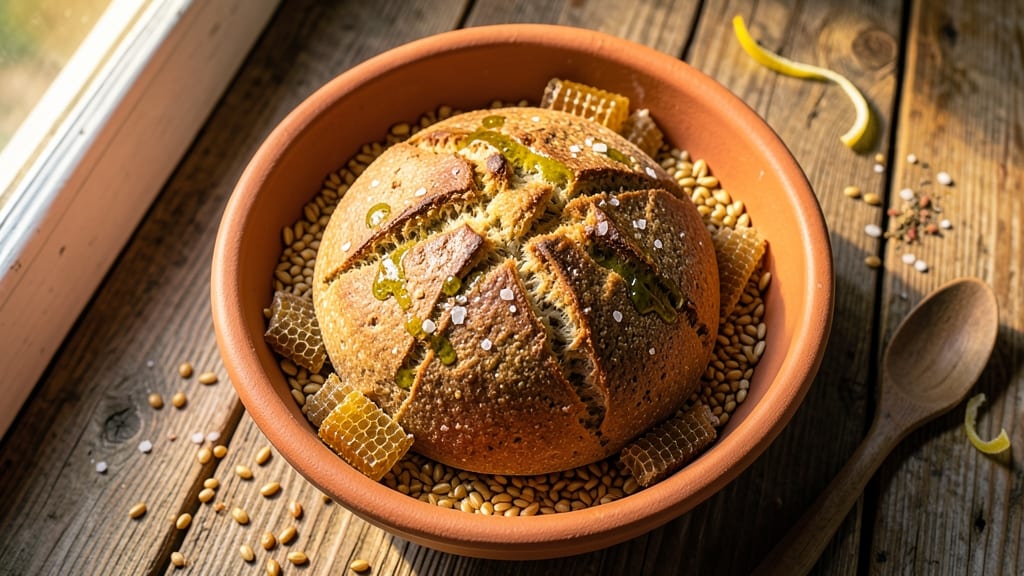
This ancient Greek barley bread recipe transports you straight to the hearths of Athens, where barley flour and olive oil created hearty loaves for daily meals. The nutty depth of barley and crispy crust were staples in ancient Greek cuisine, offering both sustenance and cultural richness.
I’ve recreated this traditional bread using simple ingredients and methods that honor its historical roots.
The beauty of this recipe lies in its simplicity and authenticity. You’ll work with barley flour, olive oil, and a touch of salt—just as the ancient Greeks did—while shaping the dough into a rustic loaf for baking in a wood-fired oven or hearth.
The result is a bread with a crusty exterior and a tender, nutty crumb, perfect for dipping in olive oil or pairing with stews.
What makes this bread truly special is its connection to history. Barley was a staple grain in ancient Greece, prized for its hardiness and nutritional value. This recipe brings that tradition to life, offering a taste of the past with every bite.
The aroma of baking barley bread, infused with the earthy notes of olive oil, evokes the warmth of a Greek hearth.
Whether you’re serving it alongside a Mediterranean feast or enjoying it with a simple spread of olive oil and herbs, this bread is a testament to the enduring appeal of ancient techniques. Let’s bring this piece of history to your kitchen.
Ingredients for ancient greek barley bread
Simple ingredients that bring ancient Greece to your kitchen table.
| Ingredient | Amount | Notes |
|---|---|---|
| Barley Flour 🌾 | 3 cups | Stone-ground for best texture |
| Extra-Virgin Olive Oil 🫒 | ½ cup | High quality, fruity variety |
| Warm Water 💧 | 1 ½ cups | Just off the boil |
| Kosher Salt 🧂 | 1 ½ tsp | Diamond Crystal preferred |
| Active Dry Yeast 🍞 | 1 tsp | Freshly opened packet |
| Honey 🍯 | 1 tbsp | For yeast activation |
| Sesame Seeds 🌻 | 1 tbsp | Optional for topping |
| Poppy Seeds 🌿 | 1 tbsp | Optional for topping |
| Coarse Sea Salt 🧂 | 1 tbsp | For sprinkling crust |
Barley flour is the heart of this bread—look for stone-ground at specialty stores like Whole Foods or Bob's Red Mill online. The texture is coarser than all-purpose, so don't substitute. Extra-virgin olive oil should smell vibrant and peppery—California Olive Ranch or Colavita are solid choices. Warm water is key: if it's too hot, you'll kill the yeast; if too cold, it won't activate properly. I always use a thermometer to check 105°F (just off boil). The yeast should foam within 5-10 minutes after mixing with honey—if it doesn't, it's dead and you'll need fresh.
No honey? Maple syrup works in a pinch, though it adds a slightly different flavor. Short on sesame seeds? Toasted pine nuts or sunflower seeds give a similar crunch. The coarse sea salt should be Maldon flakes or similar—it melts beautifully into the crust. For a quicker version, you can use instant yeast (just skip the honey activation step), but traditional active dry yeast gives that authentic rise. If your kitchen is cold, let the dough rise in a warm oven with the light on—it's like a mini proofing box.
This dough keeps beautifully—3 days in the fridge wrapped tightly in plastic. For longer storage, freeze shaped loaves (unbaked) for up to 3 months. Thaw overnight in the fridge before baking. The bread reheats best in a 350°F oven for 5 minutes—it'll crisp up again. I always bake two loaves: one for the table, one for freezing. The crust gets crunchier as it sits, so slice just before serving. Leftovers? Toast them—golden and crispy is how they should be.
Why You'll Love This Recipe
- Four-Ingredient Magic: This bread only needs barley flour, olive oil, water, and yeast—no fancy pantry trips or last-minute scrambling. Honestly, I keep a bag of barley flour on hand just for this; it’s that reliable.
- Nutty, Earthy Richness: That barley flour gives it a deep, toasty flavor you won’t find in regular bread. Drizzle it with olive oil while still warm—trust me, the contrast is ridiculously good.
- Meal Prep MVP: Slice it fresh, toast it later. I make a whole loaf on Sundays and keep it wrapped in the fridge; it’s perfect for quick lunches or crumbling over salads all week.
- Budget-Friendly Staple: Barley flour is cheap, and this recipe stretches further than most. Between us, I’ve fed a houseful of guests with two loaves and still had leftovers for sandwiches.
Step-by-step instructions for ancient Greek barley bread
Here's how to craft a loaf that channels ancient Greek baking traditions with a crisp crust and hearty crumb.
Activate the Yeast with Honey and Warm Water
In a small bowl, combine the 1.5 cups warm water (just off the boil, around 105°F) with the 1 tbsp honey and 1 tsp active dry yeast. Stir gently and let sit for 5-10 minutes until frothy. You'll see tiny bubbles forming on the surface—this means your yeast is alive and ready to work.
I always test the water temperature first with my finger—it should feel warm but not hot to the touch. If it's too hot, you'll kill the yeast; if too cool, it won't activate properly. The honey here serves two purposes: it feeds the yeast while also adding subtle sweetness that complements the nutty barley flour.
Mix the Dough with Olive Oil and Salt
In a large mixing bowl, whisk together the 3 cups barley flour and 1.5 tsp kosher salt. Create a well in the center and pour in the yeast mixture along with the 0.5 cup extra-virgin olive oil. Using a wooden spoon or your hands, mix until a shaggy dough forms.
This dough will be stickier than wheat-based doughs because barley flour absorbs more moisture. Don't be tempted to add extra flour—trust the recipe. Knead the dough on a lightly floured surface for about 8-10 minutes until smooth and elastic. You'll know it's ready when it springs back slightly when poked.
Let the Dough Rise Until Doubled
Place the dough in a lightly oiled bowl, cover with a damp kitchen towel, and let rise in a warm place for 1-2 hours or until doubled in size. I like to use my oven with the light on for consistent warmth. The dough should feel puffy and jiggly when gently pressed.
Ancient Greeks didn't have precise timers, but they knew dough by touch. If your kitchen is cold, give it extra time—barley dough rises more slowly than wheat. Patience here prevents a dense loaf. Once doubled, punch down the dough to release air bubbles before shaping.
Shape and Proof the Loaf
Transfer the dough to a floured surface and shape it into a round loaf about 8 inches in diameter. Place it on a parchment-lined baking sheet, cover again, and let proof for 30-45 minutes until slightly puffy. This second rise develops flavor and ensures an open crumb.
For that authentic Greek touch, I like to make a shallow cross on top with a sharp knife before baking. This not only looks beautiful but also helps the bread expand evenly. Brush the loaf lightly with water and sprinkle with 1 tbsp coarse sea salt and 1 tbsp sesame seeds mixed with 1 tbsp poppy seeds for a traditional finish.
Bake Until Golden and Hollow-Sounding
Preheat your oven to 375°F with a Dutch oven inside for 30 minutes to create steam. Transfer the shaped loaf to the hot Dutch oven, cover, and bake for 30 minutes. Then remove the lid and bake for another 15-20 minutes until deep golden brown.
The bread is done when it sounds hollow when tapped on the bottom and has developed a crisp crust. Let it cool on a wire rack for at least 30 minutes before slicing—this prevents a gummy crumb. The interior should be tender with a slightly chewy texture, while the crust remains crisp enough to hold up to dipping in olive oil.
Pro Tips For Making Ancient Greek Barley Bread
- STIR THE DOUGH LONG: Barley flour gums up fast—give that dough a solid 5 minutes of stirring after mixing, especially when the water starts looking weirdly thick. I used to rush this, and the bread turned out dense and chewy. Patience here means a lighter crumb.
- USE WARM, NOT HOT, WATER: The yeast needs to wake up, not get shocked. Fill your bowl with water that’s warm to the touch (like a hot cup of tea, not scalding). Too hot kills the yeast; too cold makes it lazy. Test it by dipping your finger in—should feel like a cozy bath, not a sauna.
- SALT THE WATER FIRST: Toss that kosher salt into the warm water before adding anything else. It dissolves better and spreads evenly, so every bite gets that subtle, balanced flavor. I learned this the hard way after tasting a bland first batch—now I measure the salt right into the water.
- LET THE YEAST PROOF UNTIL DOUBLED: Don’t eyeball it. Wait until the dough puffs up to nearly double its original size before shaping. Barley flour is dense, so it takes longer than wheat—sometimes 1.5 to 2 hours. Skipping this step means a flat, heavy loaf. Trust the rise.
Pro cooking tips for ancient greek barley bread
Barley Flour Magic
Barley flour is the star here—its coarse texture creates a uniquely nutty flavor and dense crumb. I always use stone-ground barley flour from Whole Foods or Bob’s Red Mill for that authentic ancient Greek texture.
Unlike wheat flour, barley dough is stickier and more elastic, so resist the urge to add extra flour during kneading. The secret to success lies in patience: let the dough rise until it’s doubled in size and feels jiggly when pressed.
This slow fermentation develops the bread’s deep, earthy flavor. 🌾
Olive Oil’s Role
The extra-virgin olive oil isn’t just fat—it’s the soul of this bread. Use a fruity, peppery variety like California Olive Ranch or Colavita for that authentic Greek taste. Olive oil tenderizes the crumb while adding a subtle fruity note that balances barley’s nuttiness.
I recommend adding it gradually during kneading to avoid a greasy dough. For extra authenticity, brush the loaf with a little olive oil before baking to enhance the crust’s golden color.
Yeast Activation
Getting the yeast right is critical—warm water (105°F) is key. Test it with your finger: it should feel warm but not hot. If your yeast doesn’t foam within 5-10 minutes, it’s dead, and you’ll need fresh.
I like to use active dry yeast for that traditional rise, but instant yeast works in a pinch (just skip the honey activation). The honey here isn’t just for sweetness—it helps the yeast activate faster and adds a subtle depth that pairs perfectly with barley’s earthiness.
Dutch Oven Secret
A Dutch oven is your best friend for that crusty exterior and open crumb. Preheat it in the oven for 30 minutes before adding the dough to create steam. This mimics the ancient Greek hearth baking method, where bread was baked in clay ovens.
After the initial 30-minute covered bake, remove the lid to let the crust brown beautifully. The steam phase is crucial—it prevents a dense loaf and gives that signature hollow-sounding crunch when tapped.
Shaping Like the Ancients
Shape the dough into a round loaf (8 inches) for that classic Greek style. Make a shallow cross on top with a sharp knife before baking—this helps the bread expand evenly and adds a rustic touch.
Brush the loaf lightly with water and sprinkle with coarse sea salt and sesame/poppy seeds for that authentic finish. The cross also creates beautiful steam channels, giving the bread a crispy crust and tender interior. This is where the magic happens! ✨
Proofing and Baking
Let the dough proof for 30-45 minutes until slightly puffy—this second rise is non-negotiable. The bread is done when it’s deep golden brown and sounds hollow when tapped. Let it cool on a wire rack for at least 30 minutes before slicing—this prevents a gummy crumb.
The longer it cools, the crispier the crust becomes. I always bake two loaves: one for the table and one for freezing. The crust gets even better the next day, so plan ahead! 🔥
Nutrition facts
Frequently asked questions
Why does barley bread have a different texture than wheat bread?
Barley flour contains more protein and fiber than wheat flour, creating a denser, chewier crumb with a nutty flavor. The coarse texture also holds moisture differently, resulting in a bread that stays fresh longer but requires proper hydration during mixing. Ancient Greeks prized barley for its hardiness—this recipe captures that rustic, hearty quality!
Can I substitute barley flour with whole wheat?
Not ideal, but in a pinch you can replace up to 50% of the barley flour with whole wheat. Barley's unique flavor and texture come from its husk and protein structure, so expect a slightly different mouthfeel. For authenticity, seek out stone-ground barley flour—it's worth the search for that true ancient Greek taste.
How do I know when the bread is fully baked?
Your bread is done when the crust is deep golden brown and it sounds hollow when tapped on the bottom (like knocking on wood!). The internal temperature should reach 190°F. Let it cool completely on a wire rack—this prevents a gummy crumb. Ancient bakers didn't have thermometers, but they knew by ear and sight when bread was perfect!
What's the best way to store leftover barley bread?
Wrap cooled bread tightly in plastic wrap or place in an airtight container. It stays fresh for 3-4 days at room temperature or 1 week in the fridge. For longer storage, freeze shaped (unbaked) loaves for up to 3 months. Toast slices to revive crispiness—ancient Greeks would have eaten their bread fresh daily, but we can cheat with modern storage!
Can I make this bread without a Dutch oven?
Yes! If you don't have a Dutch oven, try baking on a pizza stone or in a heavy baking sheet. For steam, place a metal bowl of boiling water on the lower oven rack during the first 20 minutes of baking. The key is maintaining moisture—this mimics the ancient hearth baking method where bread was cooked in clay ovens with hot coals.