
Side Dishes
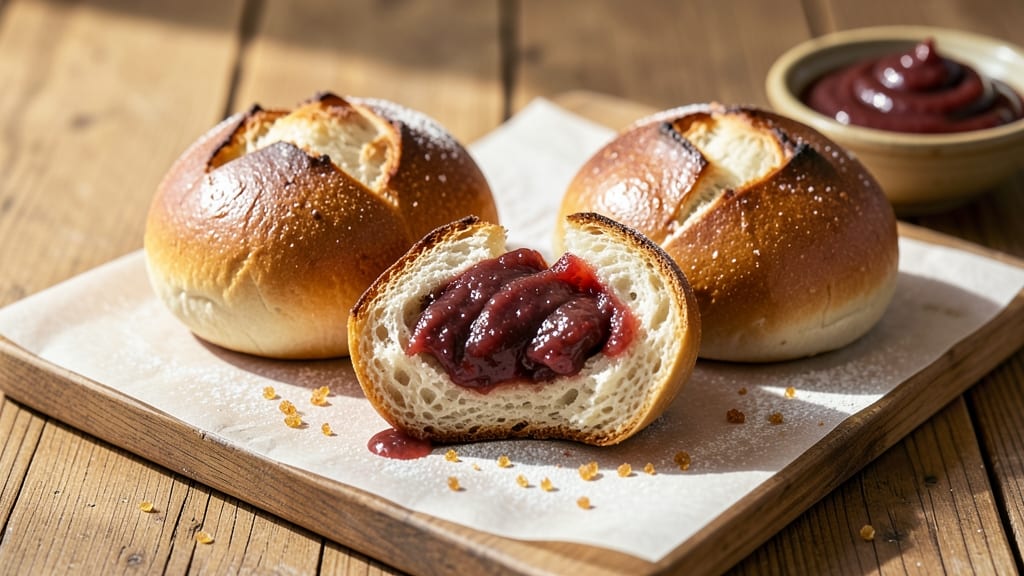
Anpan bread delivers the perfect balance of crispy, flaky layers and sweet red bean paste that melts in your mouth. This traditional Japanese treat transforms simple ingredients into something extraordinary with its signature texture and rich flavor profile.
The key lies in achieving that signature crispness while keeping the filling perfectly soft—a technique I've perfected after years of baking.
The process begins with making the anko filling, a smooth blend of sweet red beans and sugar that forms the heart of every bite. Meanwhile, the dough develops its signature flaky layers through careful folding and resting.
What makes this recipe special is how these two elements come together during baking, creating a bread that's both satisfying and visually stunning.
By the time you pull it from the oven, you'll have golden-brown anpan with crispy, crackly edges and tender, pillowy layers filled with velvety red bean paste.
The aroma alone will transport you to a bustling Japanese bakery, while the texture delivers that perfect contrast of crispy and soft with every bite.
This recipe serves as a beautiful introduction to Japanese baking, offering a taste of tradition with a method that's approachable for home bakers. Whether you enjoy it warm from the oven or at room temperature, each piece promises a delightful experience that's worth the effort.
Let's get started on creating this classic treat.
Ingredients for anpan bread
Six simple ingredients transform into golden, crispy anpan with velvety red bean filling.
| Ingredient | Amount | Notes |
|---|---|---|
| Red Bean Paste (Anko) 🍡 | 1 ½ cups | Store-bought or homemade, smooth texture |
| All-Purpose Flour 🌾 | 4 cups | Plus 2 tbsp for dusting |
| Granulated Sugar 🍚 | ½ cup | For dough sweetness |
| Unsalted Butter 🧈 | ½ cup | Cold, cubed for dough |
| Milk 🥛 | ¼ cup | Cold for dough |
| Active Dry Yeast 🍞 | 1 tbsp | Or 2.25g packet |
| Large Eggs 🥚 | 1 whole | Room temperature |
| Salt 🧂 | ½ tsp | Kosher or sea salt |
| Vanilla Extract 🌸 | ½ tsp | Pure vanilla preferred |
| Vegetable Oil 🫒 | 2 tbsp | For greasing pan |
| Cornstarch 🌾 | 1 tbsp | For dusting |
| Sesame Seeds 🌰 | 1 tbsp | For topping |
The red bean paste is everything here. Store-bought anko from Asian markets (like H Mart) has that perfect sweetness, but homemade is worth the effort. If you're making your own, soak adzuki beans overnight—no shortcuts. The dough needs to be cold for those flaky layers, so chill your butter and milk before mixing. I always use King Arthur flour for the best texture, but any all-purpose works. The yeast should be fresh—if it's over a year old, toss it and grab a new packet.
No anko? Sweetened mashed beans mixed with sugar works in a pinch (though it won't be as smooth). Short on butter? Coconut oil works too, but it changes the flavor slightly. The vanilla extract can be swapped for vanilla sugar—just mix 1 tsp sugar with a drop of extract. For the sesame seeds, toast them in a dry pan for 2 minutes to deepen the flavor. And if you're feeling fancy, add a pinch of cardamom** to the dough for warmth.
Make the dough the night before for best results—it develops flavor while resting. Store wrapped in plastic in the fridge for up to 2 days. The anko filling keeps for 1 week in the fridge, but once you mix it with dough, bake immediately. These freeze beautifully too—wrap individually and freeze for up to 3 months**. Just thaw at room temperature before serving.
Why You'll Love This Recipe
- No-Knead Magic: I swear by this dough—just mix, fold, and let it rest. No stand mixer, no overworking, just a simple butter-and-milk combo that makes the flaky layers happen while you sip coffee.
- Sweet-Salty Bliss: That first bite of warm bread with the anko oozing out? Rich, caramelized sweetness balanced by the soft, buttery crust. Honestly, it’s the kind of comfort food that makes you forget to eat healthy.
- Lunchbox Legend: Between us, these are my kids’ favorite school snacks. Wrap one in parchment, toss in a bento box, and they’ll thank you. (Yes, even on a Tuesday night when you’re exhausted.)
- Budget Baking Win: Store-bought anko is cheap, flour and butter last forever, and you can halve the recipe. Make a batch on Sunday, freeze extras, and you’ve got dessert or breakfast covered for days—no guilt, just satisfaction.
Step-by-step instructions for anpan bread with crispy layers
Here's how to create that perfect balance of flaky crust and sweet filling.
Prepare the Dough with Red Bean Paste
In a stand mixer fitted with the dough hook attachment, combine the 4 cups all-purpose flour, 0.5 cup granulated sugar, 0.5 tsp salt, and 1 tbsp active dry yeast. Mix on low speed for 1 minute until just combined. Add the 1.5 cups red bean paste (anko) and mix again until fully incorporated.
In a separate bowl, melt the 0.5 cup unsalted butter and let it cool slightly. Add the 0.25 cup cold milk, 1 whole large egg, and 0.5 tsp vanilla extract to the melted butter. Pour this mixture into the flour mixture and mix on medium speed for 3-4 minutes until the dough comes together and pulls away from the sides of the bowl.
Knead and Rest the Dough
Continue kneading the dough for an additional 5-7 minutes until it becomes smooth and elastic. The dough should be slightly tacky but not sticky—if it sticks to your hands, add 1-2 tablespoons more flour as needed. Shape the dough into a ball and place it in a lightly oiled bowl.
Cover the bowl with a damp kitchen towel and let the dough rise in a warm place for 1-1.5 hours, or until it has doubled in size. I like to place my bowl in a slightly warm oven (70°F) with a cup of boiling water on the bottom shelf to create a consistent rising environment. Poke the dough gently—if it springs back slowly, it's ready for the next step.
Shape the Anpan Dough
Once the dough has risen, punch it down to release the air and divide it into 6 equal portions (about 6 ounces each). Roll each portion into a 12-inch circle on a lightly floured surface. Place 2 tablespoons of red bean paste (anko) in the center of each circle and gently gather the edges of the dough to seal it around the filling, creating a half-moon shape.
Seal the edges tightly by pinching them together with your fingers. Place the shaped anpan on a parchment-lined baking sheet, leaving 1 inch of space between each piece. Cover with a damp towel and let them rest for 20 minutes to relax the dough before baking. This resting period helps prevent the filling from leaking during baking.
Bake for Crispy Layers
Preheat your oven to 350°F. Brush the tops of the anpan with a little milk or egg wash (beat the 1 whole large egg with 1 tablespoon water for a simple wash) to create a golden crust. Sprinkle 1 tablespoon sesame seeds evenly over the tops, pressing them gently into the dough.
Bake for 25-30 minutes until the crust is golden brown and the internal temperature reaches 190°F. The filling should be warm but not boiling—this ensures the sweet red bean paste stays soft and gooey without becoming runny. If the tops brown too quickly, tent the pan with foil to prevent over-browning while the centers finish cooking.
Cool and Serve for Maximum Crispiness
Remove the anpan from the oven and let them cool on a wire rack for 10 minutes. This cooling period allows the crust to set and become crispy while keeping the filling warm and soft inside. Serve immediately for the best texture—warm anpan with a crispy crust and a gooey, sweet filling is a match made in heaven.
For extra crispiness, I like to reheat any leftovers in a 350°F oven for 5-10 minutes to restore that perfect texture. Store them in an airtight container at room temperature for up to 2 days, or freeze for up to 1 month—just thaw at room temperature before serving.
Pro Tips For Making Anpan Bread
- Chill the Anko First: Cold red bean paste spreads slower and stays put when shaping—skip this, and your anko will ooze out during baking, leaving a messy, uneven center. Pop it in the fridge for 20 minutes before filling, and your bread will hold its shape like a pro.
- Butter Should Be Cold: I learned this the hard way—soft butter makes the dough sticky and hard to handle. Cut that unsalted butter into small cubes and refrigerate it for 15 minutes before mixing. The dough will come together cleaner, and your layers won’t tear when rolling.
- Don’t Overfill the Dough: More anko isn’t better—stuff too much, and your bread will crack or collapse in the oven. Aim for a filling that’s about 70% of the dough’s volume. Press it into a neat log, then seal the edges with a little water to trap the flavor inside.
- Rest the Dough Twice: First rest (30 minutes) develops gluten; second rest (1 hour in the fridge) makes shaping easier. Skimp on either, and your bread will be dense or tear when cutting. Cover it loosely with a towel—no need for fancy equipment, just patience.
Creative variations of this dish
Matcha Green Tea Twist
Swap the red bean paste for 2 tbsp matcha powder mixed with 1 cup sweetened condensed milk and 1 tbsp honey. This creates a vibrant green filling with earthy, slightly bitter notes that pair beautifully with the crispy crust.
I like to dust the tops with white sesame seeds instead of black for a delicate contrast. The matcha adds a subtle caffeine boost that makes this version perfect for morning tea sessions. 🌿
Chocolate Hazelnut Fusion
For a decadent twist, replace the anko with a mixture of 1 cup Nutella and ½ cup melted dark chocolate. Spread this rich filling between two thin dough circles before sealing into the half-moon shape.
Top with crushed hazelnuts and a sprinkle of flaky sea salt for a sweet-savory balance. This variation is a crowd-pleaser during holiday gatherings and pairs wonderfully with a cup of hot cocoa. 🍫
Black Sesame Swirl
Transform your anpan with a black sesame paste by blending ½ cup toasted black sesame seeds with ½ cup sugar and 2 tbsp water. This creates a deep, nutty filling that contrasts beautifully with the traditional red bean version.
I recommend using black sesame seeds for the topping as well to maintain visual harmony. The nutty flavor profile makes this an excellent option for those seeking a nut-based alternative. 🌰
Seasonal Fruit Variations
Summer calls for fresh fruit fillings! Try replacing anko with mashed strawberries mixed with 1 tbsp honey and a pinch of cinnamon, or sautéed peaches with a drizzle of maple syrup. For autumn, use roasted apple compote with a touch of ginger.
These variations work best when baked immediately to preserve the fruit's freshness. Serve warm with a dollop of whipped cream for an elevated dessert experience. 🍓
Savory Umami Option
For a unique twist, create a savory version by replacing the sweet filling with a mixture of 2 tbsp miso paste, 1 tbsp soy sauce, and 1 tbsp grated ginger. This umami-rich filling pairs wonderfully with a slightly crispier dough.
Top with toasted nori strips and a sprinkle of furikake for an authentic Japanese-inspired snack. This version is perfect for tea time or as a light lunch option. 🍜
Custom Flavor Layering
Get creative by layering two fillings! Start with a base of anko, then add a thin layer of chocolate ganache or black sesame paste before sealing. For a tropical twist, use mango purée** between layers of anko.
This technique creates complex flavor profiles in each bite while maintaining the signature crispy texture. Experiment with different combinations to find your perfect flavor pairing. 🌈
Nutrition facts
Frequently asked questions about anpan bread
Can I make anpan bread without red bean paste?
While traditional anpan uses sweet red bean paste, you can substitute with other fillings like Nutella, mashed banana with cinnamon, or even savory options like miso paste mixed with grated ginger. The key is using 2 tablespoons per piece to maintain the proper filling-to-dough ratio for that signature texture.
Why did my anpan filling leak during baking? Leaking usually happens when the dough isn't properly sealed or rested.
How do I store leftover anpan bread?
Store in an airtight container at room temperature for up to 2 days to maintain crispiness. For longer storage, freeze individual pieces wrapped in plastic for up to 1 month. To restore crispness, reheat in a 350°F oven for 5-10 minutes until golden. Never microwave - it makes the crust soggy!
What's the secret to getting that perfect crispy crust?
The crispy texture comes from a combination of cold butter in the dough, proper egg wash, and baking at the right temperature. Brush the tops with beaten egg or milk before baking, then bake at 350°F until golden brown. Let them cool on a wire rack for 10 minutes - this sets the crust while keeping the filling soft.
Can I make anpan bread without yeast?
Traditional anpan uses yeast for that light, fluffy texture, but you can try a quick version with baking powder. Replace the yeast with 1.5 tsp baking powder and ½ tsp baking soda, and reduce the sugar slightly. The texture will be denser but still delicious. For best results, stick with the yeast version for that authentic bakery-style anpan.