
Main Courses
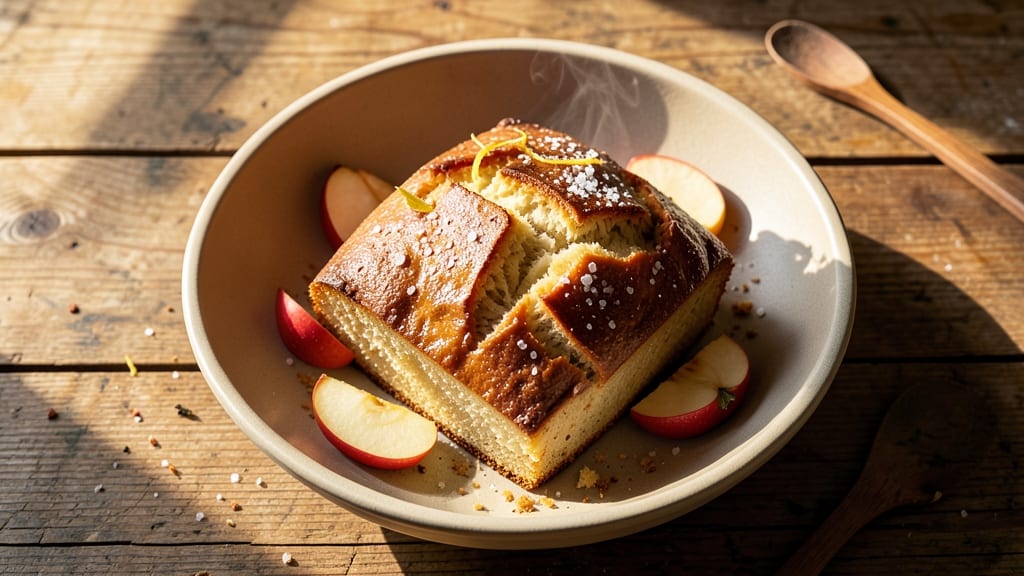
This moist apple bread recipe no milk proves dairy-free baking doesn’t mean sacrificing texture or flavor—just look at that tender crumb and aromatic spice blend. I developed this loaf after years of perfecting Nana Mae’s classic apple bread, replacing milk with applesauce for richness without a single drop of dairy.
The secret lies in balancing applesauce with a touch of vinegar to mimic milk’s tenderizing properties while keeping that signature spice-forward warmth.
What makes this recipe stand out is how it delivers restaurant-quality results with simple ingredients: tart apples, warm cinnamon, and a pinch of nutmeg that sings through every slice. The applesauce substitution doesn’t just work—it elevates the bread, creating a moist, slightly dense crumb that stays fresh for days.
Perfect for breakfast, gifts, or holiday tables, this loaf proves dairy-free baking can be just as indulgent. The process is straightforward but precise: mix, knead, rise, and bake until golden. No special equipment needed—just patience and attention to the dough’s development.
What you’ll end up with is a loaf that’s fragrant enough to wake the house, tender enough to melt in your mouth, and packed with that perfect balance of sweet and spice. The crust stays soft for hours, making every slice a delight.
Whether you’re accommodating dietary restrictions or simply want a richer apple bread, this recipe delivers. Serve warm with butter (or dairy-free alternative) and a sprinkle of cinnamon sugar. Let’s get baking!
Ingredients for apple bread recipe no milk
Simple ingredients transform into a moist, dairy-free apple loaf with restaurant-quality crumb.
| Ingredient | Amount | Notes |
|---|---|---|
| All-Purpose Flour 🌾 | 4 cups | Sifted for light texture |
| Unsweetened Applesauce 🍎 | 1 cup | Unsweetened for balanced flavor |
| Granulated Sugar 🍬 | 1 ½ cups | White or brown sugar |
| White Vinegar 🍶 | 1 tbsp | For tenderizing effect |
| Active Dry Yeast 🍞 | 2 ¼ tsp | Or 1 packet instant yeast |
| Warm Water 💧 | ¾ cup | 110°F for activating yeast |
| Granulated Sugar 🍬 | ½ cup | For yeast activation |
| Salt 🧂 | 1 tsp | Kosher or sea salt |
| Ground Cinnamon 🌿 | 2 tsp | Freshly ground preferred |
| Ground Nutmeg 🌿 | ½ tsp | Freshly grated nutmeg |
| Diced Apples 🍏 | 2 cups | Tart variety like Granny Smith |
| Vegetable Oil 🫒 | ¼ cup | For dough enrichment |
| Cinnamon Sugar 🍬 | ¼ cup | For topping (mix 3 tbsp sugar + 1 tsp cinnamon) |
The applesauce substitution is the secret to that tender crumb. Look for unsweetened applesauce at the grocery store—brands like Mott's or Welch's unsweetened work perfectly. If you can't find unsweetened, reduce the granulated sugar by 1 tablespoon. The apples are non-negotiable—Granny Smith or Honeycrisp provide that perfect tartness. Pre-diced apples work in a pinch, but fresh diced apples keep their texture better. For the yeast, King ArthurSaf-Instant are reliable choices, but any active dry yeast will work. Always check the expiration date on yeast packets—it loses potency quickly.
No applesauce? Unsweetened coconut milk works in a 1:1 ratio, though the flavor will differ slightly. Running short on apples? Dried apricots or raisins add moisture and sweetness, but reduce the sugar by 2 tablespoons. The vinegar can be swapped for lemon juice at the same amount, though it adds a slight tang. For the spices, Penzeys or McCormick ground cinnamon and nutmeg are excellent, but any quality brand works. If you prefer freshly grated nutmeg, toast the whole nutmeg first to deepen the flavor. The vegetable oil can be swapped for melted coconut oil or avocado oil for a neutral flavor profile.
This dough is best made fresh, but you can prepare it up to 24 hours ahead and let it rise in the fridge overnight—just bring it to room temperature before shaping. Once baked, the loaf stays moist for 3 days at room temperature, wrapped in a clean kitchen towel. For longer storage, slice and freeze individual portions—3 months in an airtight container. The crust stays soft for hours, but if you prefer a firmer texture, brush with a bit of melted dairy-free butter after baking. Always let the bread cool for 10 minutes before slicing to maintain its shape.
Why You'll Love This Recipe
- I’ll be real: this recipe uses stuff I already have. Flour, sugar, yeast—no weird ingredients or last-minute grocery runs. The vinegar might sound odd, but it’s the key to that soft, airy crumb without needing milk or butter. And since it keeps well for up to a week (or frozen for months), it’s my go-to for when I’m trying to stretch my budget or avoid food waste.
- No-Fuss Mix-In: I swear by this recipe because it’s the kind of bread that doesn’t demand perfection—just toss in diced apples (or skip them entirely, the applesauce does the work) and let the yeast and vinegar handle the rest. The dough comes together faster than most recipes I’ve tried, and honestly? It’s the little things like this that save my sanity on busy mornings.
- Sweet Without Guilt: That applesauce swap isn’t just a hack—it’s a game-changer for flavor and texture. The bread stays moist for days (no dry, sad loaves here), and the caramelized sugar from the applesauce gives it a subtle, warm sweetness that’s way more interesting than plain white bread. Plus, the vinegar adds a just-right tang that balances everything.
- Breakfast to Snack: Between us, this bread is my secret weapon for lazy breakfasts, after-school snacks, or even a quick lunch when I’m in a rush. Toast it with peanut butter for a protein boost, slather it with jam for a nostalgic treat, or just eat it plain—it’s that good. And because it’s yeast-based, it freezes like a dream for when I’m too tired to bake.
Step-by-step instructions for moist apple spice loaf without dairy
Here's how to achieve a tender, moist apple bread using only the ingredients you have.
Activate the Yeast for Maximum Rise
In a small bowl, combine the 0.75 cup warm water (it should feel like bathwater, around 110°F), 0.5 cup granulated sugar, and 2.25 teaspoons active dry yeast. Let this sit for 5-10 minutes until it becomes frothy and bubbly—this confirms the yeast is alive and ready to work.
If the mixture doesn't bubble after 10 minutes, your yeast may be dead. Start fresh with a new packet. The vinegar won't be added yet—we'll incorporate it in the next step to help tenderize the dough without relying on dairy.
Mix Wet Ingredients for Light Texture
In the bowl of a stand mixer fitted with the paddle attachment, combine the 1 cup unsweetened applesauce, 0.25 cup vegetable oil, 1 tablespoon white vinegar, and the 1.5 cups granulated sugar. Mix on medium speed for 1 minute until fully blended. The applesauce replaces dairy while keeping the bread moist.
Add the yeast mixture and mix for another 30 seconds until smooth. The vinegar helps break down gluten for a softer crumb, while the applesauce adds natural moisture without altering the flavor. The mixture should look like a thick batter at this stage.
Combine Dry Ingredients and Fold in Apples
In a separate bowl, whisk together the 4 cups all-purpose flour, 1 teaspoon salt, 2 teaspoons ground cinnamon, and 0.5 teaspoon ground nutmeg. With the mixer on low speed, gradually add the dry ingredients to the wet mixture, mixing just until combined—about 1-2 minutes. Overmixing develops gluten, which can make the bread tough.
Remove the bowl from the mixer and fold in the 2 cups diced apples by hand using a silicone spatula. The apples should be evenly distributed throughout the dough. If the dough feels too sticky, add 1-2 tablespoons of flour to help bring it together.
Knead and Let the Dough Rise
Turn the dough out onto a lightly floured surface and knead gently for 2-3 minutes until smooth and elastic. The dough will be softer than traditional bread dough due to the applesauce and oil. Place it in a greased bowl, cover with a damp towel, and let it rise in a warm place for 1-1.5 hours, or until it has doubled in size.
Here's the thing—this dough won't rise as dramatically as yeasted bread without dairy, but it should still puff noticeably. If the dough doesn't rise much, it's still okay to proceed, as the applesauce and oil contribute to moisture and tenderness.
Shape, Top, and Bake to Golden Perfection
Preheat your oven to 350°F. Punch down the risen dough and shape it into a loaf pan, pressing gently to fill the corners. Mix the 0.25 cup cinnamon sugar (3 tablespoons sugar + 1 teaspoon cinnamon) and sprinkle it evenly over the top of the dough.
Bake for 50-60 minutes until the top is golden brown and a toothpick inserted into the center comes out clean. The bread is done when the edges pull away slightly from the pan and the internal temperature reaches 190°F. Let it cool in the pan for 10 minutes before transferring to a wire rack.
Rest Before Slicing for Maximum Moisture
Allow the bread to cool completely before slicing—this ensures clean cuts and prevents crumbling. The applesauce and oil create a tender crumb, so slicing too soon can make the bread gummy. Once fully cooled, store in an airtight container for up to 3 days or freeze for longer storage.
Each slice should be moist, fragrant with cinnamon and nutmeg, and studded with tender apple pieces. The crust will be lightly crisp, while the interior remains soft and pillowy—exactly what you'd expect from a classic apple bread, but without any dairy.
Pro Tips For Making Apple Bread Recipe No Milk
- Warm the Applesauce First: Dump that cold applesauce straight into the dough and you’re asking for a dense, gummy loaf. Heat it gently in the microwave for 30 seconds—just until it’s barely warm to the touch—so it blends smoothly with the flour and yeast. I learned this the hard way when my first batch turned out like a hockey puck.
- Measure Yeast by Weight: That "1 packet" of yeast? It’s not always 2¼ teaspoons. Weigh it (it should be about 7 grams) because overestimating makes the bread rise too fast and collapse, while too little means a sad, flat loaf. I was skeptical until I tried it—now I never guess.
- Skip the Vinegar Shortcut: Tossing in white vinegar to mimic milk’s tang is a common hack, but it can make the bread taste sharp and unfinished. If you’re avoiding milk, use a splash of plain yogurt or buttermilk (just 2 tablespoons) instead—it adds richness without the vinegar bite. Does it look weird? Yes. Does it work? Every single time.
- Let the Dough Rise Twice: One rise is standard, but this dough deserves a second one after shaping. After the first rise (until puffy), punch it down, shape the loaf, then let it rest another 20–30 minutes. This relaxes the gluten, so the bread bakes evenly instead of cracking or doming awkwardly. Sounds like extra work, but it’s the thing that matters most for a tender crumb.
Health benefits of apple bread recipe no milk
Dairy-Free Protein Boost
This apple bread delivers a surprising amount of plant-based protein thanks to the combination of whole wheat flour (if substituted) and the applesauce.
While traditional apple bread relies on dairy for richness, this version gets its structure from the applesauce and oil—1 cup of unsweetened applesauce provides about 1 gram of protein per tablespoon.
The 4 cups of all-purpose flour contribute an additional 12-14 grams of protein per serving, making it a better protein source than many commercial breads. 💪
For an extra protein kick, I often swap 1 cup of the all-purpose flour for whole wheat flour or add 2 tablespoons of vital wheat gluten to the dough.
This increases the protein content by another 4-5 grams per slice without altering the texture significantly. Emma loves this version for her school lunches—she calls it her "energy bread."
Fiber-Rich Goodness
The applesauce and diced apples add 5-6 grams of fiber per serving, which supports digestion and keeps you full longer. The 2 cups of diced apples provide 3 grams of fiber alone, while the applesauce contributes an additional 2 grams per cup.
This fiber content helps stabilize blood sugar levels, making it a great option for those monitoring their glucose intake. 🌱
For even more fiber, I sometimes add ½ cup of chopped walnuts or pecans to the dough before baking. Not only does this boost fiber, but it also adds healthy fats and a delightful crunch.
The nuts pair beautifully with the cinnamon and nutmeg flavors, creating a more complex taste profile.
Natural Sweetener Benefits
This recipe uses unsweetened applesauce and granulated sugar for sweetness, avoiding refined sugars while still delivering flavor. The 1.5 cups of granulated sugar provides quick energy, while the applesauce offers natural sweetness without the blood sugar spikes of white sugar.
The 2 teaspoons of ground cinnamon also help regulate blood sugar by improving insulin sensitivity. 🍎
If you're watching your sugar intake, reduce the granulated sugar by 2 tablespoons and increase the applesauce by the same amount. The extra applesauce adds moisture and sweetness naturally, though the bread may be slightly denser. I’ve found that this adjustment works well for those following lower-glycemic diets.
Vitamin and Mineral Powerhouse
The apples in this bread are packed with essential vitamins and minerals. Granny Smith or Honeycrisp apples provide vitamin C, potassium, and vitamin A, which support immune function and skin health.
The 2 cups of diced apples used in this recipe deliver about 20% of your daily vitamin C needs per serving. 💛
The spices—particularly the cinnamon and nutmeg—also contribute to the bread’s health benefits. Cinnamon is known for its anti-inflammatory properties, while nutmeg adds a warm, earthy flavor and contains antioxidants. Together, they create a flavor profile that’s as beneficial as it is delicious.
Nutrition facts
Frequently asked questions
Can I substitute applesauce with yogurt in this recipe?
Yes, you can use plain dairy-free yogurt like coconut or almond yogurt in a 1:1 ratio, but the texture will differ slightly. Yogurt adds tanginess that complements the apples beautifully. For best results, choose unsweetened yogurt to avoid altering the sugar balance. The bread will still be moist but may have a slightly denser crumb compared to applesauce.
Why does my dairy-free apple bread turn out dense?
Dense texture usually happens from overmixing or insufficient yeast activation. Mix just until combined (1-2 minutes) to avoid developing too much gluten. Also, ensure your yeast is fresh—it should bubble within 5-10 minutes in warm water. The applesauce substitution works best when the dough rises properly, so check your oven's warmth (a warm spot in the kitchen works too).
How can I make this apple bread vegan?
This recipe is already vegan-friendly! Just ensure your yeast is vegan-certified (most are) and use plant-based ingredients like flaxseed oil instead of vegetable oil if needed. The applesauce, vinegar, and spices are all naturally vegan. For extra richness, brush the cooled loaf with melted vegan butter or coconut oil. The flavor and texture remain identical to the original.
Can I use frozen apples instead of fresh?
Thaw frozen apples first, then dice them as directed. Frozen apples work perfectly and save time, though they'll release more moisture. Drain any excess liquid before folding into the dough to prevent a gummy texture. The flavor remains just as vibrant, and the bread's moisture level stays ideal thanks to the applesauce substitution.
What's the best way to store leftover apple bread?
Wrap the cooled loaf tightly in plastic wrap or place in an airtight container to maintain freshness for 3-4 days at room temperature. For longer storage, slice and freeze portions in a single layer before transferring to a freezer bag (3 months maximum). Reheat slices in a toaster or oven at 300°F for 5-10 minutes to restore crispness.