
Side Dishes
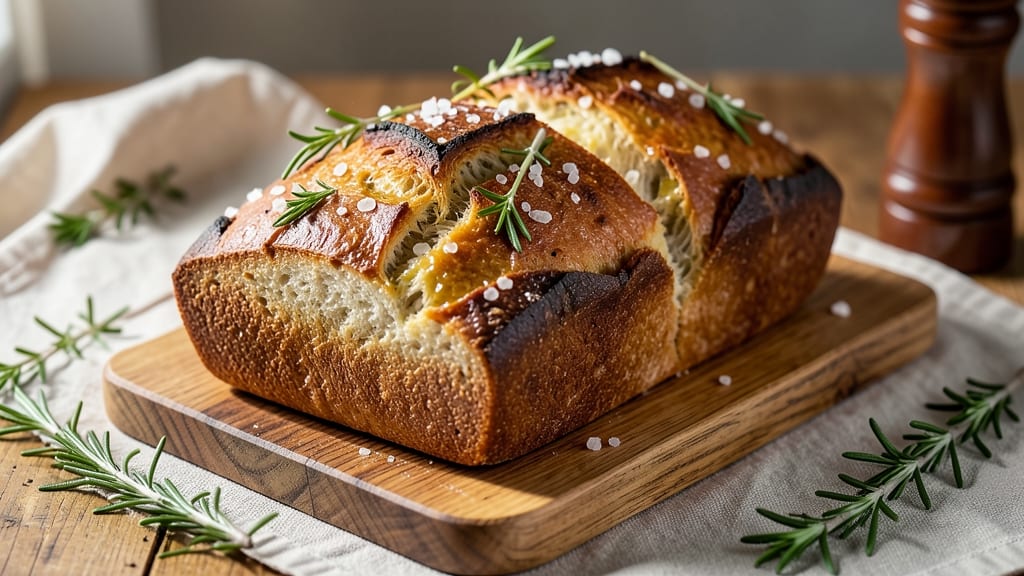
The Arthur Avenue bread recipe brings the soul of Cleveland's iconic Italian-American neighborhood straight to your kitchen. 🌟 This no-knead sourdough captures the warm spice swirls and nutty depth that make it legendary, with a crust so crisp it'll remind you of your favorite bakery.
The secret lies in the slow fermentation and traditional shaping techniques that give it that signature texture and flavor.
What sets this recipe apart is its cultural heritage—Arthur Avenue is known as "Little Italy" of the Midwest, and this bread embodies that Italian-American spirit with every bite.
The dough develops deep flavor through overnight fermentation, while the warm spice swirl (often anise or fennel) adds that signature aroma that makes it instantly recognizable. Even beginners can master this method with just a few simple ingredients and patience.
By the time you pull it from the oven, you'll have a loaf with a golden, crackly crust and a tender interior that's perfect for sandwiches, dipping in olive oil, or serving alongside any Italian meal.
The aroma alone will transport you to Cleveland's bustling Arthur Avenue, where this bread has been a staple for generations. This is more than just bread—it's a taste of tradition.
The beauty of this recipe is its versatility. While the classic version features anise or fennel swirls, you can easily adapt it with sesame seeds, garlic knots, or even a touch of rosemary for your own twist.
Once you try this Arthur Avenue bread, you'll understand why it's been beloved for decades—and why it deserves a place in your kitchen.
Ingredients for arthur avenue bread
Four key ingredients transform simple flour into Cleveland's legendary Arthur Avenue bread.
| Ingredient | Amount | Notes |
|---|---|---|
| Active Sourdough Starter 🍞 | 2 cups | Unfed, 100% hydration |
| All-Purpose Flour 🌾 | 5 cups | Bread flour preferred |
| Granulated Sugar 🍚 | ¼ cup | For fermentation boost |
| Extra-Virgin Olive Oil 🫒 | ½ cup | High quality, fruity |
| Warm Water 💧 | 2 ½ cups | 105°F, not boiling |
| Salt 🧂 | 1 ½ tsp | Kosher or sea salt |
| Anise Seeds 🌿 | 1 tbsp | Whole, lightly toasted |
| Fennel Seeds 🌿 | 1 tbsp | Whole, lightly toasted |
| Cornmeal 🌽 | ¼ cup | For dusting dough |
| Sesame Seeds 🌻 | 2 tbsp | Optional topping |
| Coarse Sea Salt 🧂 | 1 tbsp | For sprinkling crust |
The sourdough starter is the soul of this bread—your own culture is best, but King Arthur's Sourdough Starter or Bobs Red Mill are solid shortcuts. Look for a starter that's bubbly and has a tangy aroma. The flour matters too: King Arthur Bread Flour or Caputo Tipo 00 if you want that authentic Italian touch. For the spices, Penzeys Spices has the best anise and fennel seeds—lightly toast them in a dry pan for 2 minutes to deepen their flavor. The water temperature is crucial: too hot kills the starter, too cold slows fermentation. Aim for 105°F—a thermometer is worth it here.
No anise or fennel? Cardamom pods at half the amount works surprisingly well. Running low on bread flour? All-purpose plus 1 tbsp vital wheat gluten mimics the protein structure. The olive oil should be fruity and peppery—California Olive Ranch or Colavita are reliable choices. For the sesame seeds, Trader Joe's has the best toasted ones at a great price. The coarse sea salt? Maldon is ideal, but any flaky salt will do. Pro tip: if your starter isn't ready, store-bought pizza dough can be a backup (less flavorful but works in a pinch).
This dough needs time—16-18 hours at room temp or 48 hours in the fridge. The longer it ferments, the deeper the flavor. Shape it gently to avoid over-handling, and let it rest before scoring. The loaf keeps well wrapped at room temp for 3 days, or you can freeze it for 3 months. For reheating, wrap in foil and bake at 350°F for 5-10 minutes until crisp again. I always make two loaves—one for the table, one for freezing.
Why You'll Love This Recipe
- Four-Hour Magic: I swear by this schedule—mix in the morning, let it rise while I’m at work, and bake it after dinner. The sourdough starter does all the heavy lifting, so I don’t have to.
- Golden Crust Secret: That sugar and olive oil combo? It caramelizes into a crispy shell with a soft, airy interior—like a buttery, slightly sweet hug in bread form. My kids fight over the last slice.
- Weeknight Workhorse: Toss it in a lunchbox, tear it for sandwiches, or serve it warm with soup. It’s my go-to when I’m too tired to plan, but still want something that feels special. (Yes, even on a Tuesday night.)
- Budget-Friendly Staple: Flour, sugar, and olive oil are pantry basics, and a single loaf stretches across breakfasts, snacks, and leftovers for days. I make two batches at once—one for eating, one for freezing. No waste, all flavor.
Step-by-step instructions for Arthur Avenue bread
Here's how to craft this aromatic, no-knead sourdough with signature spice swirls.
👨🍳 Step 1: Mix the Dough with Warm Spices
In a large mixing bowl, combine the 2 cups active sourdough starter, 2.5 cups warm water (105°F), 0.25 cup granulated sugar, and 0.5 cup extra-virgin olive oil. Stir until everything is fully incorporated and the sugar dissolves completely. This warm water temperature is crucial—it activates the starter without shocking it.
In a small bowl, lightly toast the 1 tbsp anise seeds and 1 tbsp fennel seeds in a dry skillet over low heat for 1-2 minutes until fragrant. Let them cool slightly, then add them to the wet ingredients along with the 1.5 tsp salt. Gradually whisk in the 5 cups all-purpose flour until a shaggy dough forms. The dough should be sticky but manageable—don't worry if it looks messy at this stage.
🥘 Step 2: Let the Dough Rest and Develop
Cover the bowl with a damp kitchen towel or plastic wrap and let the dough rest at room temperature for 1 hour. This initial rest allows the gluten to begin developing and the flavors to meld. You'll notice the dough will become slightly less sticky as the flour absorbs the liquid.
After 1 hour, perform a simple stretch-and-fold every 30 minutes for 2 hours total. To do this, wet your hands slightly, then grab one side of the dough and stretch it upward while folding it over itself. Rotate the bowl and repeat this process on all four sides. This builds structure without kneading, creating that perfect open crumb we're after.
🍳 Step 3: Shape the Loaves and Prepare for Baking
Lightly flour a clean work surface with 0.25 cup cornmeal and turn out the dough. Divide it into 4 equal portions (about 1 pound each). Shape each portion into a round boule by pulling the edges toward the center and tucking them underneath. Place the shaped loaves on a parchment-lined baking sheet, seam-side up.
Cover the loaves loosely with plastic wrap and let them proof at room temperature for 1-2 hours, or until they've risen by about 50%. You'll know they're ready when they spring back slowly when gently pressed. Preheat your oven to 425°F with a Dutch oven inside for 30 minutes—this creates the perfect steam environment for that crackly crust.
🔥 Step 4: Bake to Golden Perfection
Carefully transfer the proofed loaves to the hot Dutch oven. Immediately sprinkle each with 1 tbsp coarse sea salt and 2 tbsp sesame seeds for that signature Arthur Avenue touch. Bake covered for 25 minutes, then remove the lid and bake uncovered for another 15-20 minutes until the bread is deep golden brown and sounds hollow when tapped on the bottom.
For maximum flavor development, let the bread cool on a wire rack for at least 1 hour before slicing. The internal temperature should drop to 100°F before cutting—this ensures clean slices and prevents gumminess. The aroma alone will transport you to Cleveland's Arthur Avenue, where this bread originated.
Pro Tips For Making Arthur Avenue Bread
- STRETCH AND FOLD: Use the "windowpane test" after your first bulk fermentation—if you can hold the dough up to light and see through it without resistance, it’s ready for shaping. Arthur Avenue bread’s signature chew comes from proper gluten development, so resist the urge to rush this step, even if the dough feels sticky. (Yes, it’ll get there.)
- WEIGH YOUR STARTER: Your sourdough starter’s hydration matters more than you think—weigh it before mixing to avoid guessing. A 100% hydration starter (equal parts flour and water by weight) gives Arthur Avenue bread its signature open crumb; if yours is thicker, adjust the water in the dough accordingly. I learned this the hard way when my first batch turned out denser than a brick.
- SKIP THE SUGAR RUSH: Add that granulated sugar after mixing the dough, not at the start. It’ll caramelize better during baking, giving the crust that golden, slightly crisp contrast. I used to toss it in early, and the bread just tasted sweet without that deep, toasty note—like missing the best part of a good espresso.
- BAKE UNTIL 190°F: Don’t pull the bread out at 180°F—wait for the internal temp to hit 190°F. The extra 10 degrees ensures the crumb sets properly and prevents that sad, gummy center. I know, it’s tempting to cut into it early, but resist. (Your patience will pay off with a slice that holds its shape.)
Regional styles of these flavors
Cleveland's Arthur Avenue
The original inspiration for this bread comes straight from Cleveland's Arthur Avenue, the heart of the city's Italian-American community. This neighborhood became a hub for immigrants in the early 1900s, bringing their culinary traditions with them.
The bread's signature anise-fennel swirl reflects the flavors they brought from Southern Italy, particularly regions like Calabria and Sicily. 🌟
Local bakeries like Giacomo's Bakery and La Strada Bakery have been perfecting this recipe for decades, making it a staple at family gatherings and Sunday dinners. The no-knead method became popular because it allowed home bakers to create restaurant-quality bread with minimal effort—perfect for busy families.
The warm spices in the dough aren't just for flavor; they were traditionally used to mask the taste of less expensive flours during times of scarcity.
New York's Little Italy
While Arthur Avenue is the birthplace of this bread, similar versions appear in New York's Little Italy, particularly in bakeries like Ferrara Bakery in Queens. The key difference? New York versions often incorporate garlic knots or sesame seed topping as a nod to the city's diverse Italian influences.
The dough itself remains nearly identical, but the shaping techniques sometimes vary—New York bakers might use a more elongated form for their sandwich rolls.
One notable adaptation is the use of cardamom instead of anise, which you'll find in some Brooklyn bakeries. This swap adds a floral note that pairs beautifully with the bread's nutty crust.
The fermentation times are slightly shorter in NYC due to the city's warmer climate, but the overall method stays true to the Arthur Avenue roots. For a true cross-coastal experience, try baking half with anise and half with cardamom in the same loaf.
Chicago's Italian Bakeries
Chicago's Italian bakeries, particularly in neighborhoods like West Town and Little Italy, put their own spin on this bread by adding a touch of rosemary to the dough. The city's cooler climate allows for longer fermentation, resulting in a bread with even more complex flavors.
Local bakeries like Peacock Bakery often use whole wheat flour in the outer crust for added texture and nutrition.
What sets Chicago's version apart is the baking technique—many bakeries use a combination of a Dutch oven and a wood-fired oven for the final crisp. This hybrid approach creates a crust that's both crackly and slightly chewy.
The city's Italian community also favors garlic-infused olive oil for brushing the finished loaves, adding another layer of flavor that's distinctly Midwestern-Italian.
Boston's North End
In Boston's North End, this bread takes on a slightly sweeter profile, often with the addition of orange zest to the dough. The North End's Italian heritage is deeply tied to Cannoli and Zeppole, so the bread here often serves as a base for those desserts.
Bakeries like Mike's Pastry use a longer cold fermentation (up to 72 hours) to develop even more depth of flavor.
The North End version also frequently includes poppy seeds in the dough, which add a subtle crunch and earthy note. The shaping here is often more oval or batard-style, which creates a taller loaf perfect for slicing into thick sandwiches.
For a Boston twist, try adding 1 tsp orange zest to your dough and topping with poppy seeds instead of sesame.
Modern Adaptations
Today, home bakers across the country are putting their own spin on Arthur Avenue bread. Some replace the traditional spices with smoked paprika for a BBQ bread variation, while others add chili flakes for a spicy kick. The no-knead method makes these adaptations easy—just swap the spices before mixing.
For a gluten-free version, use a 1:1 gluten-free flour blend like King Arthur Measure for Measure and increase the olive oil by 2 tbsp to compensate for the lack of gluten structure.
One of my favorite modern twists is the "Arthur Avenue Cinnamon Swirl"—replace the anise and fennel with 1 tbsp cinnamon and ½ tsp nutmeg, then add a cinnamon-sugar swirl before baking. It's perfect for breakfast toast or French toast.
The beauty of this recipe is its flexibility—whether you stick to tradition or experiment with flavors, the soul of Arthur Avenue lives on in every loaf. 💫
Nutrition facts
Frequently asked questions
Can I make Arthur Avenue bread without a sourdough starter?
Yes! If you don't have an active starter, you can use 2 ¼ teaspoons of active dry yeast instead. Just dissolve it in the warm water first and let it sit for 5 minutes until foamy before mixing with other ingredients. The flavor won't be identical to sourdough, but it'll still taste delicious with that signature spice swirl.
How do I know when the dough has proofed enough?
Press the dough gently with one finger—if it springs back slowly (takes 1-2 seconds to return), it's ready! For visual confirmation, look for the dough to have risen by about 50% of its original height. Overproofing can make your loaves flat, while underproofing results in dense bread.
Why did my bread turn out dense instead of crusty?
Dense bread usually means the dough wasn't proofed long enough or the oven wasn't hot enough. Make sure your Dutch oven is preheated for 30 minutes at 425°F and that you're baking with the lid on for the first 25 minutes to trap steam. Also check your starter—if it's weak, the dough won't rise properly.
Can I make this bread in a regular oven without a Dutch oven?
Place your shaped loaves on a baking sheet lined with parchment paper. For steam, spray the oven walls with water or place a metal tray with boiling water on the bottom rack during the first 15 minutes of baking. The crust won't be as crackly, but it'll still be delicious.
What's the best way to store Arthur Avenue bread?
Wrap cooled loaves tightly in plastic wrap or place them in an airtight container. They'll stay fresh at room temperature for 3-4 days. For longer storage, freeze the bread (up to 3 months) and reheat by wrapping in foil and baking at 350°F for 5-10 minutes until crisp again.