
Side Dishes
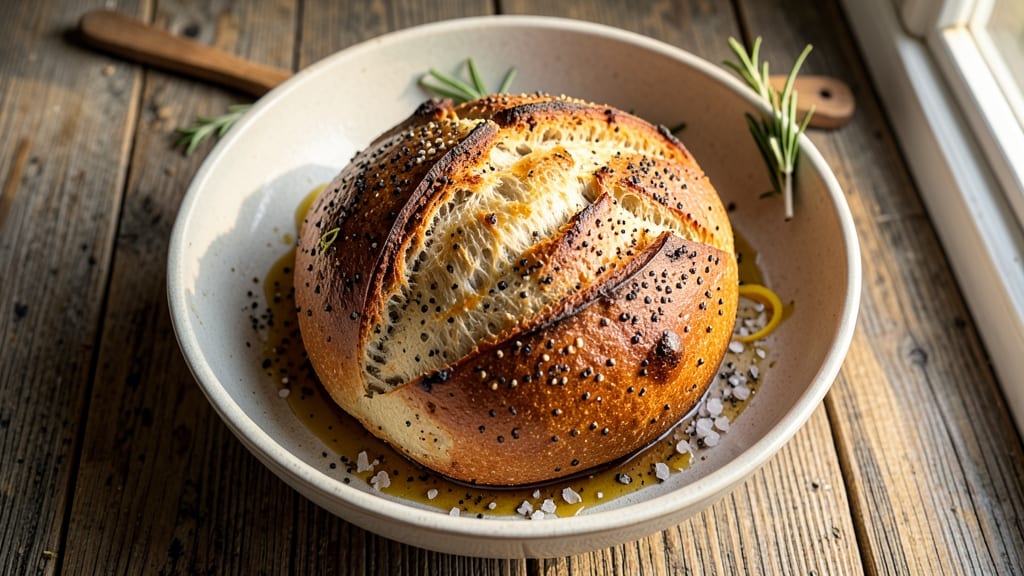
This artisan seeded bread recipe delivers a rustic loaf with a crisp golden crust and nutty seeds baked into every bite. The secret lies in a slow fermentation process that develops deep flavor, followed by a steam bath that creates that signature artisan texture.
I've perfected this method over years of baking, balancing traditional techniques with modern convenience.
What sets this recipe apart is the seed treatment—lightly toasting them before mixing into the dough enhances their flavor and prevents them from sinking.
We'll use a mix of whole grains and seeds for texture contrast, while a touch of honey in the dough adds subtle sweetness that caramelizes beautifully during baking. The result is a loaf with both visual appeal and complex flavor.
Baking at high heat with steam creates that coveted oven-spring and crisp crust, while the interior remains tender and slightly chewy. This recipe works equally well with sourdough starter or commercial yeast, giving you flexibility based on your baking preferences.
The seeds remain vibrant and flavorful throughout, adding both nutrition and texture to every slice.
Perfect for serving with soups, charcuterie boards, or as a side to any meal, this bread keeps well for days and improves with age. The aroma alone will have everyone asking for seconds. Let's get started on creating your perfect loaf.
Ingredients for artisan seeded bread
Nine simple ingredients transform into a rustic loaf with golden crust and nutty seeds baked in every bite.
| Ingredient | Amount | Notes |
|---|---|---|
| All-Purpose Flour 🌾 | 5 cups | Unbleached preferred for better texture |
| Whole Wheat Flour 🌾 | 1 cup | For nutty flavor and texture |
| Active Dry Yeast 🍞 | 2 ¼ tsp | Or 1 packet (2.25 tsp) instant yeast |
| Granulated Sugar 🍚 | 1 tbsp | Enhances yeast activation |
| Honey 🍯 | 1 tbsp | Lightly sweetens and caramelizes |
| Warm Water 💧 | 1 ¼ cups | 110°F (43°C) for optimal yeast activation |
| Salt 🧂 | 1 ½ tsp | Diamond Crystal preferred |
| Sunflower Seeds 🥜 | ½ cup | Toasted for enhanced flavor |
| Sesame Seeds 🌻 | ¼ cup | Toasted for nutty aroma |
| Pumpkin Seeds 🎃 | ¼ cup | Toasted for crunchy texture |
| Olive Oil 🫒 | 2 tbsp | Extra-virgin for richness |
| Ice Water ❄️ | ¼ cup | For final dough adjustment |
| Cornmeal 🌽 | ½ cup | For dusting bread pan |
The seeds are non-negotiable for texture and flavor. Bob's Red Mill seeds are my go-to—they toast beautifully and stay crisp. Toast them in a dry pan over medium heat for 3-4 minutes until fragrant, shaking the pan constantly to prevent burning. Trader Joe's carries pre-toasted seeds if you're short on time, but they lack that fresh-toasted aroma. For the flours, I always use a mix of all-purpose and whole wheat—it gives that perfect balance of softness and chew. If you can't find whole wheat, sub with extra all-purpose, but the flavor won't be quite the same.
No honey? Maple syrup works in a pinch, though it adds a slightly different depth. Running low on yeast? Instant yeast activates faster—just make sure it's fresh (test by sprinkling in warm water with sugar; should foam in 5-10 minutes). The olive oil can be swapped for melted butter (adds richness), but keep it unsalted. For the flours, King Arthur or Gold Medal are reliable brands. If your dough feels too sticky after mixing, add ice water 1 tbsp at a time until it pulls away from the bowl but still feels slightly tacky.
This loaf keeps beautifully—3-4 days at room temperature wrapped in a cotton towel, or up to 1 week in the fridge. For longer storage, freeze slices wrapped in parchment paper; toast straight from frozen. The seeds stay vibrant and flavorful, so don't skip toasting them. If you bake ahead, let the bread cool completely before storing to prevent condensation. Slice with a serrated knife for clean cuts, and always serve with something to soak up that golden crust—olive oil and balsamic is my favorite combo.
Why You'll Love This Recipe
- No-Knead Magic: I swear by this dough—just mix, let it rise, and bake. The whole process takes less time than waiting for takeout, and honestly? The texture is what sells me every time.
- Sweet & Nutty Crunch: That honey-sweetened dough with seeds baked right in? It’s like a warm hug for your taste buds. The whole wheat adds depth, while the seeds give every bite a satisfying bite.
- Weeknight Wonder: Toss together the dough in the morning, pop it in the oven before work, and boom—fresh bread for dinner. My go-to for sandwiches, toast, or even charcuterie boards when I’m in a hurry.
- Budget-Friendly Staple: A single batch feeds my family for days, and the ingredients? Basic pantry staples. I make this weekly, and it’s always the first thing to disappear—proof it’s worth every penny.
Step-by-step instructions for artisan seeded bread
Here's how to make a rustic loaf with a crispy crust and nutty seeds baked right in.
Activate the Yeast for Perfect Rise
In a small bowl, combine the 1.25 cups warm water (about 110°F), 1 tbsp granulated sugar, and 2.25 tsp active dry yeast. Let it sit for 5-10 minutes until frothy—this means your yeast is alive and ready to work. If it doesn't bubble, start over with fresh yeast.
While waiting, mix the 5 cups all-purpose flour, 1 cup whole wheat flour, and 1.5 tsp salt in a large bowl. This dry blend gives structure and flavor to your bread. I like to whisk it gently to distribute the whole wheat flour evenly throughout the all-purpose flour.
Combine Wet Ingredients and Knead the Dough
Add the yeast mixture, 1 tbsp honey, and 2 tbsp olive oil to the dry ingredients. Stir with a wooden spoon until a shaggy dough forms—it'll look messy, but that's normal. Gradually add the dough to a lightly floured surface and knead for 8-10 minutes until smooth and elastic.
Here's the thing—you want the dough to feel like playdough when you poke it. If it's sticky, add a little more all-purpose flour, but don't overdo it. The goal is a dough that springs back when pressed, not sticks to your fingers.
First Rise and Seed Preparation
Place the dough in a lightly oiled bowl, cover with a damp towel, and let it rise in a warm spot for 1-1.5 hours until doubled in size. While it rises, toast the seeds in a dry skillet over medium heat for 3-4 minutes until golden and fragrant—this brings out their nutty flavors.
Once the dough has risen, punch it down gently to release air, then divide it into two equal pieces. Roll each piece into a 12-inch log and place them on a parchment-lined baking sheet. Sprinkle the toasted seeds evenly over the tops, pressing them lightly into the dough so they stay put during baking.
Second Rise and Shape for Crispy Crust
Cover the seeded dough logs with a damp towel and let them rise for another 30-45 minutes until puffy. Preheat your oven to 375°F while they rise. For extra crispiness, I like to brush the tops with a little water right before baking—this helps create that beautiful golden crust.
Bake the bread for 25-30 minutes until deep golden brown and hollow-sounding when tapped on the bottom. The internal temperature should reach 190°F—this ensures the bread is fully cooked through. If the tops brown too quickly, tent with foil to prevent burning.
Cool and Enjoy Your Homemade Bread
Remove the bread from the oven and let it cool on a wire rack for at least 15 minutes. This resting period is crucial—it allows the bread to set properly and prevents a gummy texture. The crust will firm up as it cools, making it perfect for slicing.
Slice the bread into thick slices and serve warm with butter or your favorite jam. Each bite should deliver that perfect combination of crispy crust, airy crumb, and nutty seeds. Real talk: this bread tastes even better the next day when the flavors have fully developed!
Pro Tips For Making Artisan Seeded Bread
- WEIGH YOUR FLOURS: Mixing by weight (grams) instead of volume cups guarantees consistency—especially when balancing all-purpose and whole wheat flours. I learned this the hard way when a batch turned out dense because I eyeballed the whole wheat; now I use a digital scale and measure both flours separately.
- HYDRATE THE WHOLE WHEAT: Whole wheat flour absorbs water like a sponge, so add an extra 1-2 tablespoons to the dough when mixing. I was skeptical until I tried it—now my seeded bread never feels dry or crumbly, even with the extra fiber.
- LET THE DOUGH REST LONGER: Skip the rush and let the dough rise until it’s almost doubled, then punch it down and let it rise again for another 30-60 minutes. This second rise develops flavor and makes the seeds distribute evenly—no more clumpy pockets of sunflower or pumpkin.
- STEAM THE OVEN FIRST: Place a baking tray on the bottom rack and pour in 1 cup of boiling water before baking. The steam creates a crisp crust while keeping the interior soft—just like a proper artisan loaf. (Yes, even if you’re impatient like me.)
Dietary considerations for this artisan seeded bread
Gluten-Free Adaptations
For a gluten-free version, replace the all-purpose and whole wheat flours with a 1:1 gluten-free baking flour blend like King Arthur Measure for Measure. Use 1 cup of the blend plus 1 tbsp xanthan gum to mimic the structure of traditional flour.
Reduce the water by 2 tablespoons since gluten-free flours absorb less moisture. Toast the seeds as directed, but expect a slightly denser crumb. 🌾
Vegan Substitutions
Swap the honey for 1 tbsp maple syrup and replace the yeast with 1 packet (2.25 tsp) vegan active dry yeast or a sourdough starter (use ½ cup activated starter). Use 2 tbsp melted coconut oil instead of olive oil for richness.
The dough may be stickier, so add 1-2 tbsp extra gluten-free flour if needed. Bake at 375°F for 30-35 minutes—vegan dough often needs extra time to set.
Low-Carb Options
For a keto-friendly version, replace the flours with 1.5 cups almond flour and ½ cup coconut flour. Use 3 tbsp psyllium husk powder (essential for binding) and reduce the water to 1 cup. Skip the honey and add 1 tbsp erythritol for sweetness.
Toast the seeds as usual, but bake at 350°F for 25-30 minutes—the lower temperature prevents burning while ensuring a crisp crust. This version yields 2 small loaves instead of 1.
Allergy-Friendly Notes
Check seed labels for cross-contamination warnings if you have nut allergies—sunflower and pumpkin seeds are typically safe, but sesame is a common allergen. For egg-free baking, no changes are needed since this recipe doesn’t include eggs.
If you’re sensitive to FODMAPs, reduce the honey to ½ tbsp and use olive oil instead of coconut oil (which contains small amounts of lactose). Always store allergy-friendly bread in a sealed container to prevent contamination.
Seed Swaps for Allergies
Need to avoid certain seeds? Swap sesame for poppy seeds (toast lightly) or flaxseeds (ground for texture). Replace sunflower seeds with hemp seeds (adds omega-3s) or white sesame seeds (milder flavor). For pumpkin seeds, try chia seeds (soaked in water for 10 minutes before toasting).
Adjust quantities to maintain 1 cup total seeds—this keeps the texture balanced. Always toast seeds separately to preserve flavor and crunch. ✨
Nutrition facts
Frequently asked questions
Why do you toast the seeds before adding them to the dough?
Toasting the seeds enhances their nutty flavor and prevents them from sinking into the dough during baking. The light browning also creates a beautiful golden appearance on your bread's crust. Plus, it adds a delightful crunch that fresh seeds can't match—worth the extra 3-4 minutes in a dry pan!
Can I make this bread without a stand mixer?
This recipe is designed for hand-kneading. Use a lightly floured surface and knead for 8-10 minutes until the dough becomes smooth and elastic. The key is to develop the gluten properly—you'll know it's ready when the dough springs back when poked. A little elbow grease goes a long way!
What's the best way to store this seeded bread?
Wrap the cooled loaf in a cotton towel and store at room temperature for 3-4 days in a bread box or paper bag. For longer storage, slice and freeze individual portions wrapped in parchment paper. The seeds stay vibrant and flavorful this way—just toast straight from frozen for maximum crunch.
Why did my bread turn out dense instead of airy?
This usually happens from over-kneading or under-proofing. Knead just until smooth (8-10 minutes), and let the dough rise until it's doubled in size both times. Also check your yeast—it should be fresh (test by sprinkling in warm water with sugar; should foam in 5-10 minutes). Cold water can also kill yeast, so always use water around 110°F.
Can I substitute seeds with nuts for extra richness?
Yes, but adjust the quantities! Nuts like chopped walnuts or pecans work well, but they're oilier and can make the dough stickier. Use ½ cup total nuts instead of seeds, and toast them thoroughly to prevent bitterness. For best results, chop them coarsely so they distribute evenly throughout the loaf.