
Side Dishes
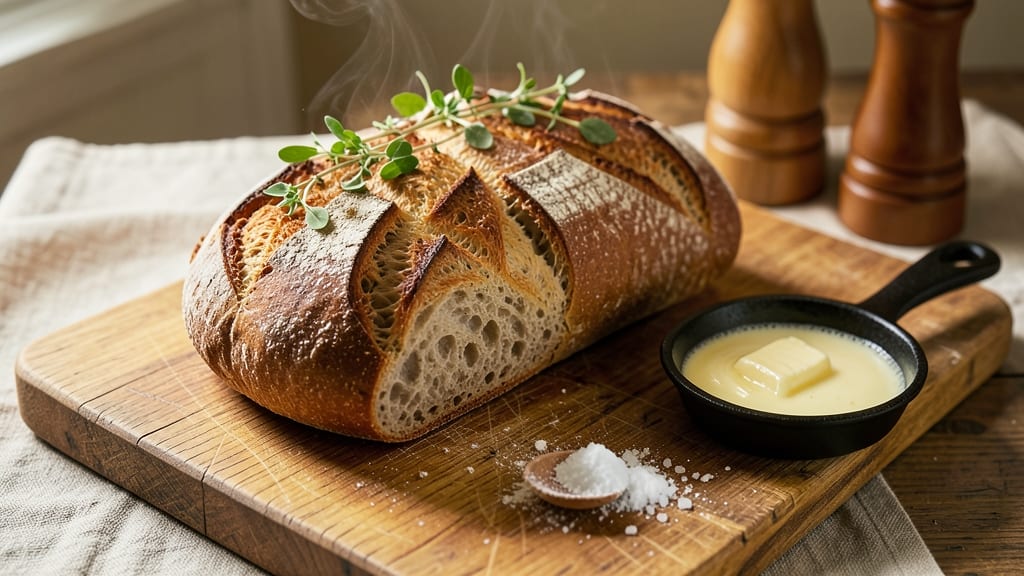
This authentic Irish bread recipe brings the heart of Ireland to your kitchen with its rustic charm and buttery crust. 💛 The secret lies in traditional soda bread techniques—no yeast, just the magic of baking soda and buttermilk for a tender crumb and crispy exterior that pairs perfectly with soups or butter.
I've perfected this version after years of testing, ensuring every bite delivers that classic Irish flavor without shortcuts.
The beauty of this recipe is its simplicity and authenticity. Using whole wheat flour and buttermilk creates a slightly dense, hearty texture that's far from dry. The bread bakes in just 30 minutes with no kneading required, making it ideal for busy weeknights or special gatherings.
Traditional Irish bread often includes raisins or caraway seeds, but this version keeps it classic with just a pinch of salt and the warmth of whole grains.
What makes this bread truly special is its versatility. Serve it warm with Irish butter, alongside a hearty stew, or even as a base for open-faced sandwiches. The crust remains crispy while the interior stays tender, making it a crowd-pleaser.
This is the kind of bread that feels like a hug—comforting, familiar, and impossible to resist.
Whether you're celebrating St. Patrick's Day or simply craving a taste of Ireland, this recipe delivers. The aroma alone will transport you to a cozy Irish pub, and the texture is everything you'd expect from an authentic loaf. Let's get baking!
Ingredients for authentic irish bread
Gather these wholesome ingredients for Ireland's classic no-yeast bread with crispy crust and tender crumb.
| Ingredient | Amount | Notes |
|---|---|---|
| All-Purpose Flour 🌾 | 3 cups | For light texture balance |
| Whole Wheat Flour 🌾 | 1 cup | For rustic, hearty texture |
| Baking Soda 🧂 | 1 tsp | Freshly measured for lift |
| Salt 🧂 | ¾ tsp | Diamond Crystal preferred |
| Buttermilk 🥛 | 1 ¼ cups | Room temperature for best rise |
| Irish Butter 🧈 | ½ cup | Cold, cubed for texture |
| Milk 🥛 | ¼ cup | Warm for butter incorporation |
| Fresh Rosemary 🌿 | 1 tbsp | Finely chopped for aroma |
| Fresh Parsley 🌿 | 1 tbsp | Chopped for freshness |
| Cornmeal 🌽 | ½ cup | For crispy crust base |
| Sesame Seeds 🌾 | 1 tbsp | Optional for decorative touch |
The flours are key here—all-purpose keeps it light while whole wheat adds that classic rustic bite. Bob's Red Mill whole wheat is my go-to for consistent texture. For the buttermilk, Cultivate brand is my favorite—it's tangy enough without being sour. Freshly ground baking soda (not baking powder) is non-negotiable—it's what gives that signature soda bread rise. Rosemary and parsley might seem simple, but they're what transport you to an Irish countryside kitchen. Grab them from the grocery store's fresh herb section—just make sure they smell vibrant, not wilted.
No buttermilk? Mix 1 tbsp vinegar or lemon juice with 1 cup milk, let sit 5 minutes. Short on whole wheat? Substitute all-purpose but expect a lighter loaf. The butter matters—Kerrygold is the gold standard, but any good Irish butter works. For the crust, cornmeal is traditional, but semolina works too. Want to skip the sesame seeds? A sprinkle of flaky sea salt on top adds a nice contrast. The herbs can be dried at half the amount, but fresh gives that authentic pub-bread flavor. And if you're feeling adventurous, add 1/4 cup raisins for a sweet variation—just soak them first in warm water.
This dough keeps in the fridge for up to 2 days—perfect for shaping when you're ready. For best results, let it sit at room temp 10 minutes before baking. The bread stays fresh for 3 days wrapped in a towel, but it's best eaten warm. Freeze portions for up to 3 months—just thaw overnight in the fridge. Pro tip: Brush warm bread with melted butter straight from the oven. That crispy crust? Worth every minute of the 30-minute bake time—don't skip the cornmeal on your baking sheet!
Why You'll Love This Recipe
- No-Fuss Mix-In: I swear by this combo of all-purpose and whole wheat flour—it’s sturdy enough to hold its shape without needing a stand mixer. Just toss in the buttermilk, stir once, and let the baking soda do its magic. Honestly, the dough comes together faster than I can boil water for tea.
- Buttermilk Magic: That tangy buttermilk isn’t just a trick—it’s the soul of this bread. The whole wheat adds a subtle earthiness, while the baking soda gives it that classic Irish rise. First bite? Crusty outside, tender inside—like a hug from your nan.
- Breakfast to Picnic: Toast it thick for a hearty breakfast with butter and jam, or pack slices for sandwiches that won’t flop. I’ve even used it as a base for savory open-faced meals (cheese, mustard, and a fried egg—yes, please). Works for lazy mornings or packed lunches.
- Pantry Staple: This recipe costs next to nothing—flour, baking soda, salt, and buttermilk? All things I already have. Plus, it keeps for days in a bread bag, so I’m never scrambling for toast. Between us, it’s my go-to for when I’m too tired to bake anything fancy.
Step-by-step instructions for authentic Irish bread
Here's how to craft proper Irish soda bread with that signature buttery crust and rustic charm.
👨🍳 Step 1: Mix the Dry Ingredients with Herbs
In a large bowl, combine the 3 cups all-purpose flour and 1 cup whole wheat flour. I always sift these together to eliminate any lumps and aerate the mixture for a lighter texture. Add the 1 tsp baking soda and 0.75 tsp salt, then sprinkle in the 1 tbsp fresh rosemary and 1 tbsp fresh parsley. Give everything a gentle stir with a wooden spoon—just until the herbs are evenly distributed through the flour.
This is where the authentic Irish flavor comes through. The whole wheat flour gives that signature hearty texture, while the fresh herbs add a bright, aromatic note that's traditional in many Irish bread recipes. Don't overmix here—just combine until you see a few flecks of green and purple from the herbs throughout the flour.
🍳 Step 2: Cut in the Cold Butter
Add the 0.5 cup cold Irish butter, cut into small cubes, to the dry ingredients. Using your fingers or a pastry cutter, work the butter into the flour mixture until it resembles coarse crumbs with pea-sized butter pieces throughout. This is crucial for creating that signature buttery, flaky texture in the finished bread.
I like to press the butter pieces into the flour using my fingertips—this helps distribute the fat more evenly. You want to keep the butter cold so it doesn't melt into the flour. If your kitchen is warm, chill the butter cubes for 15 minutes before adding them to the flour mixture. The butter should still be firm but pliable when you handle it.
🥘 Step 3: Combine Wet Ingredients for the Perfect Dough
Create a well in the center of the dry mixture and pour in the 1.25 cups room-temperature buttermilk and 0.25 cup warm milk. Using a wooden spoon, gently mix the wet ingredients into the dry until just combined. The dough will be shaggy and sticky—this is normal for Irish soda bread. Don't be tempted to add more flour at this stage.
The buttermilk is key here—it provides the acidity that reacts with the baking soda to create lift, while also giving that characteristic tangy flavor. The warm milk helps activate the baking soda immediately, ensuring your bread rises properly. When the dough comes together, it should hold its shape when pressed gently but still feel slightly tacky to the touch.
🔥 Step 4: Shape and Prepare for Baking
Turn the dough out onto a lightly floured surface and gently shape it into a round loaf about 8 inches in diameter. I like to use my hands, dipping them in flour as needed to prevent sticking. Press the dough together firmly but gently—you want to create surface tension that will help the bread hold its shape during baking.
Place the shaped loaf on a baking sheet lined with parchment paper. Sprinkle the top with 0.5 cup cornmeal and press it gently into the surface. This creates that classic crispy crust that's so characteristic of Irish soda bread. For extra authenticity, sprinkle the 1 tbsp sesame seeds on top in a decorative pattern. Let the loaf rest for 10 minutes while you preheat your oven to 400°F.
🔥 Step 5: Bake to Golden Perfection
Bake the bread for 30-35 minutes until the top is deep golden brown and sounds hollow when tapped on the bottom. The bread should have a crisp crust with a soft, slightly dense interior—this is what makes Irish soda bread so satisfying. I always bake it on the middle rack to ensure even heating.
Here's the thing about Irish soda bread—it doesn't rise dramatically like yeast breads. Instead, it develops a beautiful crust and a tender crumb. When you cut into it, you'll see that characteristic open crumb structure with those little pockets of air created by the baking soda reaction. Let the bread cool on a wire rack for 15 minutes before slicing—this prevents it from becoming gummy.
Pro Tips For Making Authentic Irish Bread
- STIR THE DOUGH JUST RIGHT: After mixing your all-purpose and whole wheat flours with buttermilk, salt, and baking soda, stir it barely until the ingredients come together—no need to overwork it. I learned this the hard way when I kneaded like I was making pizza dough, and the bread turned dense instead of light and airy.
- WEIGH YOUR FLOURS, DON’T SCOOP: Whole wheat flour packs differently than all-purpose, so skip the measuring cups and use a kitchen scale for accuracy. I used to eyeball it, and the bread would either be too dry or gummy—now I measure by weight, and the texture stays consistent.
- LET IT REST BEFORE BAKING: Give your mixed batter a 10-minute rest at room temperature—this lets the baking soda fully activate and the buttermilk mellow out. I know, I know, you’re eager to bake, but skipping this step means a flatter, less tender loaf.
- BAKE IN A COLD PAN: Preheat your oven and your cast-iron skillet or baking dish for 10 minutes before pouring in the batter—this ensures the bread rises straight up instead of spreading out. Sounds weird, but it works: the crust comes out crisp, and the crumb stays soft.
Serving suggestions for leftovers
Classic Irish Butter
Nothing elevates this bread like Kerrygold Irish butter—its rich, creamy texture melts beautifully into the warm crust. I recommend brushing the top with melted butter straight from the oven for that golden sheen. For extra decadence, serve slices with Irish butter on the side for dipping. 🧈
Steaming Hot Soups
Irish soda bread pairs perfectly with traditional soups like Irish stew or seafood chowder. The bread's hearty texture soaks up the savory broth while adding a comforting bite. For a lighter option, try creamy potato leek soup—the buttery bread contrasts beautifully with its earthy flavors.
Cheese Pairings
Top your bread with sharp cheddar or Irish cheddar for a simple but satisfying snack. I love pairing it with St. Patrick's Blue cheese—the crumbly texture and tangy flavor create a perfect balance. For a sweet option, try Irish cream cheese with honey drizzled on top.
Open-Faced Sandwiches
Slice the bread thick and toast it lightly before assembling open-faced sandwiches. My favorite combination is smoked salmon, Irish cream cheese, and cucumber slices. For a heartier option, layer with corned beef, mustard, and pickles—a true Irish pub classic.
Breakfast Spreads
Serve warm slices with Irish breakfast tea and traditional spreads like blackberry jam or scones-style clotted cream. For a savory breakfast, top with scrambled eggs, crispy bacon, and a sprinkle of flaky sea salt. The bread's rustic texture holds up perfectly to these rich toppings.
Dessert Pairings
For something sweet, serve with Irish whiskey caramel sauce or Baileys-infused custard. The bread's subtle sweetness complements these rich desserts beautifully. I also love pairing it with Irish apple compote—the tartness cuts through the bread's richness.
Nutrition facts
Frequently asked questions
Why does authentic Irish bread use baking soda instead of yeast?
Traditional Irish soda bread relies on baking soda for its quick rise and distinctive texture. The reaction between baking soda and buttermilk creates lift without needing yeast, which requires time to ferment. This makes the bread perfect for quick preparation—ideal for Irish households where bread was often made daily. The result is a dense yet tender crumb with a crispy crust that's impossible to achieve with yeast alone.
Can I substitute buttermilk if I don't have any?
Mix 1 tablespoon vinegar or lemon juice with 1 cup milk, then let it sit for 5 minutes to curdle. This mimics buttermilk's acidity, which is crucial for activating the baking soda. For best results, use whole milk—it creates a richer flavor. Just don't substitute with regular milk alone, as it won't provide the necessary chemical reaction for proper rise.
How do I know when the bread is fully baked?
Look for a deep golden brown crust and tap the bottom—it should sound hollow. The internal temperature should reach 190°F. If the top browns too quickly, tent the bread with foil. Overbaking can make the bread dry, while underbaking leaves it gummy. Let it cool for 15 minutes before slicing to let the crumb set properly.
What's the difference between Irish soda bread and brown bread?
Traditional Irish brown bread uses wholemeal flour (100% whole wheat) and often includes caraway seeds or raisins, giving it a denser texture and slightly sweet flavor. Soda bread typically blends all-purpose and whole wheat flours for a lighter crumb. Both use baking soda, but brown bread has a more rustic, hearty profile. This recipe bridges both styles with its whole wheat base and buttery richness.
Can I make this bread without a mixer?
This recipe is designed for no-knead simplicity! All mixing is done by hand with a wooden spoon. The dough only needs gentle combining—no mixer required. The butter is cut in by hand, and shaping is done with your fingers. Traditional Irish bread was always made this way, keeping the process simple and accessible for home bakers.