
Side Dishes
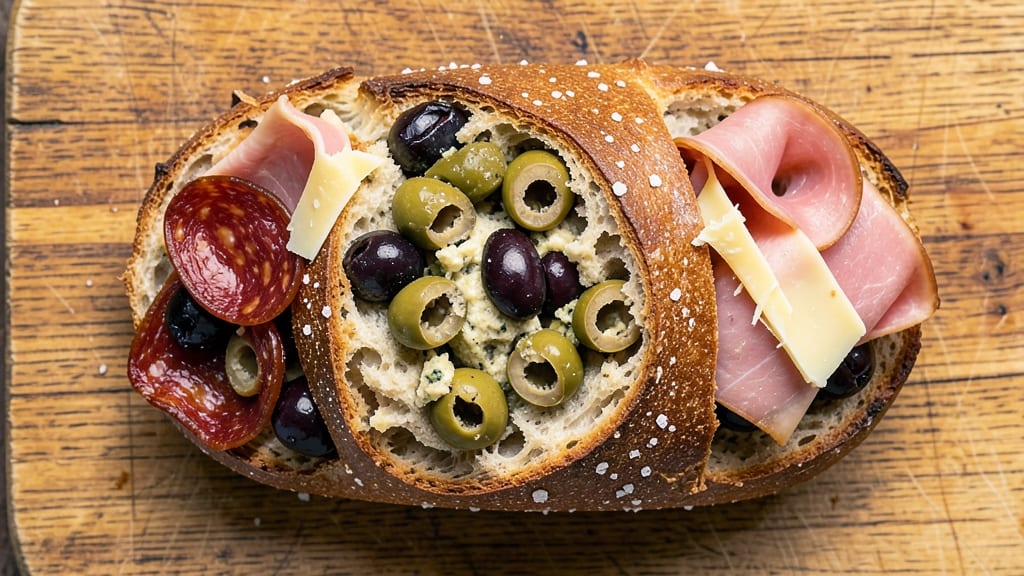
This authentic muffuletta bread recipe brings New Orleans' most iconic sandwich to your kitchen with its signature layers of olives, cured meats, and cheese.
The secret lies in using a crusty Italian bread loaf—traditionally a muffuletta loaf—and carefully assembling the fillings to create a harmonious balance of salty, briny, and savory flavors. I've perfected this recipe after years of studying the classic version served at Central Grocery, where the muffuletta originated in 1906.
The bread itself is key—look for a sturdy Italian loaf with a crisp crust that can hold up to the generous fillings. Inside, you'll layer canned olives (a mix of green, black, and stuffed varieties), salami, ham, mortadella, and provolone cheese, all separated by layers of fresh lettuce.
The traditional method calls for serving it with a drizzle of olive oil or a splash of red wine vinegar to enhance the flavors.
What makes this recipe truly authentic is the attention to layering—each component must be arranged precisely to ensure every bite delivers that perfect combination of textures and tastes. The olives provide briny depth, the cured meats add richness, and the cheese ties it all together with a creamy contrast.
This isn't just a sandwich; it's a celebration of New Orleans' culinary heritage.
Once assembled, the muffuletta should be served immediately, allowing the flavors to meld together in each bite. It's a dish that's as much about tradition as it is about taste, making it perfect for gatherings or as a centerpiece for a themed dinner.
Let's get started on recreating this New Orleans classic in your own kitchen.
Ingredients for authentic muffuletta bread
The heart of New Orleans' iconic sandwich: a sturdy loaf and layers of tradition.
| Ingredient | Amount | Notes |
|---|---|---|
| Muffuletta Loaf 🍞 | 1 whole | Crusty Italian bread, 12-14 oz |
| Green Olives 🫒 | 1 cup | Pitted, from a can |
| Black Olives 🫒 | 1 cup | Pitted, from a can |
| Stuffed Olives 🫒 | 1 cup | Pitted, from a can |
| Salami 🥓 | ½ lb | Thinly sliced, high-quality |
| Ham 🥓 | ½ lb | Thinly sliced, high-quality |
| Mortadella 🥓 | ½ lb | Thinly sliced, Italian style |
| Provolone Cheese 🧀 | 8 oz | Sliced thin, semi-soft |
| Iceberg Lettuce 🥬 | 4 cups | Shredded, crisp |
| Extra-Virgin Olive Oil 🫒 | ¼ cup | For drizzling |
| Red Wine Vinegar 🍷 | 2 tbsp | For drizzling |
| Diamond Crystal Kosher Salt 🧂 | 1 tsp | For seasoning |
| Freshly Ground Black Pepper 🌶️ | ½ tsp | For seasoning |
The bread is non-negotiable—Central Grocery's muffuletta loaf is the gold standard, but Italian-style crusty bread from local bakeries works too. Look for a loaf with a thick crust that can handle the generous fillings without collapsing. For the olives, Balzano or Colavita brands deliver that classic briny punch, but any quality canned olives will do. The cured meats should be high-quality—Oscar Mayer or Boar's Head are reliable choices, but specialty delis often carry better options. Thinly slice everything yourself for the most authentic texture, even if it takes a few extra minutes.
No salami? Genova or spicy soppressata will work in a pinch. Ham can be swapped for prosciutto if you're feeling fancy, but traditional ham keeps it authentic. Provolone is key—semi-soft, not hard—but Fontina or Gruyère can stand in. Lettuce should be crisp; iceberg holds up best under the weight of the fillings. For the olive oil, California Extra Virgin brands like Corto or Bertolli add a nice fruity note. Red wine vinegar? Any good quality will do—no need to splurge here.
Assemble the muffuletta just before serving—flavor melds best fresh. Store the bread wrapped in a damp towel for up to 3 days to keep it fresh. Cured meats and olives keep for weeks in the fridge, but cheese should be used within 1 week for best texture. For leftovers, slice and reheat briefly in the oven to crisp the bread again. This isn't a dish you'll want to reheat often—it's meant to be enjoyed fresh, just like at Central Grocery.
Why You'll Love This Recipe
- No-Knife Nightmare: I swear, this is one of those rare recipes where the hardest part is slicing the loaf—and even then, it’s just a single cut. The olives and salami are pre-packed, so I’m basically assembling a sandwich with zero chopping. Honestly, I’ve made it after a long shift when I just wanted to open a bag and call it dinner.
- Umami Bomb: That first bite? The briny green olives, the meaty salami, and the stuffed olives all packed into that soft, slightly chewy loaf—it’s like a flavor explosion in your mouth. Between us, the salami adds this deep, savory punch that makes it taste like a proper Italian feast, not just lunch meat between bread.
- Lunchbox Legend: This isn’t just a sandwich—it’s my go-to for picnics, tailgates, or even a quick work lunch. I’ll wrap half in foil for later, and it stays fresh for days. My kids fight over it (yes, even the ones who hate olives), and it’s the only thing I pack for road trips because it doesn’t get soggy.
- Budget Feast: A single loaf and a bag of olives feed my whole family for days. I’ll slice it up, toss it in the fridge, and pull it out for snacks or sandwiches all week. No fancy ingredients, no wasted leftovers—just pure, satisfying food that doesn’t break the bank. (And let’s be real, salami and olives are cheaper than takeout.)
Step-by-step instructions for assembling an authentic muffuletta
Here's the traditional method for building this iconic New Orleans sandwich with perfect balance.
Prepare the Olive and Meat Mixtures
In a large bowl, combine the 1 cup green olives, 1 cup black olives, and 1 cup stuffed olives. Drain them thoroughly using a colander, then pat dry with paper towels to remove excess moisture. This step is crucial for preventing a soggy sandwich. In a separate bowl, layer the 0.5 lb salami, 0.5 lb ham, and 0.5 lb mortadella in equal proportions.
For the olives, I always use a mix of pitted varieties from cans—their briny flavors form the foundation. The stuffed olives add that signature New Orleans touch. Keep these mixtures separate until assembly to maintain crispness in each layer. If you're using pre-sliced meats, arrange them neatly to create an even distribution when you layer them later.
Create the Olive Oil-Vinegar Dressing
In a small bowl, whisk together the 0.25 cup extra-virgin olive oil and 2 tbsp red wine vinegar until fully emulsified. This dressing should have a smooth, slightly thick consistency—it's what binds the sandwich together and keeps everything fresh. Add the 1 tsp Diamond Crystal kosher salt and 0.5 tsp freshly ground black pepper, whisking until dissolved. Taste and adjust seasoning if needed, though the olives and meats should provide plenty of flavor.
This dressing isn't just for flavor—it acts as a moisture barrier between layers. I like to make just enough to lightly coat the lettuce and first meat layer. Too much will make the sandwich soggy, so measure carefully. The vinegar's acidity cuts through the richness of the cured meats and olives, creating balance in each bite.
Assemble the Muffuletta Loaf
Carefully slice the 1 whole Muffuletta loaf horizontally in half, creating two equal rounds. The loaf should be about 2-3 inches thick—if it's thicker, you may need to make two sandwiches per serving. Place the bottom half on a serving plate or cutting board. Spread about 1/3 of the olive oil-vinegar dressing evenly over the cut surface, leaving a small border uncovered.
Next, layer half of the 4 cups shredded iceberg lettuce evenly across the dressing. This creates a fresh base that won't get lost under the heavier toppings. Then add half of each meat mixture—salami, ham, and mortadella—distributing them evenly. Finally, add half of the olive mixture, pressing down gently to help it adhere. Repeat these layers exactly on the top half of the loaf.
Final Assembly and Serving
Place the top half of the loaf onto the bottom half, pressing down firmly but gently to compress the layers without squashing them. Wrap the entire sandwich tightly in plastic wrap and refrigerate for at least 30 minutes before serving. This chilling time allows the flavors to meld and the bread to absorb some of the moisture from the toppings without becoming soggy.
To serve, slice the muffuletta into wedges with a sharp serrated knife. Each slice should reveal the perfect balance of crisp lettuce, briny olives, and rich cured meats. The dressing should be visible between layers, adding moisture without overwhelming the other flavors. Serve immediately with additional dressing on the side for those who prefer it.
Pro Tips For Making Authentic Muffuletta Bread
- Slice the Salami Thin: The difference between a good muffuletta and a great one often comes down to this: slice the salami paper-thin—like you’re shaving it with a knife, not chopping. Thick slices get soggy fast, and nobody wants a mushy sandwich. (Yes, even if you’re impatient like me.)
- Pit the Olives First: Stuffed olives are the star, but they’re useless if they’re still whole when you assemble. Pit them all ahead of time—it takes 10 minutes and prevents a messy, half-stuffed loaf later. I learned this the hard way after watching olives roll out of my sandwich like marbles.
- Assemble Just Before Serving: This isn’t a make-ahead sandwich. The bread softens fast, and the olives release brine, turning your masterpiece into a sad, soggy brick. Build it right before cutting—even if it means keeping the loaf wrapped in a towel until the last second.
- Use Two Loaves for Crowds: One loaf? That’s a side dish. Two loaves? That’s a party. If you’re feeding more than four people, split the filling between two loaves—it’s easier to slice evenly and keeps the texture crisp. Trust me, your guests will notice the difference.
Make-ahead tips for this dish
Prep Components Ahead
Slice all 0.5 lb salami, 0.5 lb ham, and 0.5 lb mortadella into ⅛-inch thick rounds and store in separate airtight containers. The olives can be drained and patted dry up to 2 days in advance, keeping them in a sealed container in the fridge.
This prep saves 30 minutes on assembly day and ensures even slicing for that restaurant-quality look. 💡
Bread Prep Timeline
Buy your muffuletta loaf 1 day ahead—it needs time to stale slightly for easier slicing. Wrap it in a damp kitchen towel and store at room temperature. The next morning, slice it horizontally with a serrated bread knife for clean cuts.
If you're short on time, toast the bread lightly before assembling to add extra crispness. ⏰
Dressing Make-Ahead
Prepare the olive oil-vinegar dressing up to 3 days in advance and store it in a small jar in the fridge. Shake well before using as the oil may separate.
This is my favorite time-saver—just grab it from the fridge when ready to assemble. For extra flavor, add 1 minced garlic clove when making the dressing ahead of time. 🍷
Layering Template
Create a visual layering template on paper before assembly day. Sketch the order: dressing → lettuce → meats → olives → repeat. This helps maintain consistency, especially if you're making multiple muffuletas. I keep mine on my fridge as a reminder of the perfect sequence. 📝
Overnight Chill Strategy
For large gatherings, assemble the muffuletta completely (without the top half) and refrigerate overnight. The next morning, add the top half and let it rest 1 hour before slicing.
This extended chilling time enhances flavor melding and makes slicing cleaner. Just be sure to wrap it tightly in plastic wrap to prevent drying. ❄️
Serving Prep
Set out your serving plates, sharp knife, and extra dressing 10 minutes before serving time. Pre-portion any extra dressing into small bowls for guests who want more.
I also keep a paper towel handy for quick cleanups—muffuletta slices can get messy! The presentation matters almost as much as the taste. 💛
Nutrition facts
Frequently asked questions
What makes a muffuletta loaf different from regular Italian bread?
The perfect muffuletta loaf has a thick, crusty exterior that stays crisp even after assembly, while the interior remains soft enough to hold the fillings without becoming soggy. Look for a loaf with a 12-14 oz weight and a slightly denser crumb than standard ciabatta or focaccia. Central Grocery's original loaf is the gold standard, but many Italian bakeries now carry muffuletta-specific bread. The key is the sturdy crust that can handle the weight of the fillings without collapsing.
Can I substitute any of the cured meats?
While the traditional recipe calls for salami, ham, and mortadella, you can swap in genova salami for extra spice, prosciutto for a more delicate flavor, or even capicola for a peppery kick. The most important factor is thin, even slicing—⅛-inch thick works best. Just maintain the same meat-to-vegetable ratio to keep the balance of flavors. For vegetarian options, consider marinated artichokes or roasted red peppers instead of meats.
Why does the muffuletta need to rest before slicing?
The 30-minute rest in the fridge is crucial because it allows the bread to absorb just enough moisture from the fillings to create a cohesive sandwich without becoming mushy. This also lets the flavors meld together in each bite. If you slice too soon, the layers may separate when cut, and the bread could become soggy. Think of it like a lasagna—the resting time ensures everything holds together beautifully when served. For large gatherings, you can even rest it overnight (wrapped tightly) for enhanced flavor development.
What's the best way to store leftovers?
Slice any remaining muffuletta and store it in an airtight container separated by parchment paper to prevent sticking. It keeps well in the fridge for 3-4 days, though the bread will lose some crispness. For reheating, wrap slices in foil and warm in a 350°F oven for 5-7 minutes until heated through. The flavors actually improve slightly after resting overnight, making leftovers a great option for quick lunches. Just avoid microwaving—it makes the bread rubbery.
How do I make this vegetarian?
Replace the cured meats with marinated artichoke hearts, roasted red peppers, and sautéed mushrooms for umami depth. Use vegetarian provolone or mozzarella for the cheese layer, and add thinly sliced pickles for acidity to balance the richness. The key is maintaining the same layering structure—each component should still have its own distinct texture and flavor profile. For extra protein, consider adding grilled eggplant or tofu slices between layers.