
Side Dishes
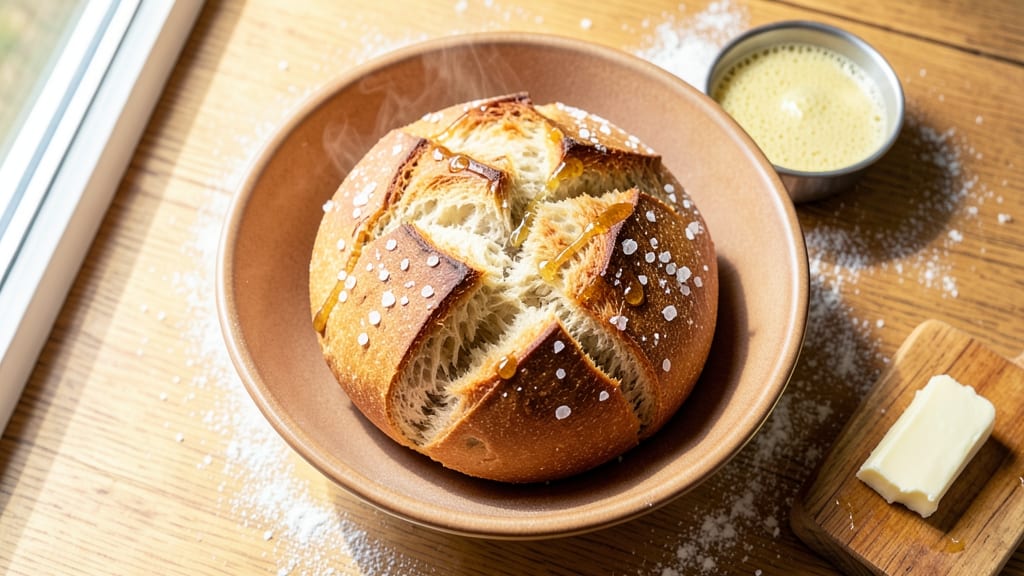
This Ukrainian bread recipe brings the soul of Eastern European tradition to your kitchen with a sourdough-style loaf featuring a golden crust and hearty crumb that’s perfect for celebrations or everyday meals.
The key lies in the slow fermentation process, which develops deep flavor and a light, airy texture—just like the breads my grandmother used to bake. This method delivers authentic taste without requiring advanced skills, making it accessible for home bakers.
The dough combines simple ingredients—flour, water, yeast, and a touch of salt—to create a loaf that’s both rustic and refined. For best results, let it rise overnight in the refrigerator, which enhances flavor and improves texture.
The shaping technique is straightforward but critical: forming a round or oval loaf (traditionally called korovai for special occasions) ensures even baking and that signature open crumb structure.
By the time it emerges from the oven, you’ll have a loaf with a crisp, caramelized crust and a tender interior that’s ideal for serving with butter, borscht, or any hearty soup.
The aroma alone will transport you to a Ukrainian family gathering, where bread isn’t just food—it’s tradition on a plate. Ready to bake?
This recipe works equally well for festive occasions or weeknight dinners, proving that homemade bread can be both foolproof and deeply satisfying. Whether you’re baking for a holiday feast or simply craving fresh bread, this method delivers professional-quality results every time.
Ingredients for ukrainian bread
Simple pantry staples transform into a traditional Ukrainian sourdough-style loaf with rich flavor and perfect texture.
| Ingredient | Amount | Notes |
|---|---|---|
| All-Purpose Flour 🌾 | 5 cups | High-protein for better structure |
| Active Dry Yeast 🍞 | 0.03 oz | 2 1/4 tsp equivalent, or 1 packet |
| Granulated White Sugar 🍚 | ½ cup | Enhances yeast activation |
| Unsalted Butter 🧈 | ¼ cup | Cold, cubed for flavor |
| Warm Water 💧 | 1 ½ cups | 110°F for optimal yeast |
| Diamond Crystal Kosher Salt 🧂 | 1 ½ tsp | Adjust to taste |
| Cornmeal 🌽 | ½ cup | For dusting baking surface |
| Egg 🥚 | 1 whole | Room temperature for binding |
| Sesame Seeds 🌿 | 2 tbsp | Optional topping |
| Poppy Seeds 🌿 | 1 tbsp | Optional topping |
| Milk 🥛 | 2 tbsp | For egg wash enrichment |
The yeast quality is critical—Fresh Yeast or Red Star brand are optimal choices. For best results, purchase yeast from a specialty baking section rather than the bulk bins, where exposure to air can compromise viability. The flour should be high-protein all-purpose (11-12% protein) for the signature open crumb structure. King Arthur or Bob's Red Mill brands are excellent choices. Store flour in an airtight container to prevent absorption of odors that could alter the bread's flavor profile. The butter should be cold and cubed to ensure proper emulsification during mixing without melting prematurely.
No active dry yeast? Instant yeast works at equal weight, though activation time differs slightly. Substitute sugar with honey or maple syrup at equal volume, though fermentation timing may vary. For a gluten-free adaptation, replace flour with a 1:1 gluten-free baking blend, though texture will differ. The egg wash can be omitted for a vegan version, though it contributes to the golden crust. For a richer flavor, consider adding 1 tsp of anise seeds to the dough during mixing, a traditional Ukrainian touch that enhances the bread's aromatic profile.
Store the dough in an airtight container in the refrigerator for up to 24 hours to enhance flavor through cold fermentation. The baked loaf maintains freshness for 3-4 days at room temperature wrapped in a clean kitchen towel. For longer storage, freeze slices wrapped in parchment paper for up to 3 months. Reheat slices in a 200°F oven for 5-10 minutes to restore crispness. This bread pairs beautifully with Ukrainian borscht or smoked sausage, making it ideal for festive gatherings or weeknight meals.
Why You'll Love This Recipe
- No Yeast Struggles: I’ve made this bread on days when I forgot to buy yeast—just toss in a little extra sugar and let it rise slower. The dough still comes out light and airy, proving you don’t need to be a baking pro to get it right.
- Buttery Crust, Soft Core: That first pull-apart moment? Pure magic. The butter baked into the crust gives it a golden, almost crisp edge, while the inside stays tender enough to melt like a hug. Honestly, I’ve ruined store-bought bread trying to replicate this.
- Sunday Morning Staple: Fresh out of the oven, it’s the star of brunch—drizzled with honey, slathered with jam, or just torn into chunks for toast. But here’s the thing: it’s just as good reheated the next day, making it my lazy weekend secret weapon.
- Pantry Goldmine: Five ingredients, zero specialty items. You’re already using what’s in your cupboard, and the cost? A fraction of what you’d pay for a loaf at the bakery. Three days later, I’m still pulling slices from the freezer for quick lunches—no waste, all flavor.
Step-by-step instructions for Ukrainian bread
This method delivers a rustic loaf with a crisp golden crust and tender interior every time.
Activate the Yeast and Mix the Dough
In a large mixing bowl, combine the 1.5 cups warm water with the 0.5 cup granulated white sugar and 0.03 oz active dry yeast. Let this mixture sit for 5-10 minutes until it becomes frothy—this confirms the yeast is active. If it doesn’t bubble, your yeast may be expired.
Add the 5 cups all-purpose flour and 1.5 tsp diamond crystal kosher salt to the bowl. Mix with a wooden spoon or dough whisk until a shaggy dough forms. Then, cut in the 0.25 cup cold unsalted butter using a pastry cutter or your fingers, working it into the dough until fully incorporated. The butter should be cold to maintain structure while adding richness.
Knead the Dough Until Elastic
Turn the dough onto a lightly floured surface and knead for 8-10 minutes by hand, or use a stand mixer with a dough hook on medium speed for 5-6 minutes. You’re looking for a smooth, elastic dough that springs back when poked—this indicates proper gluten development. If the dough feels sticky, add 1 tablespoon of flour at a time until it becomes workable.
Real talk: Over-kneading can make the bread tough, so stop when the dough passes the "windowpane test." Stretch a small piece—if it’s thin enough to see light through without tearing, you’re good. Shape the dough into a round loaf and place it back in the bowl.
First Rise and Shape the Loaf
Cover the bowl with a damp kitchen towel and let the dough rise in a warm place for 1-2 hours, or until it has doubled in size. The dough should feel light and airy when pressed gently with a fingertip. If it rises too quickly, the gluten won’t relax properly, leading to a dense loaf.
Punch down the dough to release air, then shape it into a round loaf by pulling the edges toward the center and sealing the seam. Place the loaf seam-side down on a baking sheet dusted with 0.5 cup cornmeal—this prevents sticking and adds texture. Cover again and let it rise for 30-45 minutes until slightly puffy.
Preheat and Bake for a Crisp Crust
Preheat your oven to 375°F with a baking stone or inverted baking sheet inside—this mimics a professional oven’s even heat distribution. Brush the loaf with a mixture of 1 whole egg and 2 tbsp milk for a golden finish. Sprinkle the 2 tbsp sesame seeds and 1 tbsp poppy seeds evenly over the top for a traditional Ukrainian touch.
Bake for 25-30 minutes until the crust is deep golden brown and the internal temperature reaches 190°F. Tap the bottom of the loaf—it should sound hollow. If the top browns too quickly, tent loosely with foil to prevent over-browning while ensuring the interior cooks through.
Cool and Serve for Maximum Flavor
Remove the loaf from the oven and transfer it to a wire rack to cool completely. This step is critical—cooling too quickly can cause the bread to become gummy. Let it rest for at least 30 minutes before slicing. The crust will firm up, and the crumb will develop its signature tender texture.
Slice the loaf into thick pieces and serve warm. The interior should be soft yet sturdy, with a crisp crust that shatters slightly. Store any leftovers in an airtight container for up to 3 days, or freeze for longer storage. This bread pairs perfectly with soups, cheeses, or simply slathered with butter.
Pro Tips For Making Ukrainian Bread
- Bloom the Yeast First: Skip mixing yeast directly into dry flour—it’s a rookie move. Instead, dissolve it in warm water (110°F/43°C) with sugar first and let it foam for 5-10 minutes. This guarantees your dough rises right the first time, not after three failed attempts.
- Use Room-Temp Butter: Cold butter creates pockets in dough that never fully dissolve, leaving your bread dense. Soften it to 65°F (18°C) before mixing—press a finger in and it should dent slightly, not crumble. My grandmother called this "the lazy person’s shortcut," but it’s actually the pro move.
- Knead Until Silky: Ukrainian bread dough needs 8-10 minutes of vigorous kneading by hand (or 5-6 minutes in a stand mixer) until it’s smooth, elastic, and springs back when poked. Stop early, and your loaf will collapse like a sad soufflé.
- Proof in a Warm Drawer: Your oven’s lightbulb drawer (or a bowl of hot water) keeps dough at 80°F (27°C) without overproofing. Cold kitchen? Wrap the dough in a towel and let it rise there—just check every 30 minutes. Overproofed dough is a tragedy no one needs.
Perfect pairings for ukrainian bread
Traditional Ukrainian Spreads
No Ukrainian meal is complete without smetana (sour cream) drizzled over warm slices—its tangy richness cuts through the bread’s hearty texture. I keep a jar of homemade smetana on hand, thickened to a perfect dollop consistency.
For a festive touch, add crumbled farmer's cheese (like Tvoroh) mixed with a pinch of salt and fresh dill. This combination is a staple at Ukrainian celebrations and pairs beautifully with the bread’s nutty undertones. 🥛
Soup Pairings
This bread is legendary with borscht, the iconic beet soup. The bread’s crisp crust soaks up the rich, slightly sweet broth while its open crumb structure holds up to hearty chunks of cabbage and meat.
For a lighter option, try it with rye soup (vishnya), a traditional Ukrainian barley soup with mushrooms and herbs. I often serve slices alongside a bowl of soup, using the bread to scoop up every last drop. 🍲
Cheese and Charcuterie
Create a Ukrainian-inspired charcuterie board with smoked sausage (kielbasa), hard cheeses like Gouda or Edam, and pickled vegetables. The bread’s sturdy structure makes it perfect for holding up to cured meats and sharp cheeses.
Add pickled cucumbers (ogurki) and carrot salad (vinaigrette) for a balance of textures and flavors. This setup is ideal for gatherings and makes the bread feel like a centerpiece. 🧀
Sweet Toppings
For a dessert twist, serve warm slices with honey drizzled over the top, especially buckwheat honey for its robust flavor. I also love adding a sprinkle of crushed walnuts or sunflower seeds for crunch.
Another favorite is jam (like cherry or plum), which complements the bread’s mild sweetness. These toppings transform the bread into a satisfying sweet treat. 🍯
Beverage Pairings
A dark rye beer, like Ukrainian Zhovten, complements the bread’s robust flavor profile with its malty notes. For a non-alcoholic option, try carob or beet kvass, a traditional fermented drink with a tangy kick.
The effervescence of kvass cleanses the palate between bites, enhancing the bread’s nutty depth. 🍺
Modern Adaptations
For a contemporary twist, serve the bread with avocado mash mixed with a pinch of salt and lemon juice. The creamy texture contrasts wonderfully with the bread’s crust.
Another fun pairing is spicy hummus with roasted red peppers and smoked paprika—this adds a Middle Eastern flair while keeping the bread’s traditional roots. These modern takes prove how versatile Ukrainian bread can be. 🌶️
Nutrition facts
Frequently asked questions
What makes this Ukrainian bread different from regular sourdough?
This recipe captures the essence of traditional Eastern European breadmaking through its slow fermentation and round shaping, often called korovai. The key differences include the use of cornmeal dusting for texture, sesame and poppy seed toppings, and a focus on developing deep flavor through overnight cold proofing rather than rapid yeast activation. The result is a loaf with both rustic charm and professional-quality texture.
Can I make this bread without a stand mixer?
The dough requires only 8-10 minutes of hand-kneading on a lightly floured surface. Focus on developing gluten by stretching and folding the dough until it becomes smooth and elastic. For best results, work in a well-floured area to prevent sticking, and use the "windowpane test" to check for proper gluten development.
Why does my dough rise too quickly or collapse after shaping?
Rapid rising often happens when your kitchen is too warm or the yeast is overactive. Keep the dough in a 75°F environment for optimal rising. If it collapses after shaping, it may be overproofed—check by gently pressing the dough: it should spring back slowly. For a second rise, shape the dough and let it proof in the fridge overnight for better control.
How do I store leftover Ukrainian bread?
Wrap cooled slices in a clean kitchen towel and store in an airtight container at room temperature for 3-4 days. For longer storage, freeze slices wrapped in parchment paper for up to 3 months. To restore freshness, reheat slices in a 200°F oven for 5-10 minutes or toast in a dry skillet until crispy.
What's the best way to serve this bread traditionally?
For an authentic experience, serve warm slices with homemade smetana (sour cream) and crumbled farmer's cheese (tvoroh). This bread pairs perfectly with borscht or rye soup (vishnya), making it ideal for festive meals. The open crumb structure also holds up well to charcuterie boards with smoked sausage and pickled vegetables.