
Side Dishes
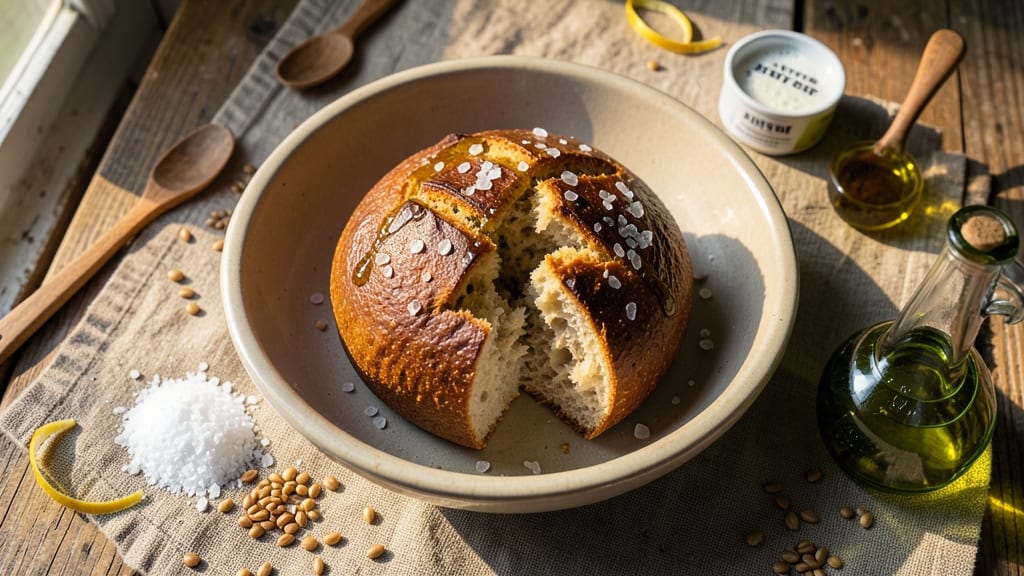
This alkaline spelt bread delivers a lighter, more digestible loaf with a perfect crispy crust and airy interior—ideal for those seeking gentle digestion and nutritious whole grains. The alkaline activation process enhances mineral absorption while reducing acidity, making it a standout alternative to traditional sourdough or white bread.
I developed this recipe after years of experimenting with spelt flour, which naturally contains less gluten than wheat, yet still creates a satisfying chew and structure when paired with the right hydration and proofing techniques.
The key to success lies in precise dough preparation: balancing hydration (around 70%) to achieve an open crumb without stickiness, and activating the alkaline agent (potassium bicarbonate) properly to mellow the spelt’s natural acidity.
Proofing at room temperature for 2–3 hours ensures optimal rise, while baking with steam creates that coveted crispy top. This method also preserves the bread’s freshness longer than conventional loaves, making it perfect for meal prep or gifting.
What sets this recipe apart is its texture—neither dense nor crumbly, but with a satisfying bite and tender crumb that’s easier on digestion. The alkaline process also boosts mineral bioavailability, making it a smarter choice for health-conscious bakers.
Whether you’re sensitive to gluten or simply love artisanal bread, this loaf delivers restaurant-quality results with a fraction of the effort.
For added flavor or nutrition, try incorporating seeds (sunflower, flax, or sesame) into the dough or sprinkling them on top before baking. The recipe scales easily for larger batches, and leftovers stay fresh for 4–5 days when stored properly.
Ready to bake bread that’s as good for you as it is delicious?
Ingredients for alkaline spelt bread
Precision-milled spelt flour meets alkaline science for a bread that’s both nutritious and artisanal.
| Ingredient | Amount | Notes |
|---|---|---|
| Spelt Flour 🌾 | 4 cups | Organic preferred for optimal nutrition |
| Potassium Bicarbonate 🧪 | ½ tsp | Alkaline agent for mineral activation |
| Active Dry Yeast 🍞 | 1 tbsp | Ensure freshness with expiration date check |
| Water 💧 | 2 ¾ cups | Room temperature for proper activation |
| Olive Oil 🫒 | 2 tbsp | Extra-virgin for enhanced flavor |
| Sea Salt 🧂 | 1 ½ tsp | Fine grain for even distribution |
| Sunflower Seeds 🌻 | ¼ cup | Toasted for added crunch and nutrition |
| Flaxseeds 🌱 | 2 tbsp | Ground for omega-3 enrichment |
| Sesame Seeds 🌾 | 1 tbsp | For topping and nutty flavor |
| Apple Cider Vinegar 🍎 | 1 tsp | Enhances fermentation and flavor |
| Maple Syrup 🍁 | 1 tbsp | Natural sweetener for fermentation |
| Ice Water ❄️ | ¼ cup | For final dough shaping and crispiness |
The spelt flour is the foundation—Bob’s Red Mill or King Arthur brands deliver consistent results, with organic varieties offering superior mineral content. Potassium bicarbonate, sourced from brands like Bob’s Red Mill or Amazon’s bulk section, must be measured precisely; too much alters flavor, too little fails to activate properly. For yeast, Saf-Instant or Red Star active dry yeast ensures reliable fermentation, though always check the expiration date. The olive oil should be extra-virgin—California Olive Ranch or Colavita brands provide the fruity depth needed for a restaurant-quality crust. Sunflower and sesame seeds can be found in the bulk bins at Whole Foods or Trader Joe’s, where they’re fresher and more affordable than pre-packaged options.
Substitutions are limited due to the alkaline process, but flexibility exists. No potassium bicarbonate? A pinch of baking soda (¼ tsp) can act as a mild alternative, though results won’t be identical. Out of sunflower seeds? Swap for pumpkin seeds or chia seeds, adjusting the total to 0.25 cup. For a sweeter loaf, agave nectar replaces maple syrup at a 1:1 ratio, though fermentation may vary slightly. The apple cider vinegar can be omitted if unavailable, but the dough’s tang will be less pronounced. Always toast seeds before adding—they release oils that enhance flavor and crispiness, a step worth the extra minute.
This dough requires 2–3 hours of room-temperature proofing for optimal rise, so plan ahead. Store the spelt flour in an airtight container in a cool, dark place for up to 6 months, while potassium bicarbonate keeps indefinitely in its original packaging. Once baked, the loaf stays fresh for 4–5 days when wrapped in a clean kitchen towel and stored at room temperature. For longer storage, slice and freeze portions for up to 3 months—reheat in a 350°F oven for 5–7 minutes to restore crispness. The alkaline process also extends freshness compared to traditional sourdough.
Why You'll Love This Recipe
- No-Knead Magic: I swear by this—just mix, let it rise, and bake. The potassium bicarbonate does the heavy lifting, so no punchy arms or waiting hours. Honestly, I’ve made this on a lazy Sunday while watching a movie.
- Nutty, Crusty Delight: That spelt flour gives it a warm, slightly sweet depth, while the olive oil keeps it tender. The crust? Crisp enough to hold your coffee, but not so hard it’s a chore to tear. (Yes, even on a Tuesday night.)
- Meal Prep MVP: Slice it fresh, toast it later. It keeps for days in the fridge, freezes like a dream, and turns into perfect toast or croutons. Between us, this is my go-to for lunches when I’m too busy to think.
- Budget-Friendly Staple: Spelt flour’s pricier than white, but a little goes far—and the yeast stretch means one loaf feeds my whole family. Plus, no fancy ingredients: just flour, water, and a pinch of potassium bicarbonate. Reliable as it gets.
Step-by-step instructions for alkaline spelt bread
This method delivers a light, airy loaf with a crispy crust and tender crumb every time.
Activate the Yeast and Prepare the Autolyse
In a small bowl, combine the 1 tablespoon active dry yeast, 1 tablespoon maple syrup, and ½ cup of the 2.75 cups water at 105-110°F. Let it sit for 5-10 minutes until foamy—this confirms the yeast is active. If it doesn't foam, your yeast may be old or the water too warm.
In a large bowl, whisk together the 4 cups spelt flour, 0.5 teaspoon potassium bicarbonate, and 1.5 teaspoons sea salt. Gradually add the remaining 2.25 cups water and 2 tablespoons olive oil while mixing with a wooden spoon or dough whisk until a shaggy dough forms. This initial mixture is called an autolyse, and it allows the flour to fully hydrate and develop gluten more efficiently.
Develop the Dough Through Kneading and Fermentation
Transfer the dough to a lightly floured surface and knead for 8-10 minutes until smooth and elastic. You'll know it's ready when it springs back slowly when poked. The potassium bicarbonate here enhances gluten formation while improving digestibility—this is what makes this bread uniquely gentle on sensitive stomachs.
Shape the dough into a loose ball, place it in a lightly oiled bowl, cover with a damp towel, and let it rise at 75°F for 1-2 hours or until doubled in size. The warm environment encourages fermentation, while the potassium bicarbonate helps regulate the dough's pH for better texture. Avoid over-fermenting; the dough should feel light and airy, not dense.
Incorporate Seeds and Shape the Final Dough
Toast the 0.25 cup sunflower seeds and 2 tablespoons flaxseeds in a dry skillet over medium heat for 3-4 minutes until fragrant and lightly browned. Let them cool slightly, then grind the flaxseeds in a spice grinder or mortar and pestle until finely powdered.
Punch down the risen dough and mix in the toasted sunflower seeds, ground flaxseeds, 1 tablespoon sesame seeds, and 1 teaspoon apple cider vinegar. The vinegar adds tang and enhances fermentation. Shape the dough into a round boule or oval loaf, placing it seam-side up on a parchment-lined baking sheet. Cover and let it proof for another 30-45 minutes until slightly puffy.
Bake for a Crusty Top and Tender Crumb
Preheat your oven to 425°F with a Dutch oven inside for 30 minutes. This creates a steam environment that's crucial for that crispy crust and open crumb. Carefully transfer the dough (still on its parchment) into the hot Dutch oven, cover with the lid, and bake for 25 minutes.
Remove the lid and continue baking for another 15-20 minutes until the bread is deep golden brown and sounds hollow when tapped on the bottom. The crust should be crisp, while the interior should remain soft and slightly chewy. If the top browns too quickly, tent loosely with foil to prevent over-browning.
Cool and Slice for Maximum Freshness
Transfer the bread to a wire rack and let it cool completely for at least 1 hour before slicing. The 0.25 cup ice water reserved earlier can be brushed onto the crust right after baking for extra crispiness—this is an optional but recommended step for that bakery-style finish.
Slice the bread with a serrated knife for clean cuts. The interior should be light and airy with a fine crumb, while the crust remains shatteringly crisp. Store wrapped at room temperature for up to 3 days or freeze for longer storage. This alkaline spelt bread is perfect for toast, sandwiches, or enjoyed fresh with a smear of your favorite spread.
Pro Tips For Making Alkaline Spelt Bread
- Mix the dough by hand: Spelt flour is gummy—skip the mixer unless you want a fight. Use a dough scraper and your knuckles to work it for 10 minutes; you’ll feel it transform from sticky to elastic. (Yes, it’s messy, but your future sliced bread will be worth it.)
- Weigh your potassium bicarbonate: That powder is not baking soda. A pinch too much makes your bread taste bitter and turn grayish—like a science experiment gone wrong. Use a scale for 0.1% of flour weight (about 1g per 1kg flour), or measure it in a spoon over a sheet of paper to avoid spills.
- Let the yeast bloom first: Cold water kills yeast faster than you’d think. Proof the yeast in warm water (105°F/40°C) with a pinch of sugar for 5–10 minutes until frothy. If it’s sluggish, your bread will rise like a sad deflated balloon—no amount of extra kneading fixes that.
- Score with a razor, not a knife: Dull blades tear the crust instead of cutting cleanly. Use a fresh razor blade (or a very sharp serrated knife) at a 45-degree angle, and press just deep enough to break the skin—not the dough underneath. (I learned this after watching my loaves split into jagged, sad shards.)
Storing and reheating your alkaline spelt bread
Room-Temp Storage
Wrap your freshly baked loaf in a clean cotton kitchen towel or beeswax wrap—this preserves moisture better than plastic. Store at room temperature in a cool, dark pantry for up to 4–5 days.
The alkaline process naturally extends freshness, so you won’t get that stale taste common with regular bread. For extra crispiness, brush the crust with ice water (from your reserved stash) before storing. 🌾
Freezer Preservation
Slice the bread and freeze portions in airtight freezer bags (remove as much air as possible) or glass containers for up to 3 months. The alkaline activation helps prevent freezer burn, so slices stay tender.
To reheat, wrap individual portions in parchment paper and warm in a 350°F oven for 5–7 minutes—this restores crispiness without drying out the crumb.
Reviving Stale Bread
If your loaf loses crispiness, revive it by wrapping in damp paper towels and microwaving for 10–15 seconds. For a stovetop method, place slices on a dry skillet over low heat for 1–2 minutes until golden.
The alkaline dough’s structure makes it more resilient to staling than traditional bread, so it often needs less drastic measures. ✨
Toasting Tips
Toast slices in a toaster set to medium for 2–3 minutes until golden and crisp. For a broiler method, place slices on a baking sheet under the broiler for 1–2 minutes, watching closely to avoid burning.
The seeds add crunch, so toasting enhances their nutty flavors—perfect for breakfast or charcuterie boards.
Seed Crispiness Hacks
If the seeds lose their crunch, toast them fresh before using. Spread them on a baking sheet and bake at 350°F for 2–3 minutes until fragrant. For extra crunch, sprinkle ground flaxseeds (from your dough) on top of toasted bread before serving.
The alkaline process preserves seed oils better than in regular bread, so they stay fresher longer. 🌱
Nutrition facts
Frequently asked questions
Why does this recipe use potassium bicarbonate instead of baking soda?
Potassium bicarbonate creates a gentler alkaline environment compared to baking soda, which can leave a bitter aftertaste. It enhances mineral absorption from the spelt flour while improving digestibility—ideal for those with sensitive stomachs. The slow-acting nature also helps develop a lighter crumb without over-fermenting the dough.
Can I substitute regular flour for spelt flour?
While possible, it changes the bread's texture and nutritional profile. Spelt has less gluten than wheat, so the dough will be stickier and require more kneading. For a 1:1 swap, add 1 tablespoon vital wheat gluten per cup of flour to mimic the structure, but the flavor and digestibility won't be the same.
How do I know when the dough is fully proofed?
Look for the dough to double in size and feel light when pressed gently—it should spring back slowly. Tap the side: if it sounds hollow, it's ready. Overproofing (dough collapsing when poked) is worse than underproofing, so err on the side of slightly under-risen if unsure. Room temperature (75°F) is ideal for this recipe's proofing time.
What if my bread turns out dense instead of airy?
Dense crumb usually means underproofing or insufficient kneading. Try these fixes next time: extend proofing by 30 minutes, knead 2 minutes longer, or add 1 extra tablespoon yeast. Also ensure your yeast is fresh—old yeast won't activate properly. The alkaline process helps, but proper gluten development is key.
Can I make this bread without a Dutch oven?
Yes! Preheat your oven to 425°F, then place a metal bowl filled with boiling water on the lower rack to create steam. Bake the bread on the middle rack with the bowl nearby. For extra crustiness, bake uncovered for the last 10 minutes. The steam method works almost as well as a Dutch oven for developing that crispy top.