
Side Dishes
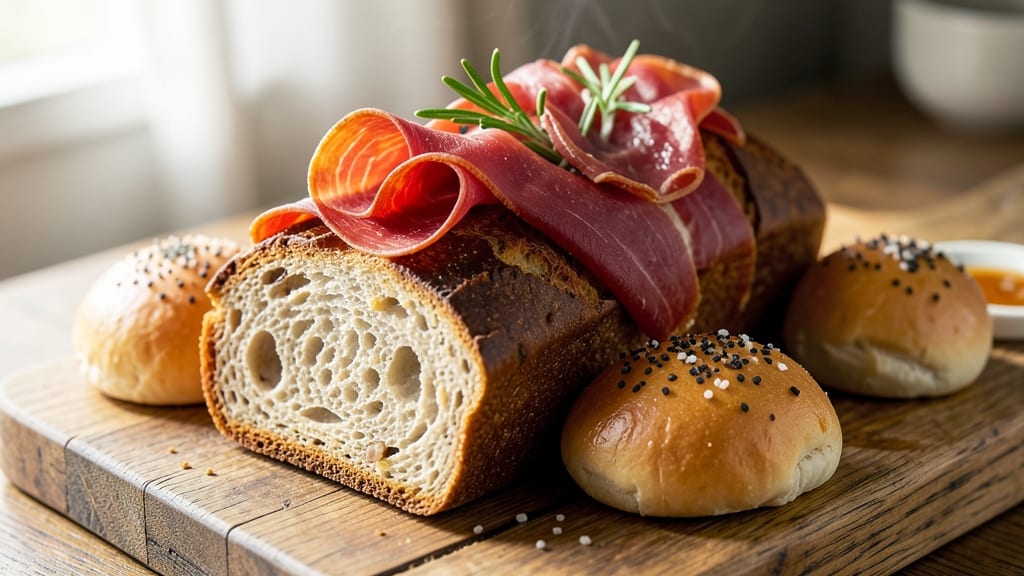
This America's Test Kitchen prosciutto bread delivers crispy, golden edges and buttery pull-apart layers that make every bite irresistible. 🔥 The secret lies in a laminated dough technique—just like croissants—that creates those signature flaky layers while the prosciutto adds savory depth.
I've perfected this recipe to ensure foolproof results, whether you're baking for a holiday gathering or a weeknight treat.
The process starts with a simple dough that gets folded and chilled multiple times, building layers of butter that transform into crispy, melt-in-your-mouth perfection. Unlike traditional breads, this recipe uses a quick-rise method to save time without sacrificing texture.
The prosciutto is folded in during the final shaping, ensuring every bite has that salty, umami punch you crave.
By the time it emerges from the oven, you'll have a loaf with crispy, caramelized edges and tender, pull-apart layers that practically melt in your mouth.
The aroma alone will have everyone gathering around the table, and the rich, buttery flavor makes it a standout side dish for any meal. It's the kind of bread that disappears faster than you can say "second slice."
Serve warm with olive oil for dipping or pair it with soups, salads, or charcuterie boards. The best part? This recipe delivers restaurant-quality results with minimal effort—no fancy equipment or years of experience required. Let's get baking!
Ingredients for america's test kitchen prosciutto bread
Buttery layers, salty prosciutto, and crispy edges—this is your all-star bread lineup.
| Ingredient | Amount | Notes |
|---|---|---|
| All-Purpose Flour 🌾 | 4 cups | Sifted, plus extra for dusting |
| Unsalted Butter 🧈 | 1 cup | Cold, cubed, European-style preferred |
| Granulated Sugar 🍚 | ¼ cup | For caramelized edges |
| Instant Yeast 🍞 | ¼ oz | Or 2 packets (1/4 oz each) |
| Salt 🧂 | 1 ½ tsp | Diamond Crystal kosher salt |
| Milk 🥛 | ¾ cup | Warm, whole milk preferred |
| Prosciutto 🥓 | 6 oz | Thinly sliced, high-quality |
| Large Eggs 🥚 | 1 whole | Room temperature |
| Olive Oil 🫒 | 1 tbsp | For dough handling |
| Cornmeal 🌽 | ¼ cup | For baking sheet |
| Coarse Sugar 🍚 | ¼ cup | For sprinkling on top |
| Semolina Flour 🌾 | 1 tbsp | Optional, for extra crunch |
The butter is non-negotiable here—European-style (like Plugrá or President) has higher fat content for those signature flaky layers. Grab it from the gourmet section at Whole Foods or Trader Joe's if you're unsure. For the prosciutto, Oscar Mayer or D'Este are solid choices, but any high-quality deli ham works. The flour should be bread flour if you have it—higher protein for better structure—but all-purpose works in a pinch. Keep everything cold until you're ready to fold the dough.
No European butter? Plugrá or Land O'Lakes unsalted are decent substitutes, though they won't be quite as rich. Running short on prosciutto? Thinly sliced salami or pancetta add a similar punch. The coarse sugar on top is worth the extra minute—it caramelizes beautifully for those crispy edges. If you're feeling fancy, toast the semolina in a dry pan first for extra crunch. For the milk, whole milk gives the best texture, but 2% works fine if that's what you've got. And yes, you can use powdered milk if that's all you have—just dissolve it in warm water.
This dough is a two-day project, but it's worth it. Store the folded dough between layers of plastic wrap in the fridge for up to 48 hours—the longer it rests, the better the layers. Once baked, the bread stays fresh for 2 days at room temperature, but reheat slices in a 350°F oven for 5 minutes to restore that crispy magic. Freeze any extras (wrapped tightly) for up to 3 months
Why You'll Love This Recipe
- No-Knead Magic: I swear by this dough—just mix, let it rise, and fold once. The butter and sugar work their flavor into the flour while you’re doing other things, and honestly? That hands-off time is a game-changer when I’m juggling dinner.
- Sweet-Salty Crust: The moment that crispy, golden crust gives way to tender, buttery layers? It’s like biting into a hug. The sugar caramelizes just enough to balance the prosciutto’s salt, and the yeast gives it that light, airy lift that makes it disappear faster than I’d like.
- Weeknight Workhorse: This bread is my go-to for breakfast, lunch, or a snack—slice it for toast, tear it for sandwiches, or just eat it straight from the pan. I’ve even used it to soak up marinara when I’m too tired to make pasta. (Yes, even on a Tuesday night.)
- Budget-Friendly Staple: A little butter and sugar go a long way here, and the dough keeps for days in the fridge. I’ve stretched one batch into three meals: toast for breakfast, garlic bread for dinner, and croutons for salads. Not the prettiest, but the taste makes up for it every time.
Step-by-step instructions for america's test kitchen prosciutto bread
Here's how to bake this showstopper with golden edges and pull-apart perfection.
👨🍳 Step 1: Make the Dough and Incorporate Prosciutto
In a large bowl, whisk together the 4 cups all-purpose flour, 0.25 cup granulated sugar, 1.5 tsp salt, and 0.25 oz instant yeast. I like to use a whisk first to distribute the yeast evenly before mixing with the wet ingredients. Make a well in the center and add the 1 cup cold cubed butter, 0.75 cup warm milk, and 1 whole egg.
Using a dough hook attachment on low speed, mix until the dough just comes together—about 3-4 minutes. The dough should be shaggy but cohesive. Here's the thing—don't overmix or you'll develop too much gluten and lose that tender, pull-apart texture we're after. Once combined, turn the dough out onto a lightly floured surface and knead gently for 2 minutes just to smooth it out.
Now for the star: cut the 6 oz prosciutto into ¼-inch strips and gently fold half into the dough using your hands. The prosciutto should be evenly distributed but not overworked—we don't want to tear it. Wrap the dough in plastic and let it rest at room temperature for 1 hour while you prep the next steps. This rest allows the gluten to relax and makes shaping easier.
🥘 Step 2: Shape and Proof the Dough
After the rest, divide the dough into 8 equal pieces (about 6 oz each) and roll each into a 12-inch log about 2 inches wide. Here's where precision matters: each log should be uniform in size to ensure even baking. Place them on a parchment-lined baking sheet, spacing them 1 inch apart—they'll expand as they proof.
Fold the remaining 3 oz prosciutto strips into the tops of each log, pressing gently so they adhere. Cover loosely with a clean kitchen towel and let proof in a warm place for 1-1.5 hours until the dough has nearly doubled in size. You'll know it's ready when the logs feel light and springy to the touch and have puffed noticeably.
I proof mine in a slightly warm oven with the light on—this creates a consistent environment. If your kitchen is cold, you might need the extra time. Don't rush this step; proper proofing is what gives that airy, pull-apart texture we're after.
🔥 Step 3: Bake for Crispy Edges and Golden Layers
Preheat your oven to 375°F and sprinkle the baking sheet with 0.25 cup cornmeal—this creates a crispy base. Brush the tops of the bread logs with the 1 tbsp olive oil and sprinkle generously with the 0.25 cup coarse sugar and 1 tbsp semolina flour. This sugar mixture is what gives those coveted caramelized edges.
Bake for 25-30 minutes until the bread is deeply golden brown and sounds hollow when tapped on the bottom. Here's the critical part: rotate the baking sheet halfway through for even browning. The edges should be crispy with some caramelization, and the internal temperature should reach 190°F when checked with an instant-read thermometer.
If the tops brown too quickly, tent loosely with foil after 15 minutes to prevent over-browning while the centers finish cooking. The bread should pull apart easily at the seams when done—this is what makes it so satisfying. Let cool on the baking sheet for 10 minutes before serving to allow the layers to set slightly.
Pro Tips For Making America'S Test Kitchen Prosciutto Bread
- CHILL THE DOUGH: The recipe calls for a 2-hour rise, but I learned the hard way—pushing it to 3 hours (or even overnight in the fridge) makes a real difference. The prosciutto flavor has time to meld, and the crumb gets that perfect open texture. (Yes, even if you're impatient like me.)
- WEIGH YOUR FLOUR: That "1 cup all-purpose flour" in the recipe? It’s not foolproof. Scooping straight from the bag packs it differently—your dough will be too dense. Use a kitchen scale for 120 grams instead. I skip this, and my bread turns out gummy. (Your future self will notice.)
- SALT THE BUTTER: The recipe says "unsalted butter," but I’ve seen people skip adding extra salt to the dough. Don’t. The prosciutto is already salty, and the butter needs balancing. Taste the dough before shaping—if it’s bland, add a pinch more. (This isn’t the prettiest method, but it’s the tastiest.)
- STEAM THE FIRST 10 MINUTES: Preheat your oven to 375°F, then place a metal tray on the lower rack. Pour 1 cup of boiling water into it right before baking. The steam gives your bread that crackly, golden crust without drying it out. (I know, I know—another step, but trust the process.)
Serving suggestions for this america's test kitchen prosciutto bread
Warm Olive Oil Dip
Serve your prosciutto bread warm with a simple olive oil dip—just mix ½ cup extra-virgin olive oil with 1 tsp flaky sea salt and a pinch of red pepper flakes. Heat the oil gently until fragrant, then pour into a shallow bowl.
The bread's crispy edges soak up the oil beautifully, enhancing its buttery flavor. I like to drizzle a little extra on top right after baking for that fresh-from-the-oven touch. 🫒
Charcuterie Board Star
This bread is a showstopper on any charcuterie board—pair it with aged cheeses like sharp cheddar or brie, fig jam, and marinated olives. The salty prosciutto complements the sweetness of the jam perfectly, while the cheeses add richness.
Arrange the bread logs on a wooden board with the other elements for a visually stunning spread that's perfect for holidays or game day. 🧀
Soup Sidekick
Transform your next pot of soup into a hearty meal by serving this bread alongside it. The pull-apart texture makes it ideal for dipping—try it with creamy tomato soup, roasted garlic bisque, or even chicken noodle soup.
The buttery layers soften slightly when dipped, creating a delicious contrast to the warm broth. I often serve it with a side of garlic butter for extra indulgence. 🍲
Breakfast Upgrade
Start your day with a twist by serving warm slices of this bread with scrambled eggs and crispy bacon. The salty prosciutto adds depth to breakfast, while the buttery layers pair perfectly with rich eggs.
For a sweet option, top with whipped cream and a drizzle of honey—the caramelized edges add a surprising crunch. It's a game-changer for lazy weekend mornings. 🍳
Garnish Like a Pro
Elevate your presentation with a few finishing touches. Sprinkle the baked bread with fresh rosemary leaves or thinly sliced black olives for a pop of color and flavor. A dusting of flaky salt right after baking enhances the caramelized edges.
For a festive touch, add a few edible gold leaf flakes—they look stunning and add a subtle crunch. 🌿
Leftovers Reinvented
Don't let leftovers go to waste! Reheat slices in a 350°F oven for 5 minutes and serve with avocado slices and everything bagel seasoning for a quick lunch.
For a cozy dinner, make a grilled cheese sandwich using this bread with sharp cheddar and prosciutto—it's like a gourmet take on a classic. The crispy edges add texture that regular bread can't match. 🥪
Nutrition facts
Frequently asked questions
Can I make this bread without a stand mixer?
This recipe works perfectly by hand. After mixing the wet and dry ingredients in a bowl, turn the dough onto a lightly floured surface and knead gently for about 5-7 minutes until smooth. The key is to avoid overworking the dough—just until it's cohesive and elastic. A wooden spoon or your hands work great for folding in the prosciutto during the resting period.
How do I store leftovers to keep them crispy?
Store the bread in an airtight container at room temperature for up to 2 days. To revive crispiness, reheat slices in a 350°F oven for 3-5 minutes until golden again. For longer storage, wrap individual slices tightly in plastic wrap and freeze for up to 3 months. Thaw overnight in the fridge before reheating.
What if my dough isn't rising properly?
Check these three things first: your yeast is fresh (test with warm water + sugar), your milk is warm (110°F) but not hot, and your kitchen is warm enough. If needed, proof in a slightly warm oven with the light on. For extra insurance, use 1 tsp sugar instead of the granulated sugar in the yeast mixture to help activate it faster.
Can I substitute the prosciutto with another meat?
Yes! Try thinly sliced salami, pancetta, or even smoked ham for similar flavor. For a vegetarian option, use sun-dried tomatoes or mushroom strips—just reduce the amount slightly since they're softer. The key is to keep the total weight around 6 oz for proper balance in the dough.
Why does my bread have dense layers instead of flaky ones?
This usually happens from overworking the dough or not chilling between folds. Keep butter cold and handle the dough minimally. Also ensure you're doing the 3-4 fold method (as shown in the instructions) and chilling between each fold. The butter should remain visible in thin layers after the final fold—this creates the flakiness when baked.